Two groups cause most termite infestations in Florida homes: subterranean termites, which usually nest in the soil and reach wood through mud tubes, and drywood termites, which live entirely inside the wood they eat. (UF/IFAS notes a dampwood termite can rarely turn up in water-exposed exterior wood, which is a moisture problem to fix.) Which one you have changes the signs you’ll see, when they swarm, and how a licensed professional treats them. UF/IFAS counts 20 termite species established in Florida, six of them invasive, and notes that identifying a species “usually requires a microscope or high-resolution camera, even for an experienced termite identifier.”
This guide covers the termites that matter for Venice and Sarasota County homes, the signs a homeowner can actually see, when swarms happen according to UF/IFAS, and what to do if you find something.
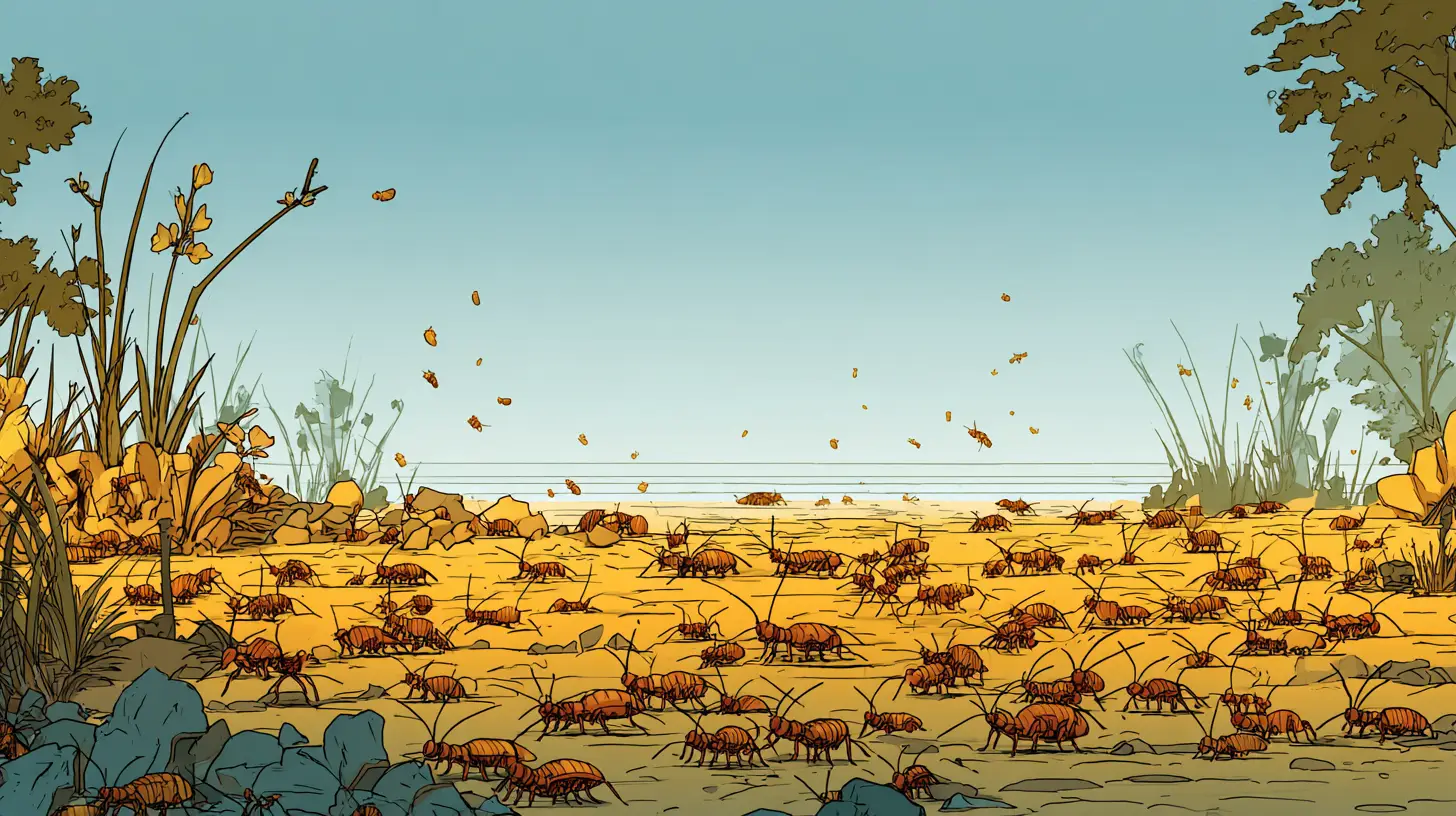
Which termites infest Venice-area homes
Eastern subterranean termites
The Eastern subterranean termite (Reticulitermes flavipes) is the subterranean species generally reported as prevalent in Sarasota County. UF/IFAS describes it as a native termite found statewide. A single colony may hold 100,000 to 1,000,000 termites and forage up to 150 feet in search of food. Colonies need moisture and usually nest in the soil.
Formosan subterranean termites
The Formosan subterranean termite is invasive, and UF/IFAS says it is “primarily found in coastal cities” in Florida. A 2026 University of Florida study found the invasive Asian subterranean termite established as far north as Hillsborough County on the Gulf Coast and Brevard County on the Atlantic side, and expects it to keep spreading. The summary doesn’t name Manatee or Sarasota County, so it can’t be ruled in or out here by location; a specimen identification settles it. Formosan colonies can reach several million individuals and can build carton nests inside infested wood.
How common Formosan termites are in Venice specifically isn’t something we can state from published data, and appearance alone won’t settle it. A species identification will (see the steps below).
Drywood termites
The West Indian drywood termite (Cryptotermes brevis) is the species UF/IFAS describes as exclusively associated with structures, and it “has spread to many cities throughout the state.” It needs no contact with the ground; a colony gets its water from the wood it eats. UF/IFAS adds that a colony takes about five years to mature and can last more than a decade, so a drywood infestation can be well along before anyone sees a sign. A second drywood species, the Florida drywood termite (Incisitermes snyderi), is common in the local landscape, but UF/IFAS says it lives mainly in dead tree branches, rarely infests structures, and is a minor pest, so finding one outdoors isn’t evidence of a home infestation.
What that means around Venice
Older wood-frame homes near the Gulf, including the 1920s to 1950s housing on Venice Island, tend to raise drywood-termite and moisture concerns. Newer slab-on-grade homes inland tend to see Eastern subterranean termites. That is a general pattern, not a rule: any house with wood can host either group.
Signs you can see
Treat everything below as a clue, not a diagnosis. Confirming what you have takes an inspection.
Subterranean termites
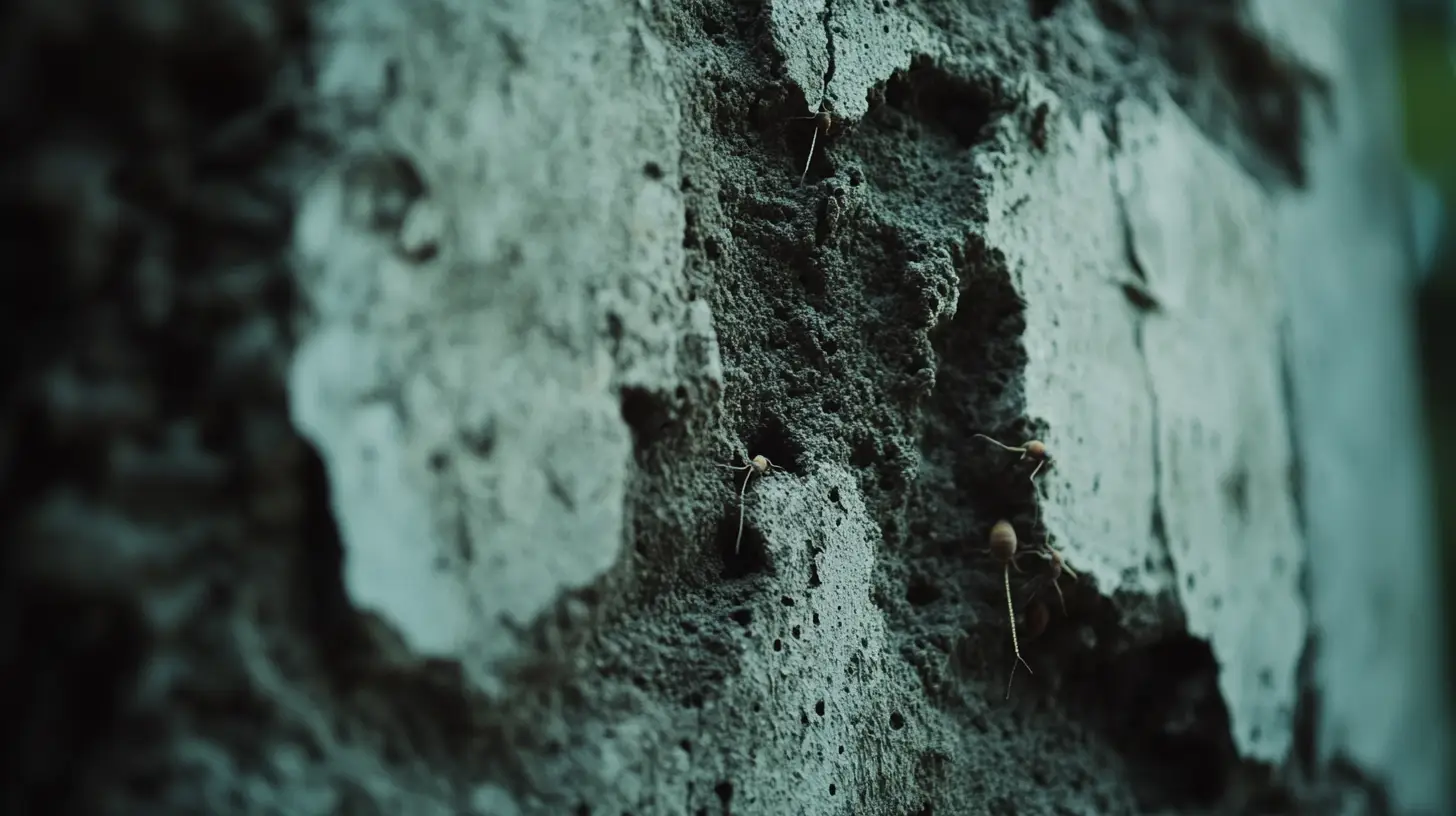
- Mud (shelter) tubes on foundation walls, piers, or slab edges. UF/IFAS describes them as corridors connecting underground colonies to wood above ground, made of soil and saliva.
- Swarmers indoors. UF/IFAS notes that “hundreds to thousands of individuals can emerge” near windows and bathtubs during dispersal flights.
- Damaged wood. Termites feed with the grain, sometimes leaving only a thin veneer, and badly damaged wood can look blistered or peeling on the surface.
Drywood termites
- Six-sided fecal pellets (frass). UF/IFAS describes the pellets as hexagonal in cross section, ranging from cream through red to black. They collect in little piles below the wood.
- Kick-out holes. The pellets are pushed out through openings usually 1 to 2 mm across, about the size of a pen tip.
- Blistering or peeling of thin surface wood or paint.
Our termite swarmer guide covers what to do when you find swarmers, and our drywood termite guide goes deeper on pellets and kick-out holes.
When termites swarm in Florida
UF/IFAS publishes swarm timing by species. These are statewide windows, not Venice-specific ones.
- Eastern subterranean (R. flavipes): early January through April, in the early afternoon. UF/IFAS says dispersal happens on “warm, sunny, and windless early afternoons usually after rain.”
- A related native species (R. virginicus): early February through late May, also in the early afternoon.
- Formosan subterranean: early April to late June, shortly after sunset, with peak swarming in May.
- West Indian drywood: multiple flights from April to June, though flights are possible any time of year.
- Another native drywood species (Cryptotermes cavifrons): evenings all year, with a peak from March through May. UF/IFAS classes it as a non-structural, landscape species, and landscape termites can fly indoors without infesting the building.
Taken together, there is no month in which you can rule termites out. A winged termite indoors is worth taking seriously at any time of year, but it isn’t proof of an infestation on its own: some species fly in from the landscape. A licensed inspection, or a sample sent to UF/IFAS for identification, tells you which it is.
What to do if you find signs
- Leave the evidence in place. Don’t tear out damaged wood or break open mud tubes before an inspection. That is what shows an inspector where to look.
- Keep a sample if you can. UF/IFAS says the UF termite ID team accepts samples from anyone at no cost, and asks for soldiers or winged reproductives because workers are not reliable for species identification. A small sealed container works for a quick collection, and UF’s send-samples page explains how to submit one.
- Get a licensed inspection. UF/IFAS says “the most important part of termite control is obtaining a correct identification,” and that termites generally require a pest management professional for control. Waves Pest Control’s termite inspection in Venice covers the foundation, framing, attic, crawl spaces, perimeter, moisture areas, and garage, with species identification and photo documentation.
- Skip the DIY fix. Treatment depends on the species, and the approaches differ a lot. Our drywood vs. subterranean comparison explains why.
Moisture and wood-contact steps that lower risk
These steps come from UF/IFAS guidance. They lower the odds of subterranean termites; they don’t make a house termite-proof, and they are aimed at that group, since drywood termites live inside wood and don’t need the soil.
- Eliminate wood-to-ground contact. Fence posts, deck framing, and stored lumber touching soil give subterranean termites a way in.
- Fix leaks and move water away. UF/IFAS says to make sure water runs away from the structure, not toward it. Point A/C condensate drains and irrigation away from the foundation, and use gutters with splash blocks.
- Keep mulch thin and pulled back. UF/IFAS advises a gap of about 6 inches between the soil or mulch line and the bottom of wall siding, so termites can be seen if they try to enter, and a thin layer (under 2 inches) of mulch within 12 inches of the foundation. The same UF/IFAS publication says mulch does not itself cause termite problems; thick layers can keep soil moist where termites are already established.
- Avoid watering next to foundation walls.
- Schedule inspections. UF/IFAS lists an annual inspection by a trained, licensed termite inspector as part of home maintenance.
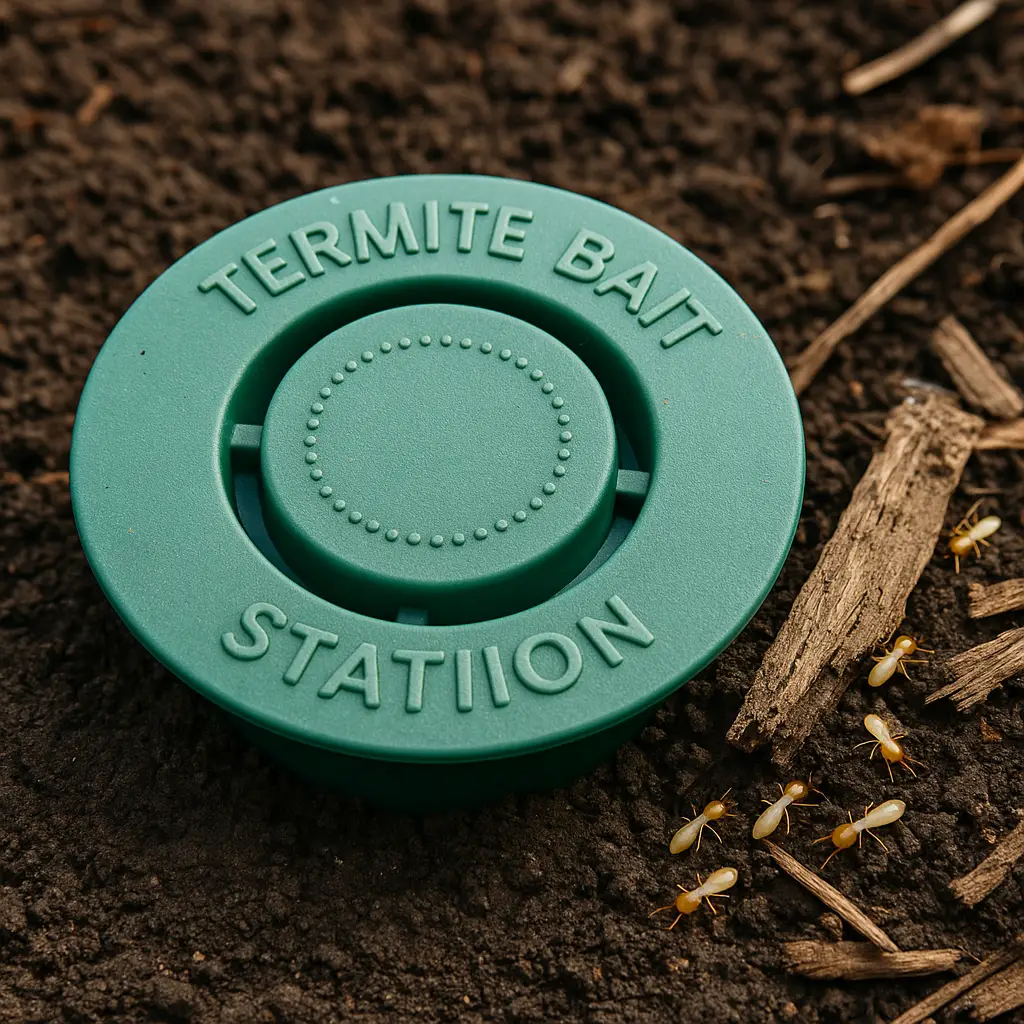
If you’re comparing treatment options after an inspection, Waves Pest Control’s termite control in Venice page describes what the service includes.
Frequently Asked Questions
What are the first signs of termites in a Venice home?
For subterranean termites, mud tubes on the foundation or swarmers near windows are common first signs. For drywood termites, look for small piles of six-sided pellets and tiny kick-out holes. Either way, a licensed inspection is how you confirm it.
When do termites swarm in Florida?
It depends on the species. UF/IFAS puts Eastern subterranean swarms between early January and April, Formosan swarms between early April and late June, and drywood swarms mainly in spring but possible any time of year.
Are Formosan termites in Venice?
UF/IFAS describes Formosan termites as primarily found in coastal Florida cities, and a 2026 University of Florida study found Asian subterranean termites established as far north as Hillsborough County on the Gulf Coast, so neither can be ruled out here by location. Which species is in a particular yard has to be identified from specimens; UF’s termite ID team accepts samples at no cost.
What should I do if I find mud tubes or frass?
Leave them in place, photograph them, and have a licensed inspector look before anything is cleaned up. If you can, save a few winged termites or soldiers in a small sealed container for identification.
How often should I get a termite inspection?
UF/IFAS lists an annual inspection by a trained and licensed termite inspector as part of home maintenance.
Can new homes in Venice get termites?
New Florida homes must have subterranean termite protection under the Florida Building Code, installed during construction. The builder’s termite coverage is time-limited and often ends a few years after closing, so it’s worth finding out when yours does.