Jump to a section (7)
- 01How subterranean termites get past concrete
- 02Drywood termites don’t need the ground at all
- 03Warning signs to watch for
- 04How to make your block home less inviting
- 05New homes: the builder’s termite protection doesn’t last forever
- 06How Waves protects block homes in Sarasota
- 07Frequently Asked Questions (FAQs)
Yes. Termites can’t eat concrete, but concrete block homes in Sarasota get termites all the time. Subterranean termites come up from the soil through cracks, joints, and pipe gaps and build mud tubes to reach the wood inside: door frames, baseboards, trim, cabinets, and roof framing. Drywood termites skip the ground entirely and fly into attics and eaves. Block walls protect the walls. They don’t protect the wood.
Here’s how termites get into a block home, what to watch for, and what actually keeps them out.
How subterranean termites get past concrete
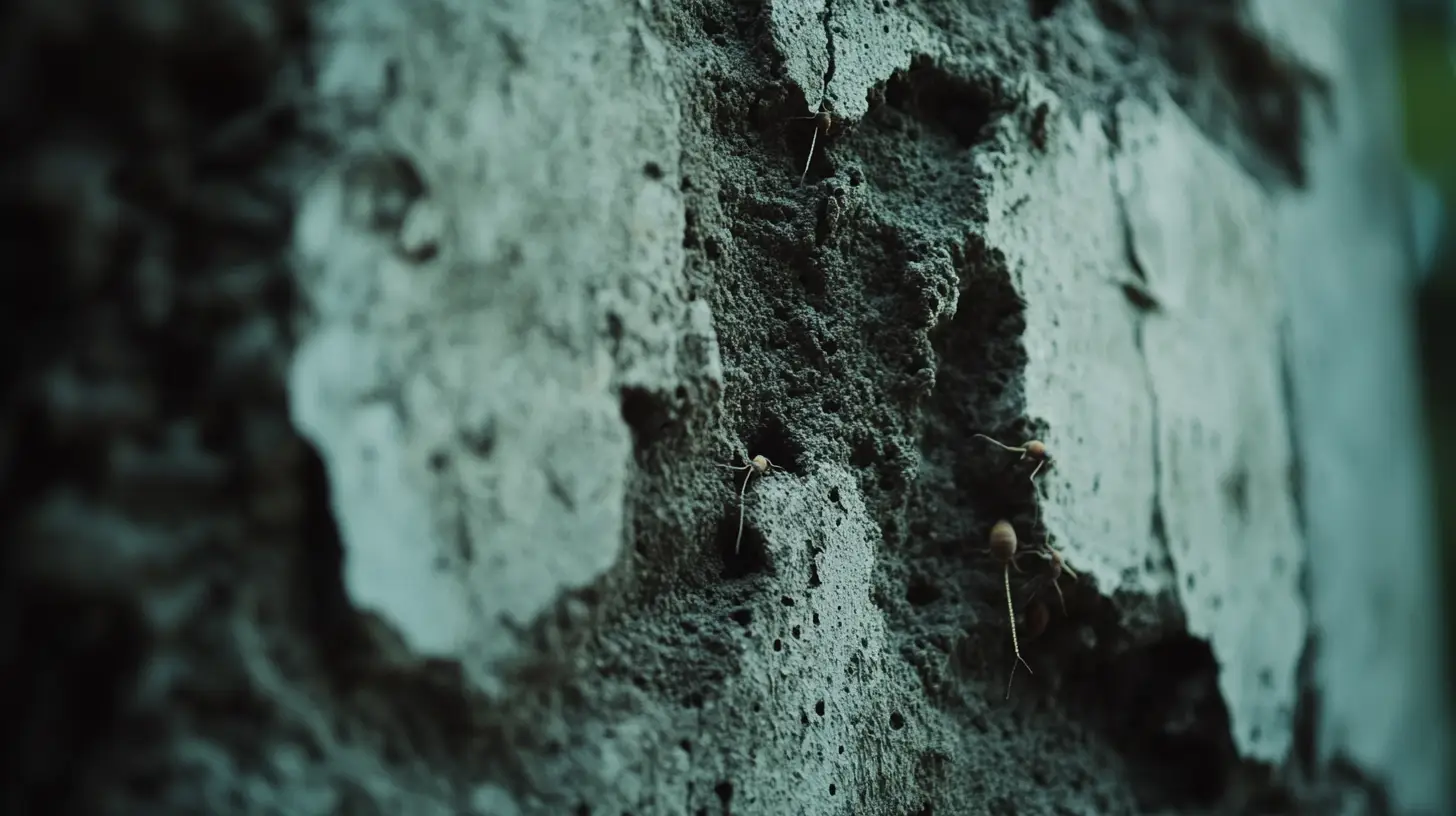
Subterranean termites live in the soil and dry out quickly in open air. To travel, they build mud tubes about the width of a pencil and use any gap they can find. University of Missouri Extension notes they can get through cracks as small as 1/32 inch, about the thickness of a credit card. In Sarasota County, the eastern subterranean termite is the most common species doing this. A do-it-yourself perimeter spray isn’t built to reach them in the soil either — see where DIY pest control works and where it doesn’t.
The usual ways in on a slab-and-block home:
- Slab cracks and expansion joints. UF/IFAS points out that doors often sit right on expansion joints, which gives termites a hidden path in.
- Pipe and wire penetrations. Gaps around plumbing, electrical conduit, and A/C lines where they pass through the slab or wall.
- Hollow block cores. Once inside a crack, termites can travel up through the open cells in block walls, out of sight.
- Soil or mulch piled against the wall. Mulch banked up over the slab edge hides mud tubes and keeps the soil moist.
- Wood touching the ground. Fence posts, deck posts, planters, and leftover form boards are bridges straight into the structure.
Drywood termites don’t need the ground at all
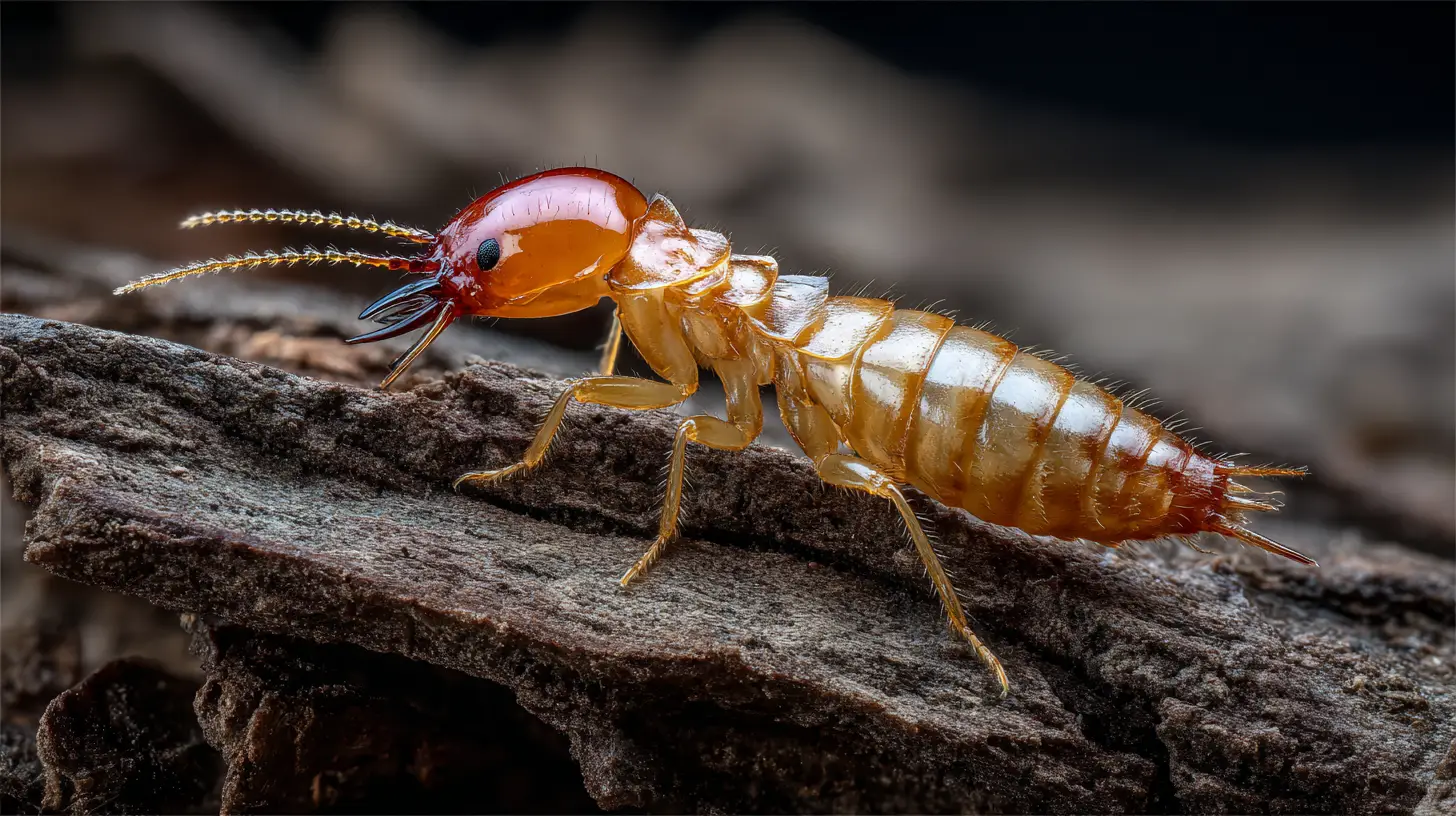
Drywood termites are a different problem. They live entirely inside dry wood, with no soil contact, and swarming adults fly in to start new colonies in attic framing, fascia, trim, and even furniture. Concrete makes no difference to them. They’re especially common in older homes on the barrier islands and near the coast.
The tell is small, six-sided pellets that pile up below infested wood and look like coarse sand or coffee grounds. Localized colonies can be spot-treated. Whole-house infestations may need tent fumigation, which a fumigation company performs. See our drywood termite treatment page for how we handle it.
Warning signs to watch for
- Mud tubes on the slab edge, block walls, garage walls, or around plumbing.
- Swarmers or piles of shed wings near windows, doors, and light fixtures. Eastern subterranean termites swarm on warm, sunny, still afternoons from about January through April, usually after rain, according to UF/IFAS. A related native species keeps swarming into May.
- Pellets under baseboards, window sills, or in the attic (drywood termites).
- Damaged wood that sounds hollow when tapped, or paint that bubbles or blisters.
- Doors or windows that suddenly stick. Humidity can cause this too, but termite activity near the frame is worth ruling out.
Pay closest attention where concrete meets wood: door frames, baseboards on exterior walls, and anything in the garage.
How to make your block home less inviting
Most of these come straight from UF/IFAS’s termite prevention guide:
- Keep a gap between soil and walls. Leave at least 6 inches between the bottom of your wall covering and the soil or mulch line, and pull mulch back off the slab edge.
- Move water away from the house. Fix leaks, point downspouts away from the foundation, and adjust irrigation heads that spray the walls. Watch for A/C condensate lines dripping at the slab.
- Give plants some room. Keep shrubs at least 2 feet from exterior walls, and don’t keep rain barrels, compost, or other damp items against the foundation.
- Break wood-to-soil contact. Replace wood fence or deck posts that touch the ground, and don’t store lumber or firewood against the house.
- Keep the roofline tight. Repair soffits and screen attic vents to make it harder for drywood swarmers to get in.
If you’re building or adding on, use pressure-treated or borate-treated lumber near the ground.
New homes: the builder’s termite protection doesn’t last forever
Florida’s building code requires new homes to get subterranean termite protection during construction, either a soil treatment or an approved alternative system. That’s why you’ll often find a termite treatment notice near the electrical panel. But the builder’s termite warranty is time-limited and often ends a few years after closing. Many homes in newer Sarasota neighborhoods are no longer covered unless the owner renewed the protection, and most owners don’t realize it.
How Waves protects block homes in Sarasota
It starts with an inspection: the foundation, garage, expansion joints, plumbing penetrations, and attic, with photos of anything we find. From there:
- Bait stations go in the ground around the home and are checked on a regular schedule. Once termites start feeding, colonies are typically eliminated within about 3 to 6 months.
- Liquid soil treatment is an option where it’s the better fit for the home.
- Drywood colonies that are localized get a spot treatment. If a home needs whole-structure fumigation, we’ll tell you honestly and refer you to a fumigation company.
Ongoing termite protection runs on an optional renewable warranty in 1-, 5-, or 10-year terms, quoted separately from the treatment itself. See our termite control in Sarasota page for the details, or pair it with year-round pest control in Sarasota so the same local team is watching your foundation all year.
Schedule a Sarasota termite inspection
Frequently Asked Questions (FAQs)
Do concrete block homes get termites?
Yes. Termites can’t eat concrete, but subterranean termites get in through slab cracks, expansion joints, and gaps around pipes, then build mud tubes to reach the wood framing, trim, and cabinets inside. Drywood termites fly straight into attics and eaves and never touch the ground. A block home still needs regular termite inspections.
What are the problems with concrete block homes?
For termites, the main issues are hidden paths and false confidence. Termites can travel through cracks and the hollow cores of block walls without being seen, and gaps around plumbing and utility lines are hard to seal completely. Because owners assume block is termite-proof, infestations often go longer before anyone notices. The spots where concrete meets wood, like door frames and baseboards, are where damage usually shows up first.
Should I worry about termites in a brick house?
Yes. Termites can’t eat brick, but they can travel through mortar joints and foundation cracks to reach the wood behind it. Many brick homes are brick veneer over wood framing, which gives termites plenty to eat once they’re in. Focus inspections on the foundation line, any spot where soil or mulch touches the brick, and places where wood meets masonry.