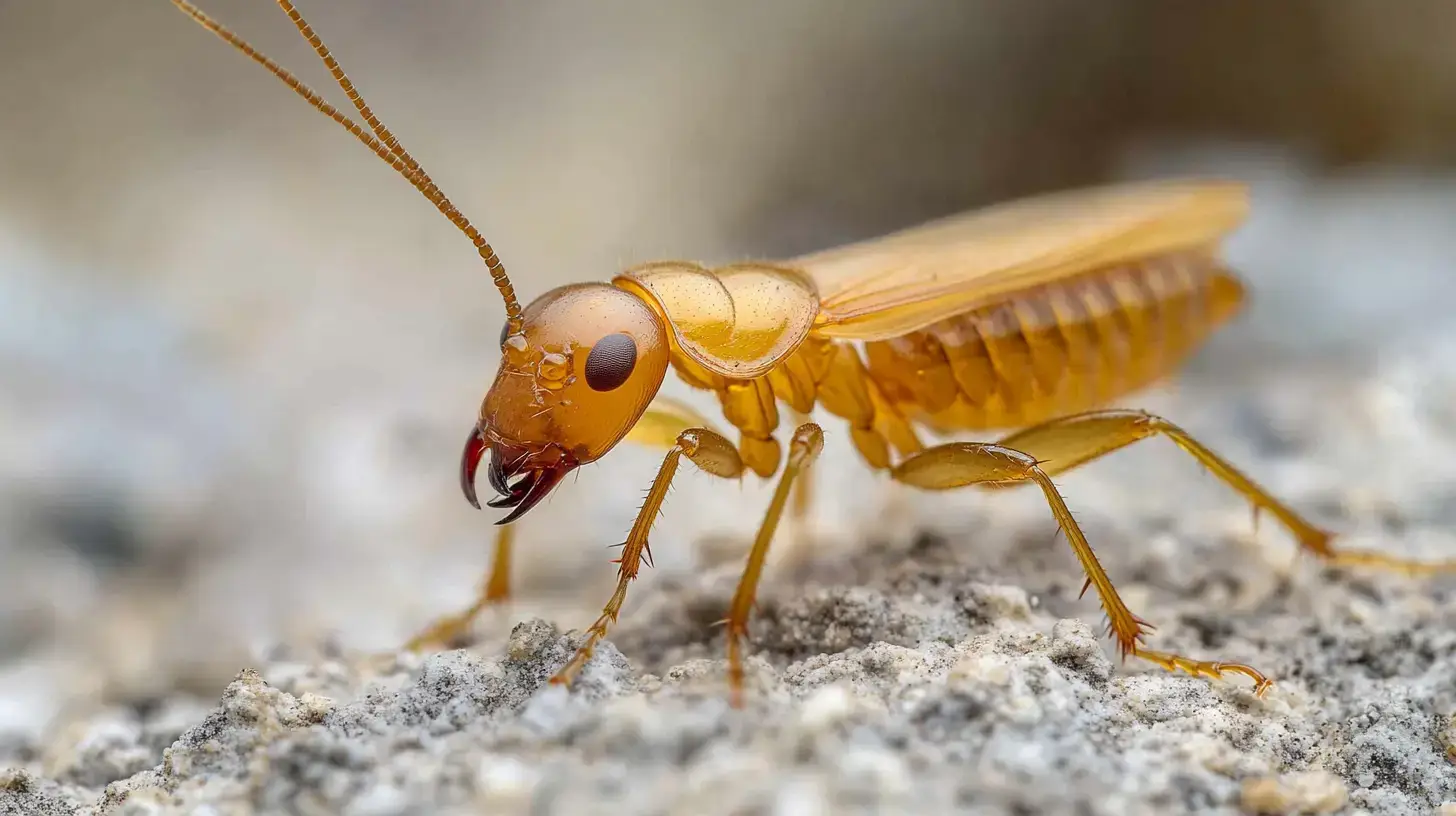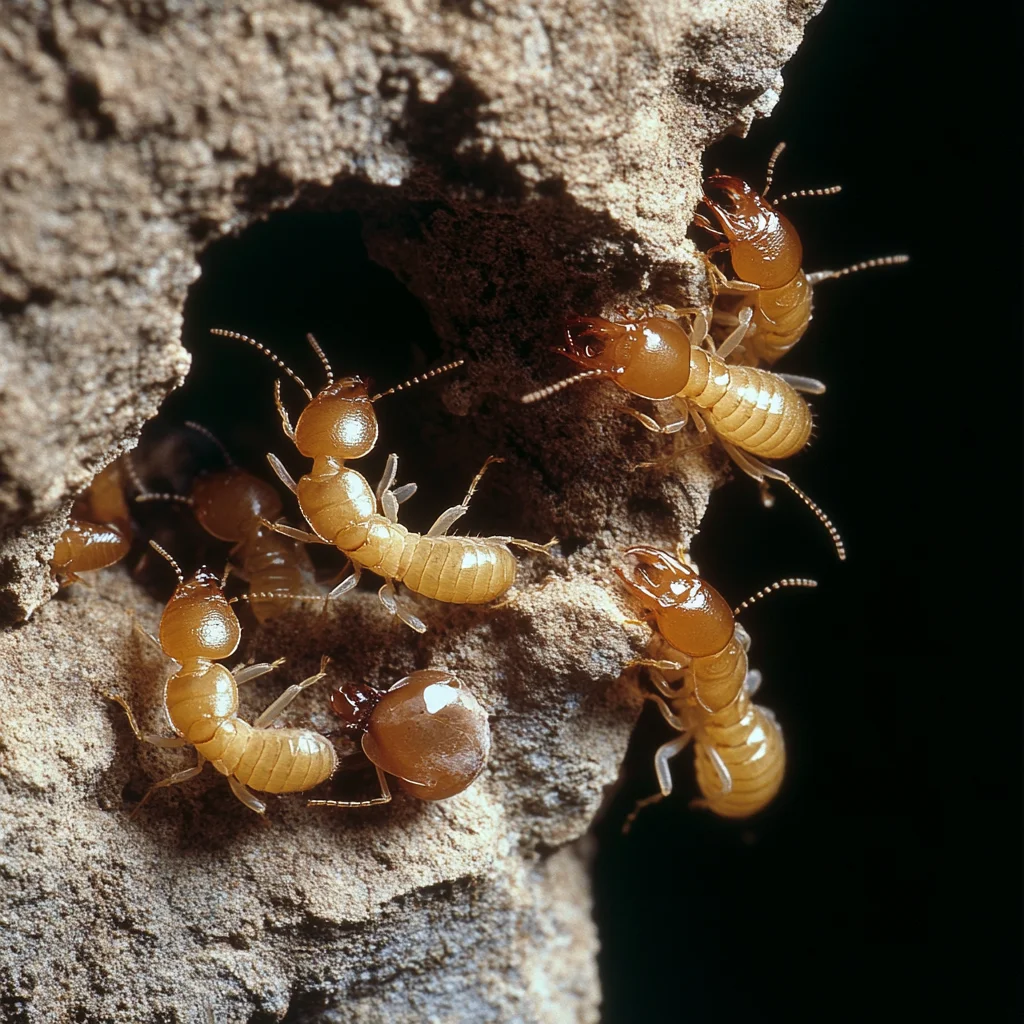
Subterranean and drywood termites both eat the wood in Southwest Florida homes, but they live differently, leave different evidence, and are treated differently. The main difference is where the colony lives: subterranean termites usually nest in the soil and travel to your house, while drywood termites live entirely inside the wood they eat. Knowing which one you’re dealing with is the first step, because, as UF/IFAS puts it, “the most important part of termite control is obtaining a correct identification”.
Side by side
| What to compare | Subterranean termites | Drywood termites |
|---|---|---|
| Where the colony lives | Usually in the soil. Workers build mud (shelter) tubes to reach wood above ground. | Entirely inside the wood. No contact with the ground is needed. |
| What the colony needs | Moisture; usually nests in the soil and reaches wood through mud tubes. | Water comes from the wood it eats and from its own metabolism. |
| Evidence you may see | Mud tubes on foundations, piers, or slab edges. Wood eaten along the grain, sometimes leaving a thin veneer. | Piles of six-sided fecal pellets (frass) and small kick-out holes, usually 1 to 2 mm across. Blistering or peeling of thin surface wood or paint. |
| Swarmers (statewide timing) | Eastern: early January to April, early afternoon. Formosan: early April to late June, just after sunset. | West Indian: flights April to June, possible any time of year. Cryptotermes cavifrons, a landscape species that doesn't infest structures, flies evenings all year (peak March to May) and can fly indoors from outside. |
| How professionals approach treatment | Soil termiticides (liquid barriers) or baits that contain insect growth regulators. | Wood replacement for localized damage, spot treatments, or larger options for whole-structure infestations. |
Sources: UF/IFAS publications IN369, IN278, IN236, IN537, and IN1277, linked below.
Table sources: UF/IFAS on native subterranean termites, the Formosan subterranean termite, the West Indian drywood termite, the native drywood termite Cryptotermes cavifrons, and termite prevention and control.
Which one is more likely at your house?
Both are present in Southwest Florida. For subterranean termites, the species local data point to as prevalent in Sarasota County is the Eastern subterranean termite (Reticulitermes flavipes), which UF/IFAS describes as native and found statewide. Its colonies may hold 100,000 to 1,000,000 termites and forage up to 150 feet. The invasive Formosan subterranean termite is, according to UF/IFAS, “primarily found in coastal cities” in Florida. Only a specimen identification can say which species is in a given yard.
For drywood termites, UF/IFAS describes the West Indian drywood termite (Cryptotermes brevis) as exclusively associated with structures and says it “has spread to many cities throughout the state.” The Florida drywood termite (Incisitermes snyderi) is common in the local landscape, but UF/IFAS says it lives mainly in dead tree branches, rarely infests structures, and is a minor pest.
Home type tends to shape the mix. Older wood-frame and heavy-trim homes on barrier islands and near the coast, with little or no wood-to-soil contact, tend toward drywood termites. Older inland neighborhoods with wood framing, slab foundations, and mulch banked against the house tend toward subterranean termites. That’s a pattern, not a rule, and any house with wood can have either.
How to read the evidence
- Mud tubes point toward subterranean termites. UF/IFAS describes shelter tubes as corridors that connect underground colonies to wood above ground, built from soil and saliva.
- Pellets and kick-out holes point toward drywood termites. UF/IFAS describes the pellets as hexagonal in cross section and ranging from cream through red to black. They are pushed out through the small kick-out holes and collect in little piles.
- Swarmers can come from either group. Timing varies by species, as the table shows, but the insect itself usually takes a close look to identify. Our termite swarmer guide covers what swarmers are and what to do when you find them.
These are clues, not a diagnosis. UF/IFAS notes that termite identification “usually requires a microscope or high-resolution camera, even for an experienced termite identifier.” If you can collect a few soldiers or winged reproductives in a small container, UF’s termite ID team accepts samples at no cost.
How treatment differs
The two groups call for different approaches, which is why a correct identification comes first.
Subterranean termites. Because the colony usually lives in the soil, UF/IFAS describes treatment as soil termiticides applied around the structure or baits containing insect growth regulators. Waves Pest Control’s subterranean program is built around in-ground bait stations that are monitored on a quarterly schedule.
Drywood termites. Baits aimed at subterranean colonies aren’t the tool here, because a drywood colony lives inside the wood. UF/IFAS describes options at three scales: whole structure, compartmental (such as an attic), and local (such as a windowsill), and notes that these infestations are difficult to deal with. Waves treats drywood termites with localized spot treatment. Waves does not perform tent or whole-structure fumigation; if a drywood infestation is beyond spot-treatment scope, Waves inspects, explains what it finds, and refers to a fumigation specialist.
Treatment is only part of the picture. Fixing the conditions that help termites also matters, especially for subterranean termites: remove wood-to-ground contact, fix leaks, direct A/C condensate and irrigation away from the foundation, and keep a gap of about 6 inches between mulch or soil and the bottom of wall siding, per UF/IFAS. These steps lower the odds of subterranean termites; they don’t make a house termite-proof, and they are aimed at subterranean termites, since drywood termites live inside wood without soil contact.
What to do next
If you think you’ve found either type, leave the evidence in place and have a licensed professional inspect. Waves Pest Control’s termite inspection covers the foundation, framing, attic, crawl spaces, perimeter, moisture areas, and garage, with species identification and photo documentation. You can read more about local service on our termite control in Bradenton page, and our drywood termite guide goes deeper on that group.
Frequently Asked Questions
What is the main difference between drywood and subterranean termites?
Subterranean termites usually nest in the soil and need moisture, reaching wood through mud tubes. Drywood termites live entirely inside the wood they eat and need no ground contact.
How can I tell which one I have?
Mud tubes suggest subterranean termites, while piles of six-sided pellets and tiny kick-out holes suggest drywood termites. These are clues, not proof. A licensed inspection, or a specimen sent for identification, is how you confirm the species.
When do drywood and subterranean termites swarm?
According to UF/IFAS, Eastern subterranean termites swarm from early January to April in the early afternoon, and Formosan termites from early April to late June after sunset. Drywood termites swarm mainly in spring, but flights are possible any time of year.
Do termite bait stations work on drywood termites?
Bait stations are a subterranean termite approach, because they target colonies that usually live in the soil. Drywood termites live inside the wood, so they are handled with localized treatments or other whole-structure or compartment options.
Does Waves Pest Control fumigate for drywood termites?
No. Waves treats drywood termites with localized spot treatment. If an infestation goes beyond spot-treatment scope, Waves inspects, explains honestly, and refers to a fumigation specialist.