
Which one is it? · Ants
Which Florida Ant Is This?
From the tiny ones trailing across a kitchen counter to fire ants and carpenter ants outside, compare Southwest Florida's ants side by side, then read the ID guide for the one that matches.
Acrobat Ant
Crematogaster spp.
Keep an eye on it
- Can sting
- Can bite
How to tell: Heart-shaped abdomen held up and forward over the back when the ant is disturbed
Bigheaded Ant
Pheidole megacephala
Keep an eye on it
How to tell: Sandy soil piles between pavers, along foundations, and in lawns
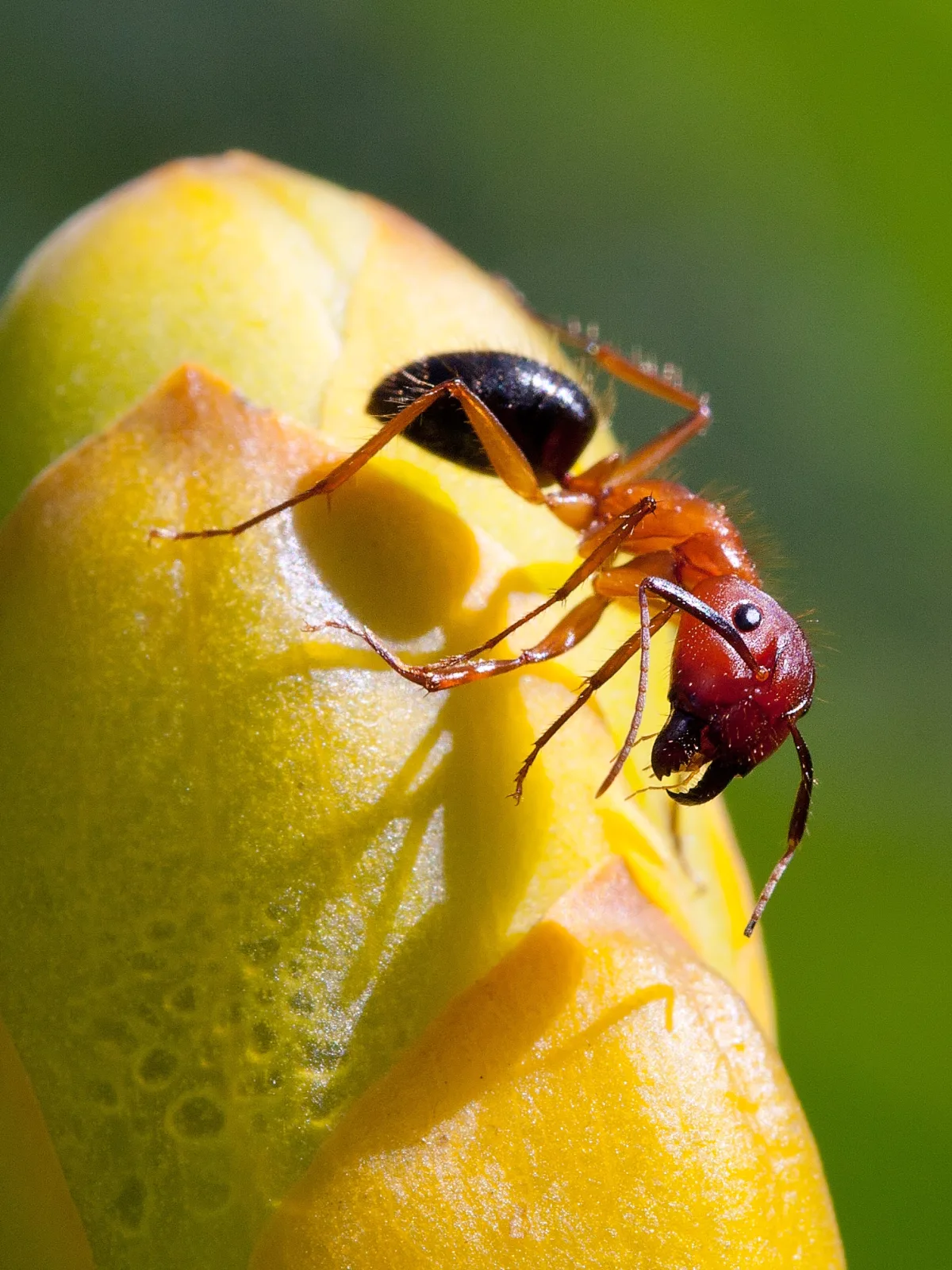
Florida Carpenter Ant
Camponotus floridanus
Worth a pro look
- Can bite
How to tell: Large — among the biggest ants seen indoors, bicolored reddish-orange head/thorax and black abdomen
Photo: User:MrX via Wikimedia Commons , CC BY-SA 3.0, resized.

Dark Rover Ant
Brachymyrmex patagonicus
Keep an eye on it
How to tell: Extremely small, dark brown, soft-bodied ant
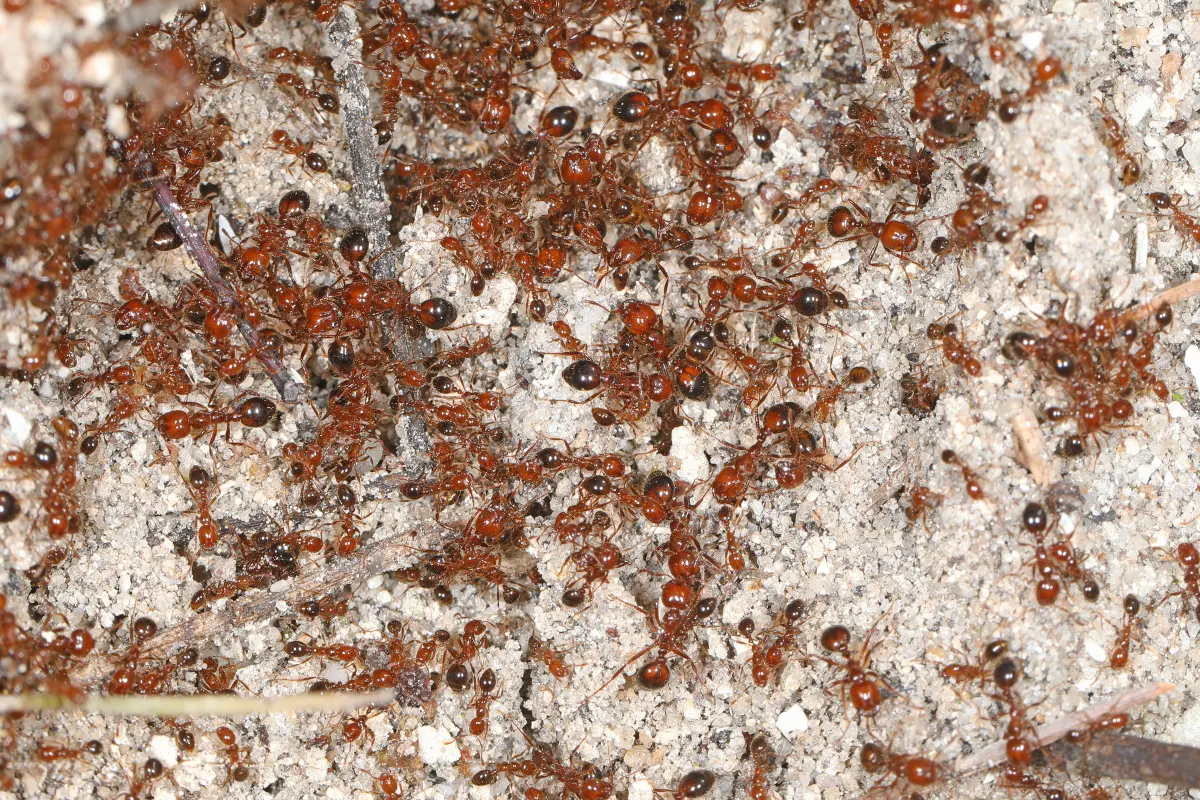
Red Imported Fire Ant
Solenopsis invicta
Worth a pro look
- Venomous — don't touch
How to tell: Fluffy dome mounds with no visible entry hole on top, often after rain
Photo: Judy Gallagher via Wikimedia Commons , CC BY 2.0, resized.
.jpg)
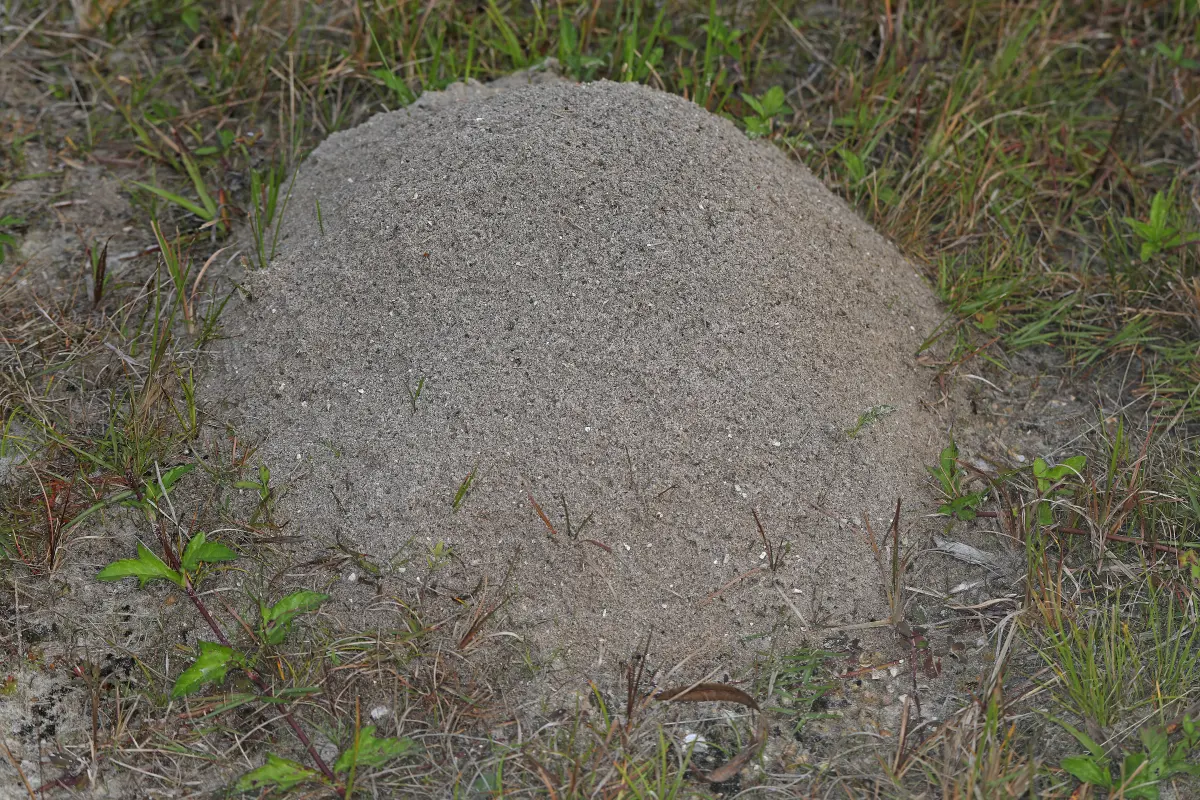
Fire Ant Mound
Solenopsis spp. (sign)
Worth a pro look
- Venomous — don't touch
How to tell: Loose, fluffy dome of soft dirt with no single visible entrance hole
Photo: Judy Gallagher via Wikimedia Commons , CC BY 2.0, resized.
.jpg)
Florida Harvester Ant
Pogonomyrmex badius
Keep an eye on it
- Venomous — don't touch
How to tell: Dark rust-red ants, larger than most yard ants, with an enlarged head on the biggest workers
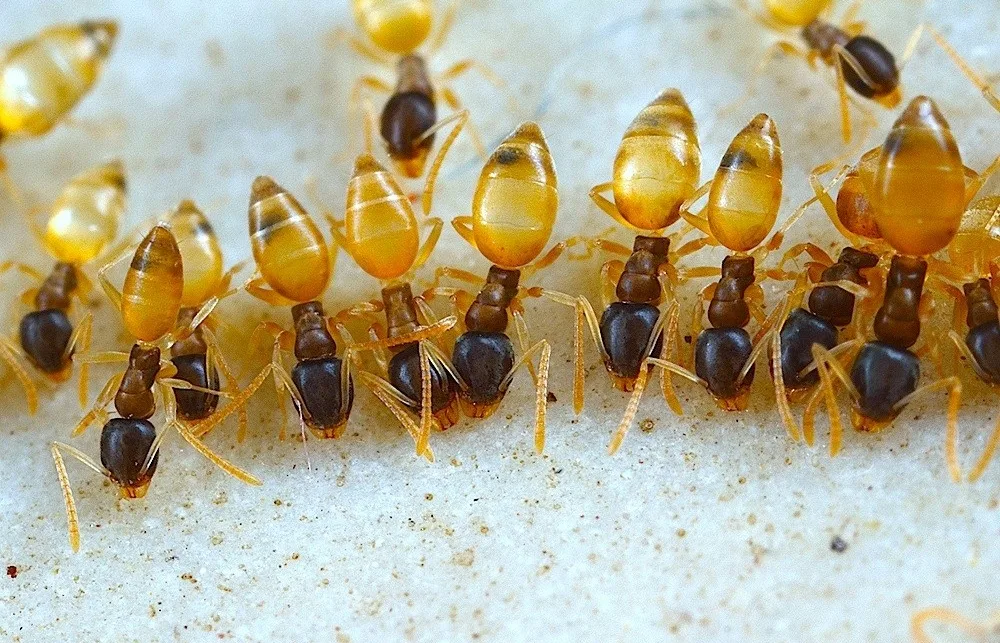
Ghost Ant
Tapinoma melanocephalum
Keep an eye on it
How to tell: Dark brown head and thorax with a pale, almost see-through abdomen and legs
Photo: Dr.Kalesh Sadasivan via Wikimedia Commons , CC BY-SA 3.0, resized.

Graceful Twig Ant
Pseudomyrmex gracilis
Keep an eye on it
- Can sting
How to tell: Slender, wasp-like ant about 1/3 inch long, noticeably larger than most household ants
Little Fire Ant
Wasmannia auropunctata
Worth a pro look
- Venomous — don't touch
- Toxic to pets
How to tell: Tiny, pale golden-brown ants, barely bigger than a pinhead
Longhorn Crazy Ant
Paratrechina longicornis
Keep an eye on it
- Can bite
How to tell: Dark brown to black body with unusually long legs and antennae
Pharaoh Ant
Monomorium pharaonis
Worth a pro look
How to tell: Very small, pale yellow to light reddish-brown ants
Pyramid Ant
Dorymyrmex spp.
Helpful — leave it
How to tell: Small, fast-moving, light orange to reddish-brown ant
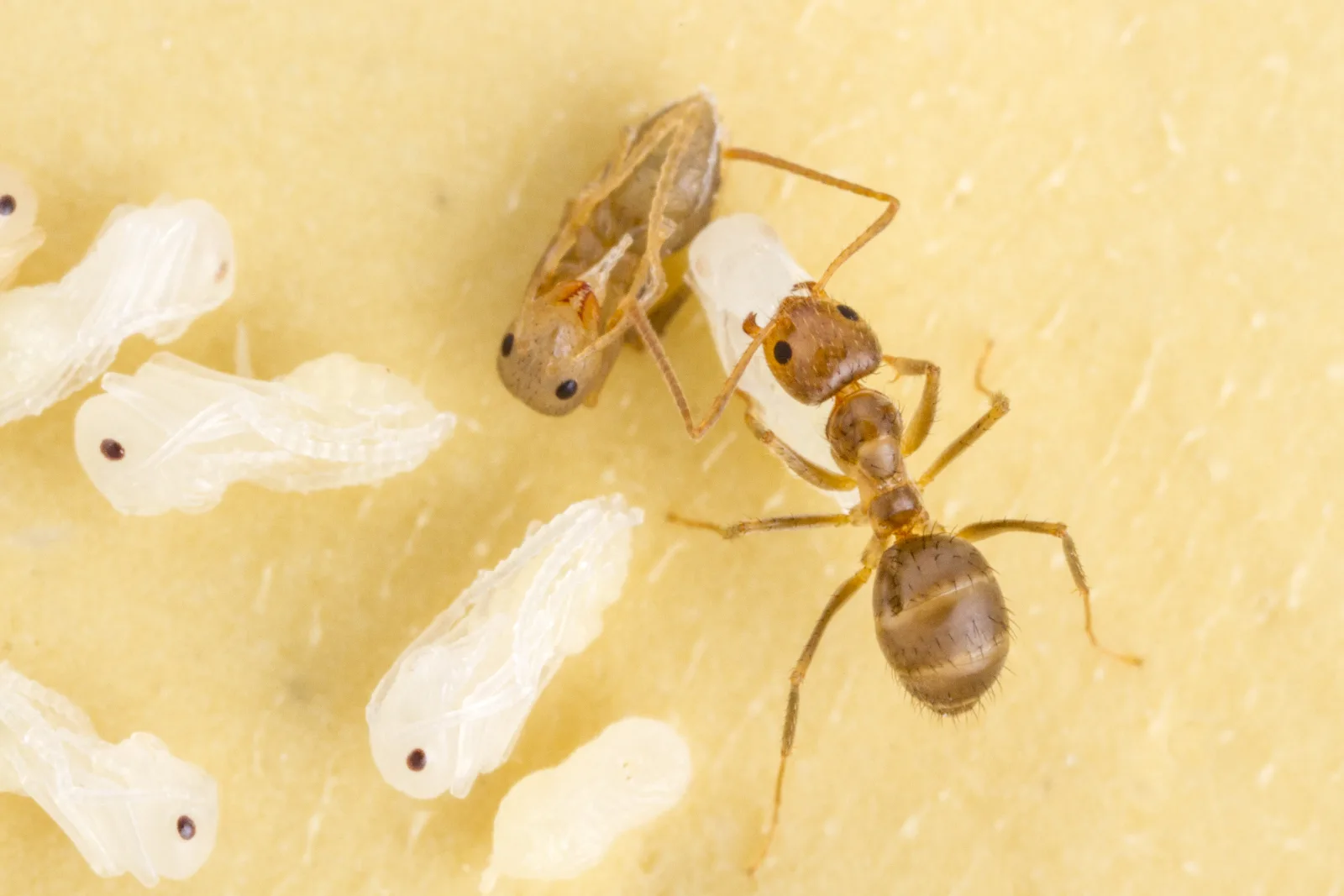
Tawny Crazy Ant
Nylanderia fulva
Worth a pro look
How to tell: Erratic, zigzag "crazy" running — never forms a neat trail
Photo: Insects Unlocked via Wikimedia Commons , CC0, resized.
.jpg)
Thief Ant
Solenopsis molesta
Keep an eye on it
How to tell: Extremely tiny, pale yellow to light brown ant
Trap-jaw Ant
Odontomachus spp.
Keep an eye on it
- Can sting
- Can bite
How to tell: Long, straight, trap-like jaws held wide open at rest
Tropical Fire Ant
Solenopsis geminata
Worth a pro look
- Venomous — don't touch
How to tell: Reddish-brown ants of mixed sizes in the same trail
White-footed Ant
Technomyrmex difficilis
Keep an eye on it
How to tell: Black body with pale yellowish-white feet (look closely at the last leg segment)
Winged Ants (swarmers)
Formicidae (reproductives)
Keep an eye on it
How to tell: Four wings, with the front pair clearly longer than the back pair
Still Not Sure Which One You Have?
Text a photo and a licensed local tech will help you identify it for free. Some look-alikes can only be told apart in person, so we'll say if it needs an inspection. Or get a real price online in about 60 seconds.