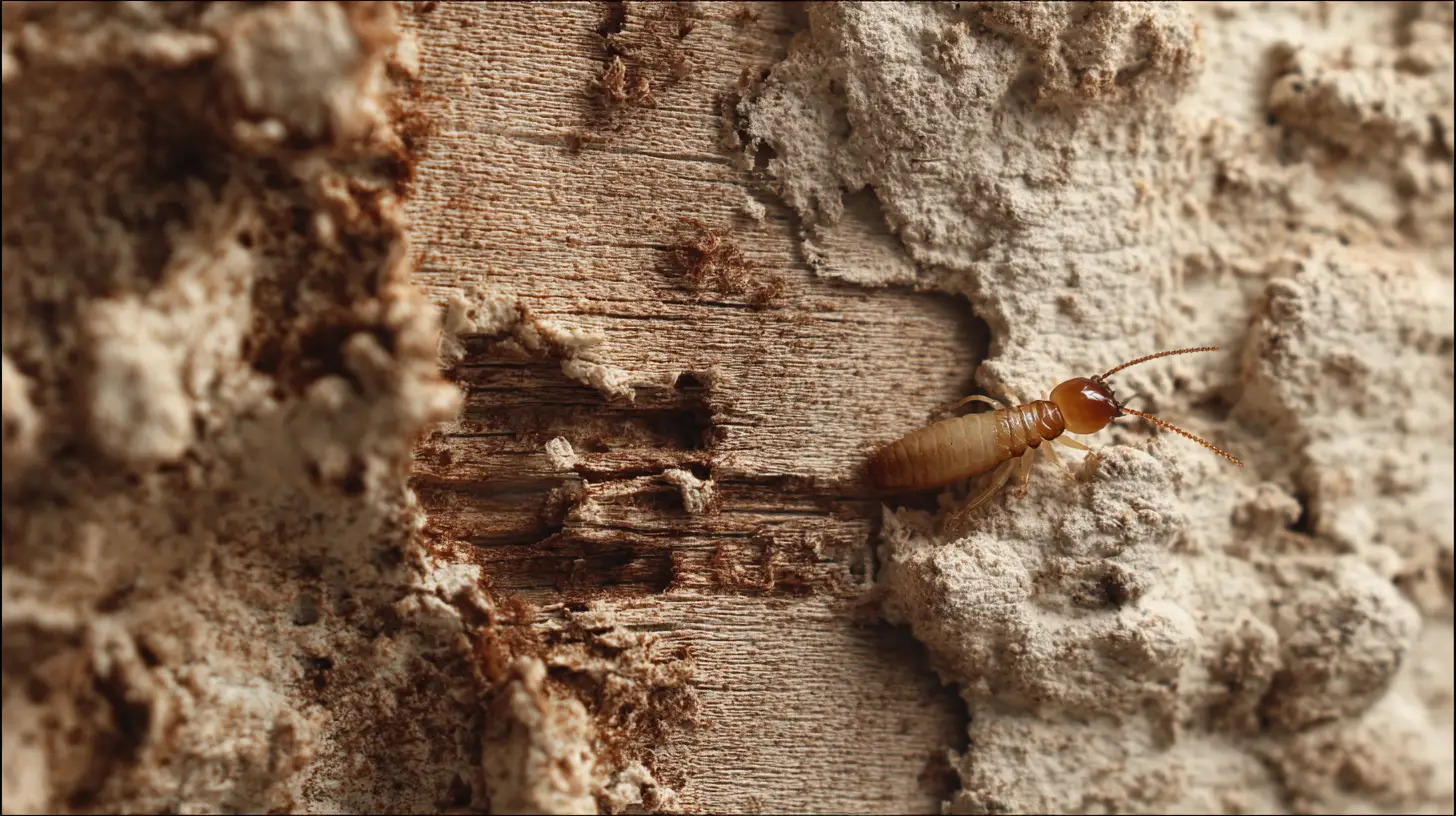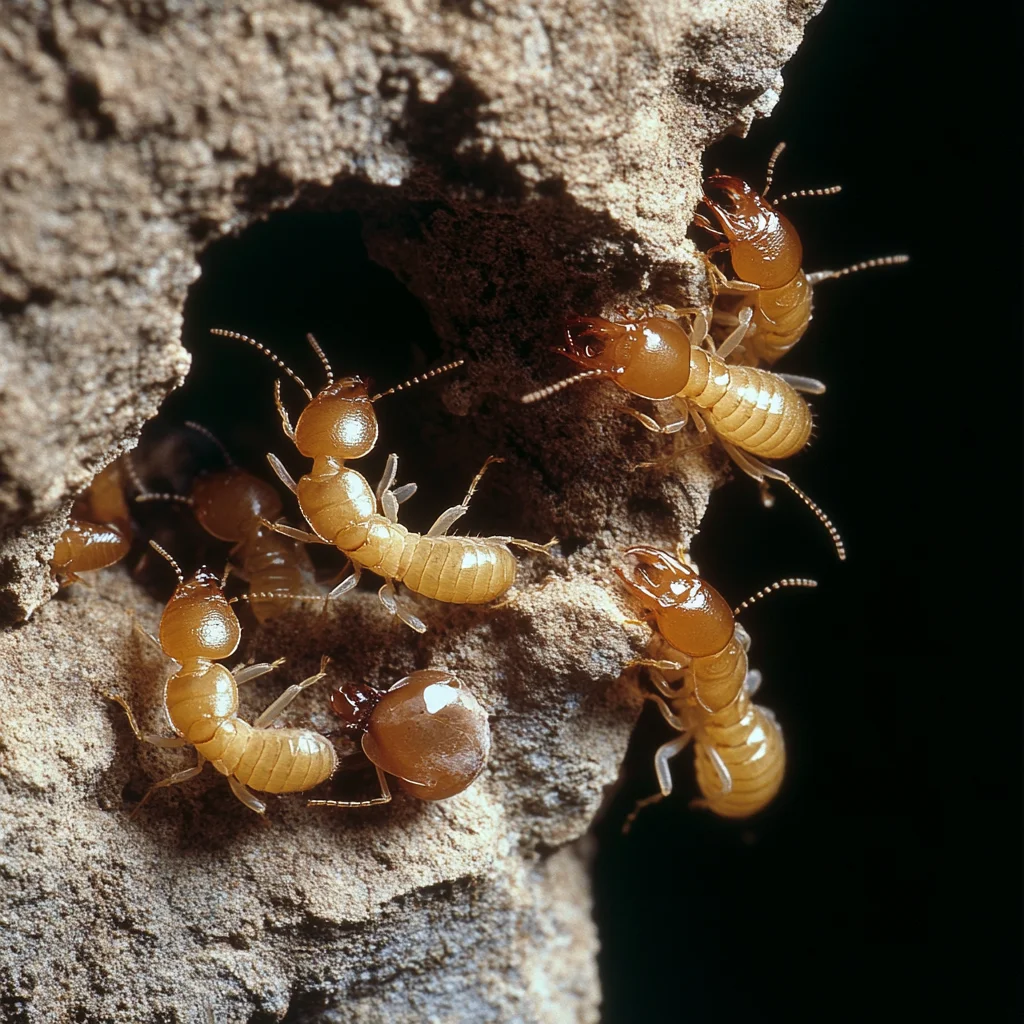
If you’ve spent any time Googling termites, you’ve bumped into Sentricon. It’s the bait-station name people ask for by brand, the way folks ask for a Kleenex instead of a tissue. And in Southwest Florida, where native subterranean termites swarm from late winter into spring, usually on a warm afternoon after rain (UF/IFAS), it’s a fair thing to be curious about. Sandy soil, afternoon storms, and slab homes sitting a few feet above the water table? That’s a termite buffet. So yes, bait stations are worth understanding before you sign a contract.
Quick heads-up before we dig in: Sentricon is one specific brand of in-ground bait station, made by Corteva. It works. It’s also not the only bait system on the market, and it’s not one we install. We’ll get to that. First let’s talk about how the whole category actually works, because once you understand the mechanism, you can compare any two brands on their merits instead of their marketing.
Need eyes on your property this week? Get a termite inspection scheduled — swarm season doesn’t wait for your calendar.
What Sentricon actually is (and what it isn’t)
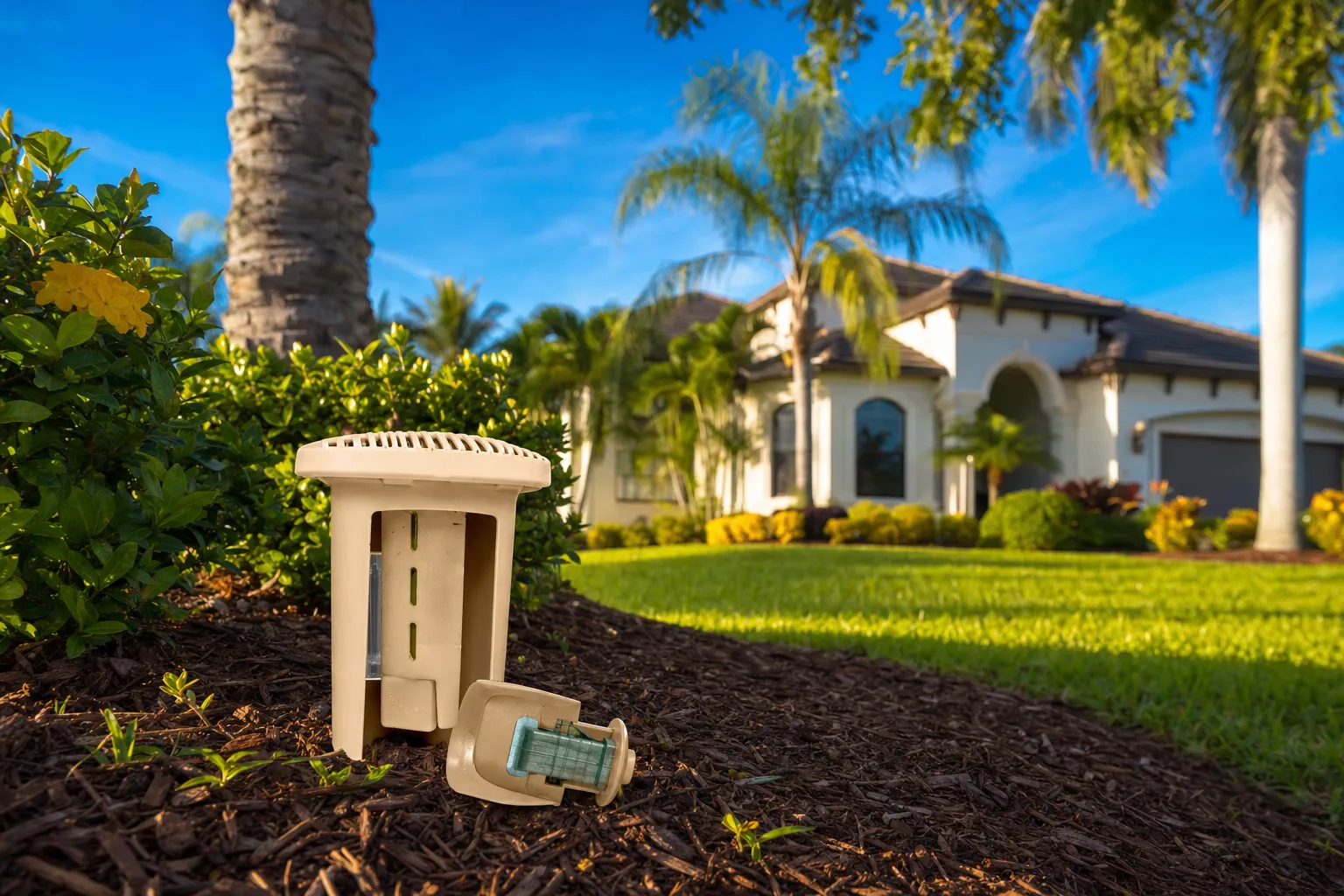
Sentricon is an in-ground termite baiting system from Corteva (previously Dow AgroSciences). It launched commercially in 1995 as an alternative to trenching your foundation and pumping it full of liquid termiticide (EPA). The stations are plastic housings set into the soil in a ring around your home, flush with the ground so you barely see them. Inside each one is a cellulose bait (Corteva calls it up to 10 times more desirable to termites than wood) containing a small amount of noviflumuron, a chitin synthesis inhibitor.
Here’s the elegant part: termites forage 24/7 looking for cellulose. When workers stumble onto a Sentricon station, they eat, and then they head home and share via trophallaxis — the mouth-to-mouth food-sharing behavior that termites use to feed the queen, the soldiers, and the nymphs. Noviflumuron rides along. It doesn’t kill on contact; it blocks the termites’ ability to molt. Every subterranean termite molts multiple times as it grows. If it can’t molt, it dies. Multiply that across the whole colony and the colony collapses. Corteva says elimination follows within weeks of termites feeding on a station (Corteva); how fast it happens depends on how quickly termites find the stations.
A few things Sentricon is not:
- It’s not a repellent. Termites don’t know they’re being poisoned. That’s the point — no avoidance behavior.
- It’s not a barrier. A liquid treatment like Termidor SC creates a treated soil zone that kills termites as they pass through. Bait works differently: it lets termites find it, feed, and haul the active ingredient home. You’re killing the colony, not just the individuals that touched your foundation.
- It’s not a one-and-done. Bait systems have to be monitored and serviced on a schedule. Corteva’s label for its Always Active bait allows service once a year, and some specialists come more often (Corteva). Skip the service, and you’re just a homeowner with plastic tubes in the yard.
Why bait stations make sense in Southwest Florida
Liquid perimeter treatments are still an excellent tool, and Waves does liquid treatments too. But SWFL throws a few curveballs that make bait systems especially useful:
- Sandy soil. Sand drains fast. Liquid termiticides hold up well when applied correctly, but if you’ve got heavy irrigation or a low-lying lot that gets seasonal standing water, a bait system is less affected, because the active ingredient stays inside the station.
- Slab construction and finished landscaping. Trenching around a paver patio or a mature Bougainvillea bed is a mess. Bait stations go in with a soil auger and leave your yard alone.
- Formosan and native subterranean species. Both are established in Florida. Bait targets the whole colony, which matters more when you can’t see where the nest is.
- Year-round pressure. Termites in SWFL don’t take winters off. Continuous, monitored bait gives you 12-month coverage rather than a chemical zone whose potency drifts down over years.
Seasonal pressure
Subterranean termite pressure in Southwest Florida
- Late winter Jan–FebBuilding
Eastern subterranean swarms can start in January on warm, still afternoons, usually after rain.
- Spring Mar–MayPeak
Native subterranean swarms continue into spring, and one species flies into late May. Wings pile up on sills, lanais, and near lights.
- Summer / rainy season Jun–SepActive
Native swarms are done, but foraging continues below ground; slab-edge moisture keeps colonies close to the house.
- Fall & early winter Oct–DecLower (not zero)
Mild winters mean colonies keep feeding, so monitored bait stays on duty year-round.
Spring run hottest. Subterranean termites stay active year-round in Southwest Florida. Native species swarm from about January through May, usually on a warm afternoon after rain.
Pro tip: If a company tells you a single liquid treatment is a “lifetime” solution, ask when it was applied and when it should be reapplied. Every liquid termiticide breaks down over time, and how long it lasts depends on the product, the soil, and how the treatment was done. Bait systems are upfront about that: you’re on a monitoring schedule for as long as you want protection, because that’s how the tool works.
What we install (and why we’re telling you this in a Sentricon article)
Waves installs two bait systems. Trelona ATBS, made by BASF, uses 0.5% novaluron as its active ingredient (BASF). Hex-Pro, a Corteva system, uses hexaflumuron (Corteva). Both sit in the same category as Sentricon: in-ground bait stations with a chitin synthesis inhibitor. Noviflumuron, novaluron, and hexaflumuron are all IRAC Group 15 insect growth regulators. They target the same biological choke point, molting, and they spread through the colony the same way, through trophallaxis.
Why not Sentricon? A few practical reasons:
- Who can sell it. Sentricon can only be sold and serviced by Certified Sentricon Specialists, Corteva’s authorized network (Corteva). Waves isn’t part of that network, so we install and service Trelona and Hex-Pro ourselves.
- Same class of chemistry. These actives are cousins. All are chitin synthesis inhibitors registered with EPA for structural termite use, and they do the same job through the same door.
- It fits the rest of your program. Our termite bait program pairs with a general pest control plan, and termite bait counts toward your WaveGuard membership tier. One tech, one calendar, one call if something looks off.
Your home, zone by zone
Termite inspection & bait placement, zone by zone
A typical Southwest Florida home — the numbered zones a local tech walks on every visit.
- Bait-station line Stations augered every 10 to 20 feet along the slab perimeter, flush with the soil.
- Door jambs & thresholds Tap-tested for the papery sound of hollow, termite-damaged wood.
- Fascia & exterior trim Soft or blistered wood up top gets probed, not painted over.
- Weep holes & stucco cracks Gaps termites use to tube up behind the veneer unseen.
- Garage & form boards Leftover construction wood and slab joints are classic entry points.
- Lanai & pool cage Where swarmer wings pile up during spring flights.
- Mulch beds & wood-to-soil contact Mulch piled against the stem wall is a covered highway to your siding.
- Interior baseboards Checked for bubbling paint and hollow trim along the wall line.
- Plumbing penetrations Slab gaps around pipes let termites surface inside the house.
- Attic & top plates Overhead framing gets a look on full WDO inspections.
Bait stations sit every 10 to 20 feet around your home's perimeter, flush with the soil. We map placement to your specific lot before we auger anything.
If a Sentricon dealer quotes you a price you like and you’d rather go with them, that’s a completely reasonable choice — the tool works. Our pitch isn’t “our bait is better.” It’s “you don’t have to lock into one brand to get colony-level control, and here’s what the alternatives look like.”
Southwest Florida homeowner playbook
You don’t need a pest license to keep an eye on your own home. Here’s the honest, non-alarmist version of what to actually do.
What termite activity looks like:
- Mud tubes. Pencil-width tunnels of dried mud running up your foundation, block walls, or piers. Subterranean termites build these to travel between soil and wood without drying out.
- Swarmers and wings. From about January through May, usually on a warm afternoon after rain, you may find piles of small, translucent wings on window sills, in the pool cage, or near exterior lights. Swarmers are the reproductive caste leaving to start new colonies.
- Wood that sounds hollow. A screwdriver or the butt of a flashlight, tapped along baseboards, door jambs, and window frames. Termite-damaged wood sounds papery and thin.
- Bubbling or blistered paint. Especially at the base of interior walls. Often mistaken for moisture damage — sometimes it’s both.
Safe DIY checks:
- Walk your foundation once a quarter. Look for mud tubes and any wood-to-soil contact (deck posts, form boards, mulch piled against siding).
- Keep mulch pulled back from the stem wall so you can see the slab edge.
- Fix leaking irrigation heads and A/C condensate lines that puddle against the house.
- Store firewood and construction scraps off the ground and away from the structure.
On every inspection
What we check on a termite inspection
- Mud tubes Pencil-width soil tunnels up the foundation, block walls, or piers.
- Swarmer wings Piles of translucent shed wings on sills, lanais, and near lights.
- Hollow wood Baseboards and jambs that sound papery when tapped.
- Blistered paint Bubbling at the base of walls — moisture, termites, or both.
- Wood-to-soil contact Deck posts, form boards, and scrap wood touching the ground.
- Moisture spots Leaky irrigation heads and A/C lines puddling at the slab.
- Entry gaps Stucco cracks and slab joints that give foragers a path in.
- Mulch depth Mulch should be pulled back off the stem wall so the slab edge stays visible. Often it isn't.
What our techs look for on a Southwest Florida termite inspection — none of this requires a chemistry degree to spot.
What not to do:
- Don’t spray retail termite sprays into a mud tube. You’ll scatter foragers, they’ll rebuild somewhere else in the wall, and you’ve made the colony harder to find, not smaller.
- Don’t count on retail stake-style bait stations. Professional systems are installed and serviced on a schedule because station placement, spacing, and inspection cadence are the whole ballgame. Sentricon, for example, is registered for professional use only. A row of stations put in wrong just wastes bait.
- Don’t tear open drywall to “look for the nest.” Subterranean colonies live in the soil, not in your wall. What you’d find is the damage, not the source.
When to call:
- You found swarmers or wings inside the house.
- You see mud tubes anywhere on the exterior or interior.
- You’re buying a home and need a WDO/WDI report (bank required or otherwise).
- You’ve had a treatment expire and haven’t been on a monitoring or renewal program since.
If you want a ballpark before you call, our pest control calculator will give you a real-time estimate based on square footage and service — no phone tag required. If you’d rather just talk to a human, (941) 297-5749 rings our local Southwest Florida team.
Frequently Asked Questions
How long does Sentricon last?
Sentricon’s Always Active bait is designed to stay in the station between service visits, and Corteva’s label allows service once a year, with more visits if needed. As a system, it stays in the ground for as long as you keep the service going. Trelona’s label also allows annual checks. Either way, the moment you stop monitoring, you stop having termite protection.
Is Sentricon better than Termidor?
They’re different tools, not better or worse. Termidor SC (fipronil) is a non-repellent liquid termiticide applied as a soil treatment around your foundation — it kills termites that pass through the treated zone. Sentricon (noviflumuron) and Trelona (novaluron) are bait systems that eliminate the colony from the inside. For a home with active termite activity and complex landscaping, bait usually wins on convenience. For pre-construction and simple perimeters, liquid is often faster and cheaper. Many SWFL homes benefit from both — a liquid barrier plus a bait system for colony-level knockdown.
Is Sentricon worth the money?
The right question is: is a monitored bait program worth the money? If your alternative is nothing, or an old liquid treatment nobody has checked in years, then yes. Termite repairs can cost far more than monitoring. If you already have a current, warrantied liquid treatment and no signs of activity, layering bait on top is optional. If you’d like a straight answer for your specific home, we’ll inspect it and tell you which tool actually fits — including telling you if you don’t need one right now.
Ready for a real look at your home?
If you’re in Sarasota, Bradenton, Venice, North Port, Port Charlotte, or anywhere in between and you want a subterranean termite inspection that ends in an honest recommendation — not a scripted upsell — book a visit. We’ll walk your foundation, check the slab perimeter, look for the mud tubes and swarmer evidence above, and tell you whether a bait system, a liquid barrier, or a combined program is the right call.
Request your termite inspection or dig deeper into what to expect from each pest we treat before you decide.
Termites are patient. So are we. Beat them to the punch.