
Which one is it? · Spiders
Which Florida Spider Is This?
Big and fast on a wall, low and stocky in the mulch, or strung up in an orb web between the palms — Southwest Florida's spiders sort into a handful of look-alike groups. Compare every one we've verified, then read the ID guide for the closest match.
No recluse spider is established in Southwest Florida — the "brown recluse" reported here is almost always a wandering male southern house spider or a yellow sac spider. See our huntsman spider guide, which compares the brown recluse with both look-alikes side by side.
Southern Black Widow
Latrodectus mactans
Worth a pro look
- Venomous — don't touch
How to tell: Glossy jet black body with a red hourglass mark on the underside of the abdomen
Brown Recluse
Loxosceles reclusa
Keep an eye on it
- Venomous — don't touch
How to tell: Plain tan to dark brown spider with a darker violin-shaped marking on the head/shoulder area
Brown Widow
Latrodectus geometricus
Keep an eye on it
- Venomous — don't touch
How to tell: Tan to brown with an orange hourglass underneath (less bold than the black widow’s red)
Cellar Spider
Pholcidae
Helpful — leave it
- Can bite
How to tell: Small, pale grayish body with extremely long, thin, delicate legs
Crab Spider
Thomisidae
Helpful — leave it
- Can bite
How to tell: Front two pairs of legs are noticeably longer and held out to the sides, crab-like
Golden Silk Orb-weaver
Trichonephila clavipes
Helpful — leave it
- Can bite
How to tell: Large yellow-and-tan spider, females 24-40 mm, in a huge wheel web across paths
Green Lynx Spider
Peucetia viridans
Helpful — leave it
- Venomous — don't touch
How to tell: Bright green body with fine black spines and specks, blending in with leaves and stems
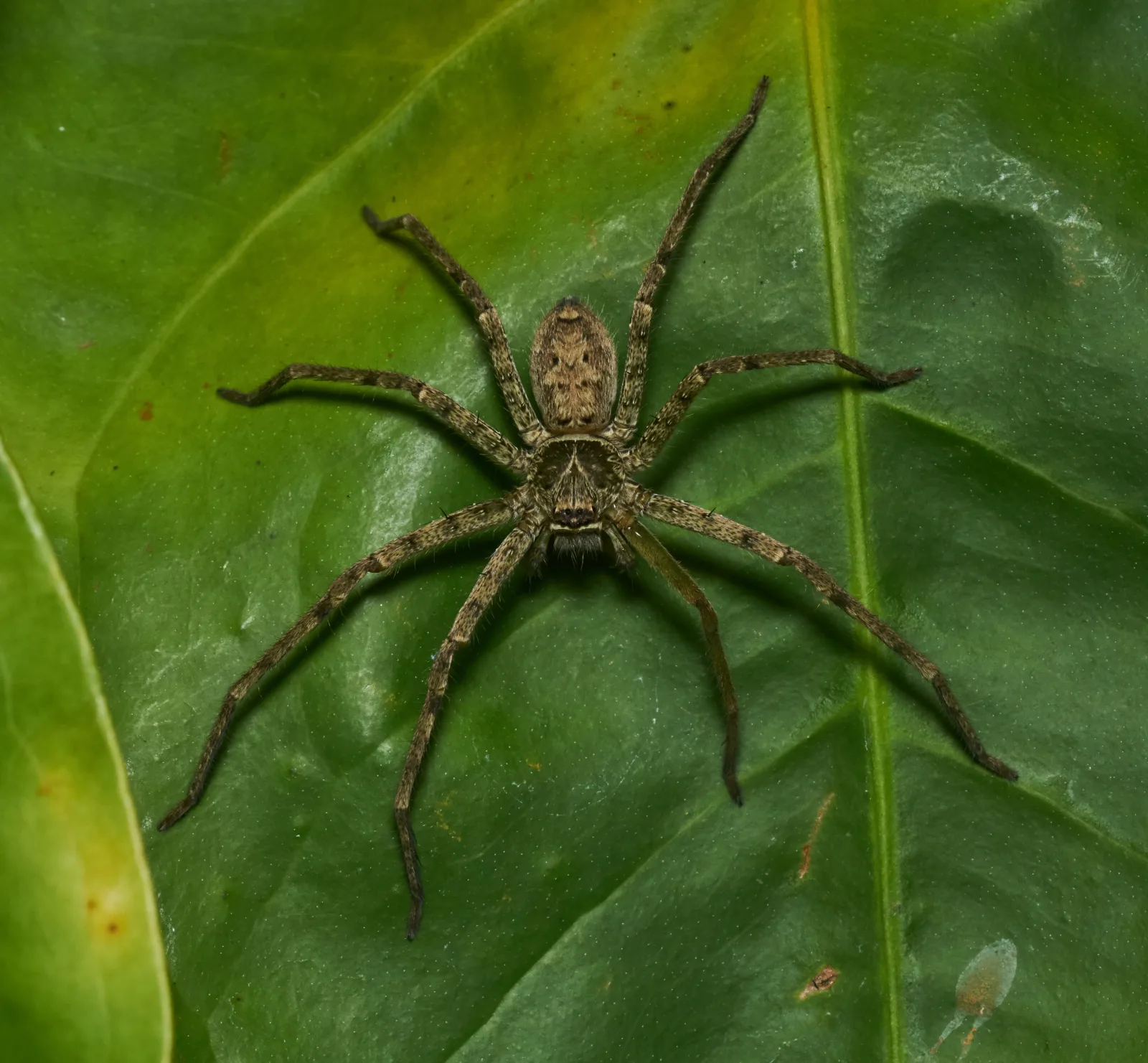
Huntsman Spider
Heteropoda venatoria
Helpful — leave it
- Can bite
How to tell: Very large, flat body about 1 inch long with a 3-5 inch leg span
Photo: Jeevan Jose, Kerala, India via Wikimedia Commons , CC BY-SA 4.0, resized.
.jpg)
Orchard Orb-weaver
Leucauge argyrobapta
Helpful — leave it
- Can bite
How to tell: Small, slender, elongated abdomen, silvery-white with dark lines down the back and reddish-orange marks underneath
Regal Jumping Spider
Phidippus regius
Helpful — leave it
- Can bite
How to tell: Large, fuzzy spider with big, forward-facing eyes and an alert, curious posture
Southern House Spider
Kukulcania hibernalis
Harmless
- Can bite
How to tell: Females are dark brown to black, compact, and stay hidden in a crack or crevice with a small tangled web around the entrance
Spinybacked Orb-weaver
Gasteracantha cancriformis
Helpful — leave it
- Can bite
How to tell: Small, flat, hard shell-like abdomen shaped like a crab, white or yellow with black spots
Tropical Orb-weaver
Eriophora ravilla
Helpful — leave it
- Can bite
How to tell: Plump, dull brown to gray spider with a rounded, humped abdomen
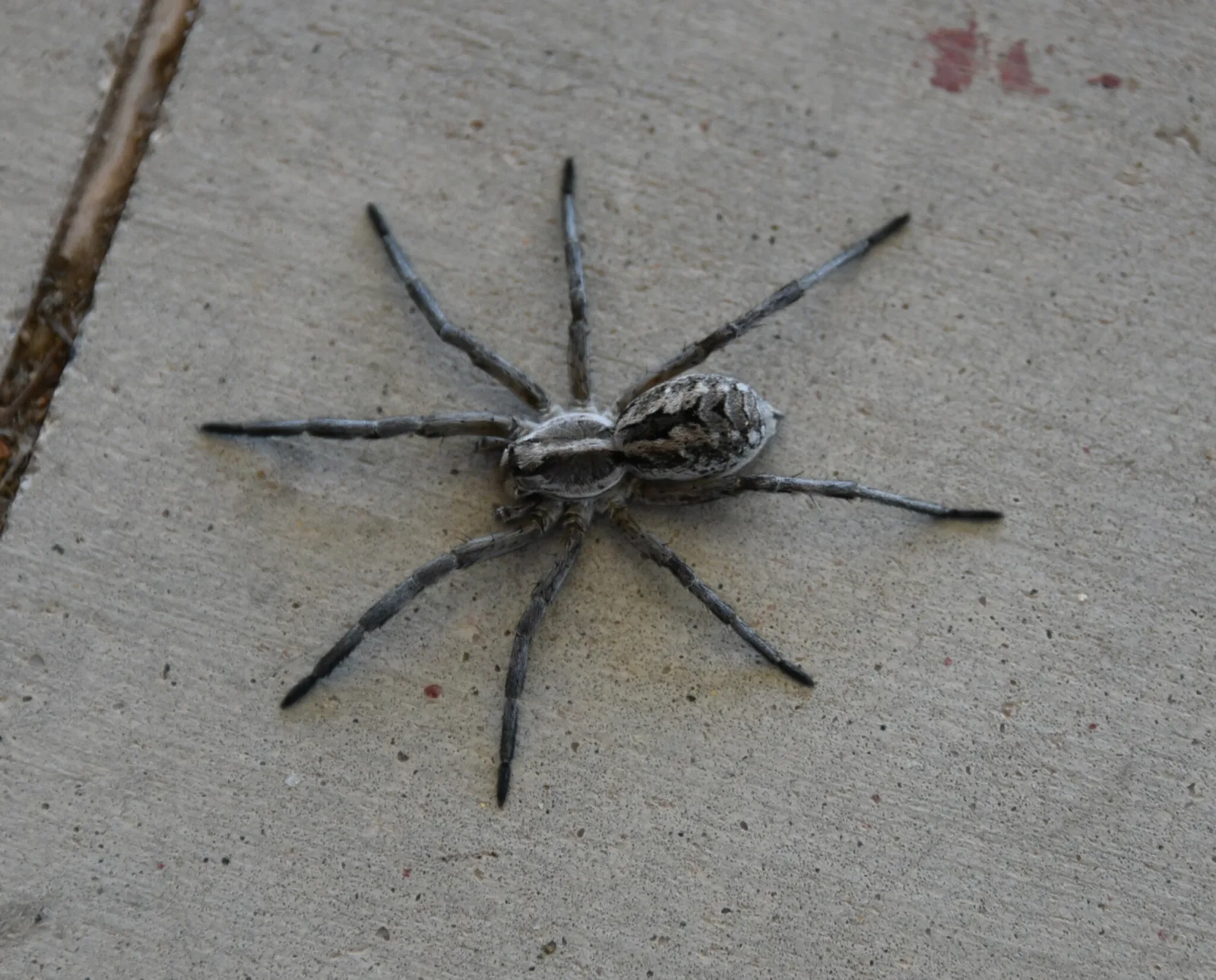
Wolf Spider
Lycosidae
Helpful — leave it
- Can bite
How to tell: No web — hunts on the ground at speed
Photo: codystricker via iNaturalist , CC BY 4.0, resized.
Yellow Garden Spider
Argiope aurantia
Helpful — leave it
- Can bite
How to tell: Large spider with a bold black-and-yellow patterned abdomen and a mostly white front section
Yellow Sac Spider
Cheiracanthium inclusum
Keep an eye on it
- Venomous — don't touch
How to tell: Small, pale yellow-beige spider with noticeably darker tips on the legs and jaws
Still Not Sure Which One You Have?
Text a photo and a licensed local tech will help you identify it for free. Some look-alikes can only be told apart in person, so we'll say if it needs an inspection. Or get a real price online in about 60 seconds.