If you think you found a brown recluse in your Lakewood Ranch home, take a breath. Brown recluses aren’t established in Lakewood Ranch, and University of Florida entomologists have found no evidence they’re established anywhere in the state. The brown spider in your garage is almost certainly something else, and usually something harmless.
Here’s what the University of Florida says, which spiders get mistaken for recluses, how to tell them apart, and what to do in the rare case you really have one.
What UF/IFAS says about brown recluses in Florida
The University of Florida’s entomologists have looked at this closely. Their brown recluse fact sheet puts it plainly: “There is no evidence to support either the notion that a widespread population of brown recluse spiders exists in Florida or that there are numerous introductions of brown recluse into the state” (UF/IFAS).
The verified records of brown recluses and related spiders cover just eight of Florida’s 67 counties: Alachua, Bay, Dade, Duval, Jefferson, Leon, Orange, and Osceola. Neither Manatee nor Sarasota County is on the list. Most records were one or two spiders that rode in with someone’s belongings, not a local population.
A newer UF/IFAS guide agrees: “There is currently no scientific evidence to suggest that any recluse spider is established in Florida” (UF/IFAS). The Florida Department of Agriculture adds that no recluse species is native to the state (FDACS).
What you probably found instead
Two Florida spiders get mistaken for brown recluses more than any others, according to UF/IFAS.
Southern house spider
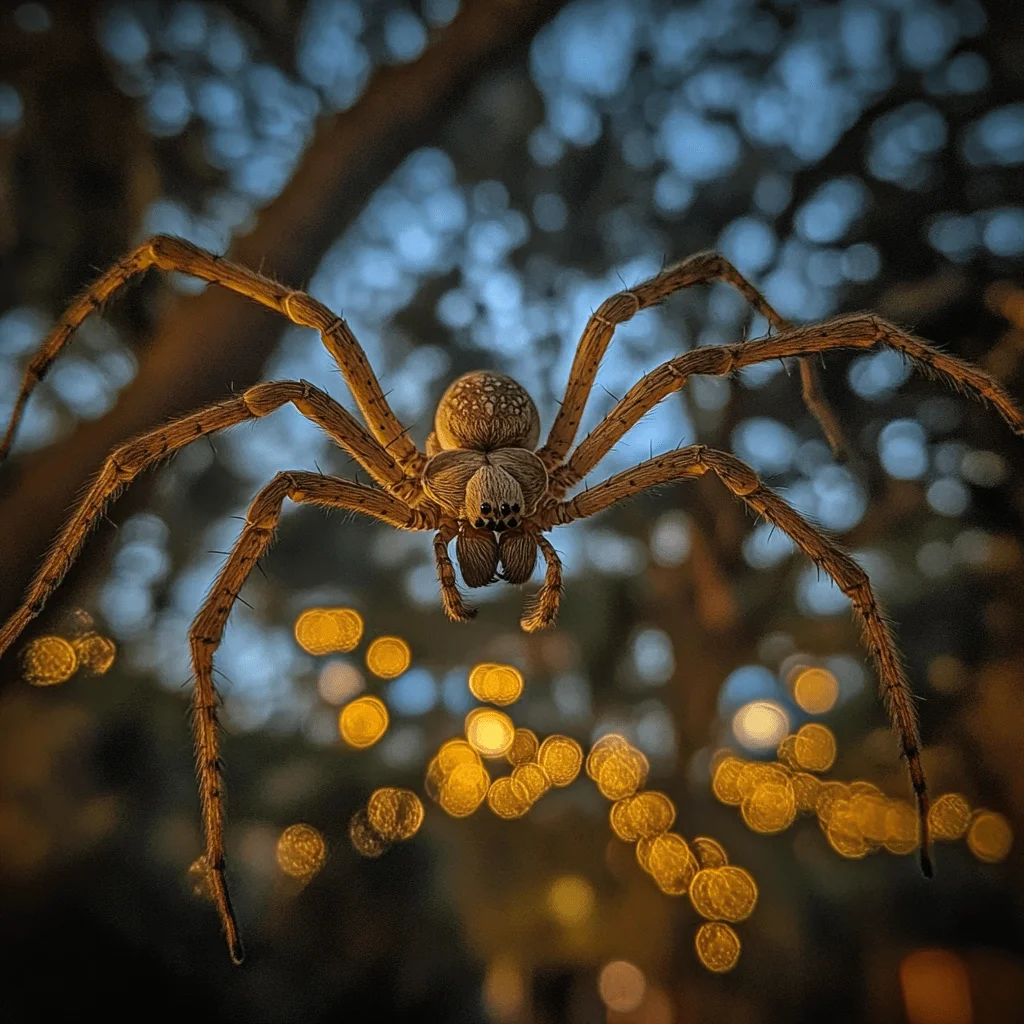
The males are brown, long-legged, and wander around at night looking for females, which is exactly when you spot them on a wall or floor. UF/IFAS notes that male southern house spiders are “frequently confused with the brown recluse.” The females stay put in flat, messy webs around window frames, eaves, and cracks. Neither is a threat to you.
Huntsman spider
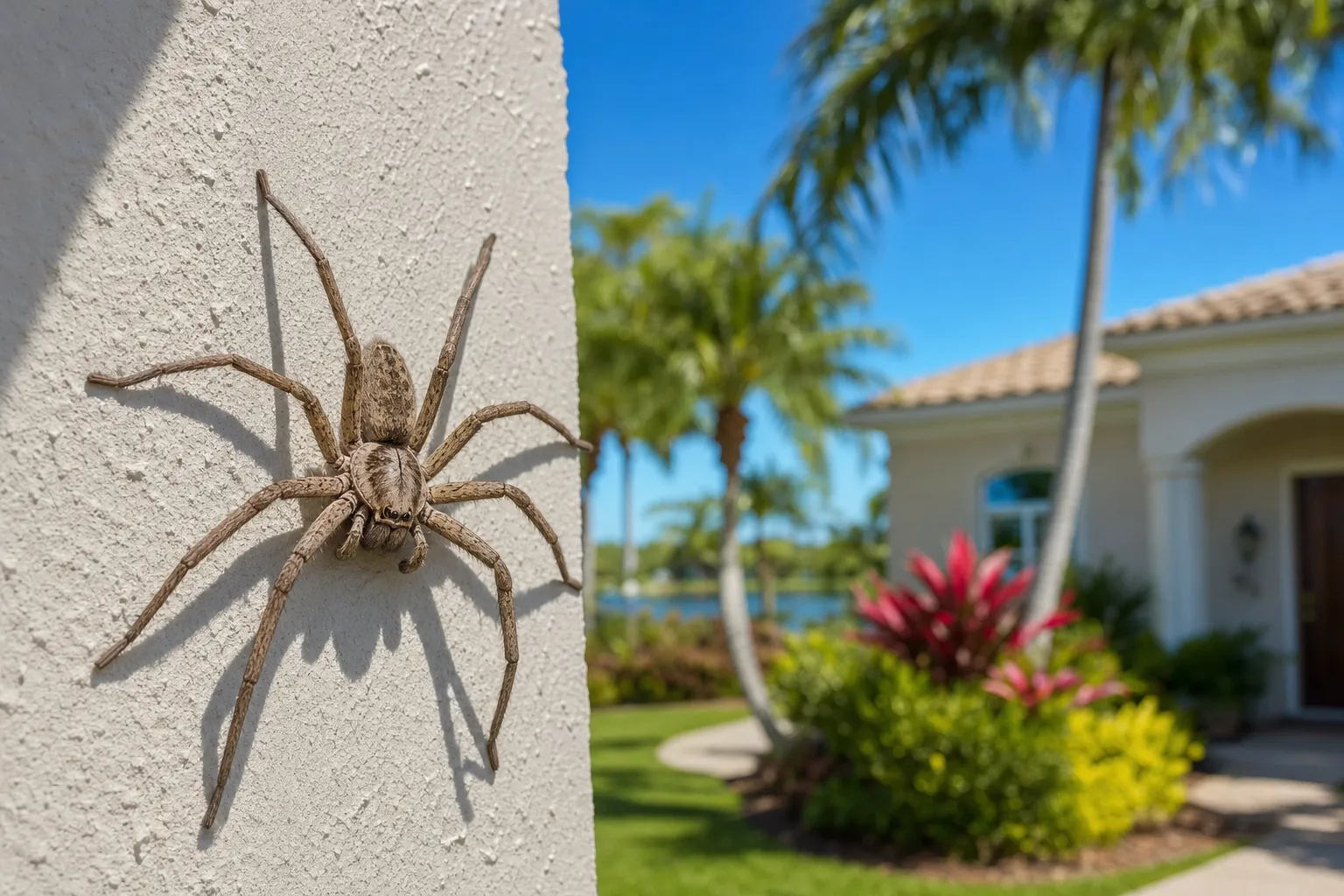
Huntsman spiders are big, flat, and fast, with legs that splay out to the sides like a crab’s. They turn up in garages and on walls at night, and their size alone can make them look dangerous. They’re not considered medically important. Our Florida huntsman spider guide has photos.
Not sure what you’ve got? Our Florida spider ID guide and common house spiders in Southwest Florida walk through the usual suspects.
How to tell a brown recluse from a lookalike
The most reliable clue is the eyes, not the famous “violin” mark:
- A brown recluse has six eyes, arranged in three pairs in a curved row.
- Most spiders have eight eyes. The southern house spider, for example, has eight eyes clustered together at the front of its head.
- The violin mark is a weak clue. Recluses do have a dark violin shape on the front body section, with the neck pointing back toward the abdomen. But plenty of harmless brown spiders have markings that look similar.
You’ll need a magnifying glass or a sharp close-up photo to count eyes. If you can’t, treat the spider as unidentified, not as a recluse.
If you think you really found one
It’s rare, but spiders do hitchhike. Here’s what to do:
- Catch it. Put a jar over it and slide stiff paper underneath. If it’s already dead, keep it in a sealed container so it can be identified.
- Get it identified. Your county’s UF/IFAS Extension office can help, and so can a pest control technician.
- Think about where it came from. Boxes, furniture, or stored items from a move out of the central or southern U.S. are the usual source.
- If it’s confirmed, check those items and nearby storage areas. Set sticky traps along walls in closets and the garage, shake out shoes and stored clothing, and swap cardboard boxes for sealed plastic bins.
About “brown recluse bites”
Florida doctors see many wounds blamed on brown recluses, but the spiders rarely back that up. UF/IFAS points out that many unconfirmed recluse bites are reported in Florida every year, yet “not one specimen of brown recluse spider has ever been collected in Tampa.” It urges medical personnel to “consider a multitude of more likely causes” before blaming a recluse.
If you have a painful, spreading, or open wound, see a doctor. Infections and other skin conditions can look like a “spider bite,” and they need their own treatment.
The spiders that do matter medically in Florida are the widows: the southern black widow, northern black widow, red widow, and brown widow. Widows are shy, and bites usually happen when one is pressed against skin, like when you reach into a spot without looking.
Keeping spiders down around a Lakewood Ranch home
Whatever kind of spider you’re seeing, the same steps cut down on them:
- Seal gaps around doors, windows, and where pipes and wires enter the house. Add door sweeps.
- Clear out the garage. Swap cardboard boxes for sealed bins and keep stored items off the floor.
- Knock down webs regularly around eaves, the lanai, and the front entry.
- Rethink outdoor lighting. Lights draw the insects spiders eat. In a 2016 study, LED bulbs attracted far fewer insects than incandescent or compact fluorescent bulbs (Ecology and Evolution). Turn off lights you don’t need.
- Wear gloves when you reach into sheds, meter boxes, or piles of stored stuff. That’s the easiest way to avoid a widow bite.
Waves’ pest control in Lakewood Ranch includes de-webbing and an exterior perimeter treatment, and we identify spiders before we treat, since most around Florida homes are harmless.
See pest control plans for Lakewood Ranch
Frequently Asked Questions
Are there brown recluse spiders in Lakewood Ranch?
Not as an established population. UF/IFAS says there is no evidence of a widespread brown recluse population anywhere in Florida. Verified records come from eight counties, none of them Manatee or Sarasota, and most were stray spiders carried in with belongings.
What spider looks like a brown recluse in Florida?
UF/IFAS names two common lookalikes: the male southern house spider and the huntsman spider. Both are brown and long-legged, and both are harmless to people.
How can I tell if a spider is a brown recluse?
Count the eyes. A brown recluse has six eyes in three pairs. Most other spiders have eight. The violin-shaped mark isn’t reliable on its own, because many harmless spiders have similar markings.
I think I was bitten by a brown recluse. What should I do?
See a doctor, especially if the wound is painful, spreading, or open. In Florida, many wounds blamed on recluse bites turn out to have other causes, like infections, so a proper diagnosis matters. If you caught the spider, bring it along.
Which spiders in Florida are actually dangerous?
The widow spiders: southern black widow, northern black widow, red widow, and brown widow. They’re shy and bite only when pressed against skin, so wear gloves when reaching into sheds, meter boxes, and clutter.
Should I spray for brown recluse spiders?
Not unless one has been confirmed. Most brown spiders in Lakewood Ranch homes are harmless lookalikes. Sealing gaps, clearing clutter, and removing webs will do more than spraying for a spider that probably isn’t there.