Jump to a section (8)
- 01Are there tarantulas in Florida? The short answer.
- 02The tarantula look-alikes SWFL actually deals with
- 03Are Florida tarantulas (and their look-alikes) actually dangerous?
- 04What to do if you find a big spider inside your house
- 05When it’s actually worth calling a pro
- 06How Waves handles spiders and the pest chain feeding them
- 07Frequently Asked Questions
- 08Bottom line
Ask ten Floridians “are there tarantulas in Florida?” and you’ll get ten different answers, usually delivered while standing on a chair. The honest answer: technically yes, but almost certainly not the one in your garage. Most “Florida tarantulas” are wolf spiders, huntsman spiders, or native trapdoor spiders doing a very convincing impression.
Here’s what’s actually out there, what you’re probably seeing, and when it’s worth calling a pro instead of handling it yourself. For photos of the usual suspects, see the Waves pest library.
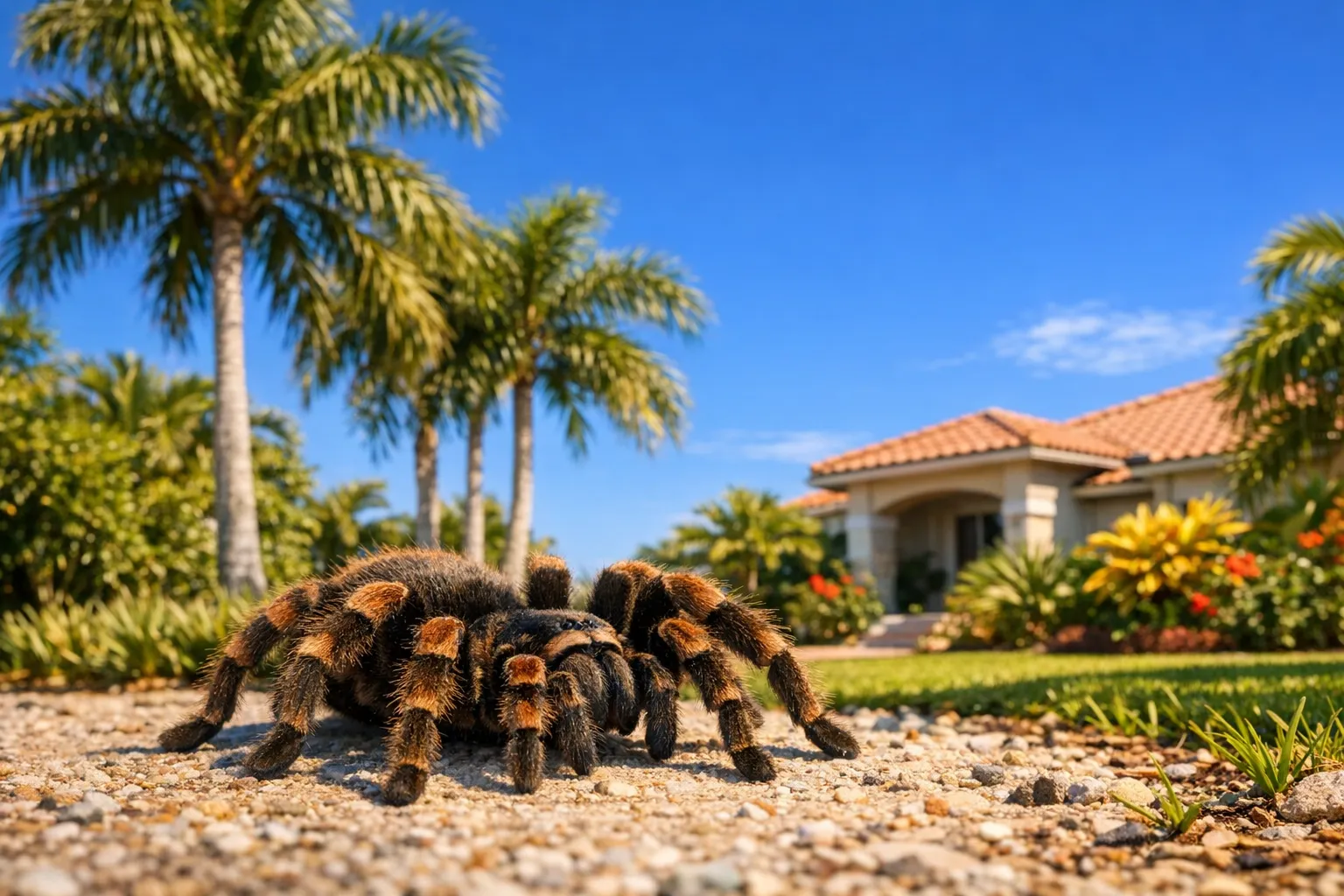
Are there tarantulas in Florida? The short answer.
Florida has exactly one true tarantula (family Theraphosidae) with a known wild population, and it isn’t native. Grove workers found the Mexican redrump tarantula (Tliltocatl vagans, formerly Brachypelma vagans) in a St. Lucie County citrus grove west of Fort Pierce in August 1996. Survey crews later captured or destroyed about 100 of them, from spiderlings to adults.
According to the state Division of Plant Industry’s report, the population stayed mostly inside that grove and along a nearby irrigation canal. Later reports from other sites were never confirmed with a specimen.
So in Southwest Florida, no, you almost certainly don’t have a wild Mexican redrump on your driveway in Sarasota, Bradenton, Venice, or Port Charlotte. You have a look-alike, and SWFL has several good ones.
One interesting asterisk: the Pine Rockland Trapdoor Spider (Ummidia richmond), formally described in 2021 after a zookeeper photographed one near Zoo Miami. It’s a tarantula relative known only from a few South Florida sites in critically endangered pine rockland habitat. It has the same downward-striking fangs and chunky build as a tarantula, so people lump them together. But it’s a different family, smaller, less hairy, and glossy.
Not sure what you’re looking at? Snap a photo from a safe distance and book an inspection. Our techs identify spiders on-site and point out any moisture or entry problem that’s drawing them in.
The tarantula look-alikes SWFL actually deals with
This is where nearly every “Florida tarantula” call lands. Sandy soil, afternoon storms that flush ground-dwellers into garages, and warm nights all year make Southwest Florida great habitat for big spiders that aren’t tarantulas. The usual suspects:
On every inspection
How to tell what you're actually seeing
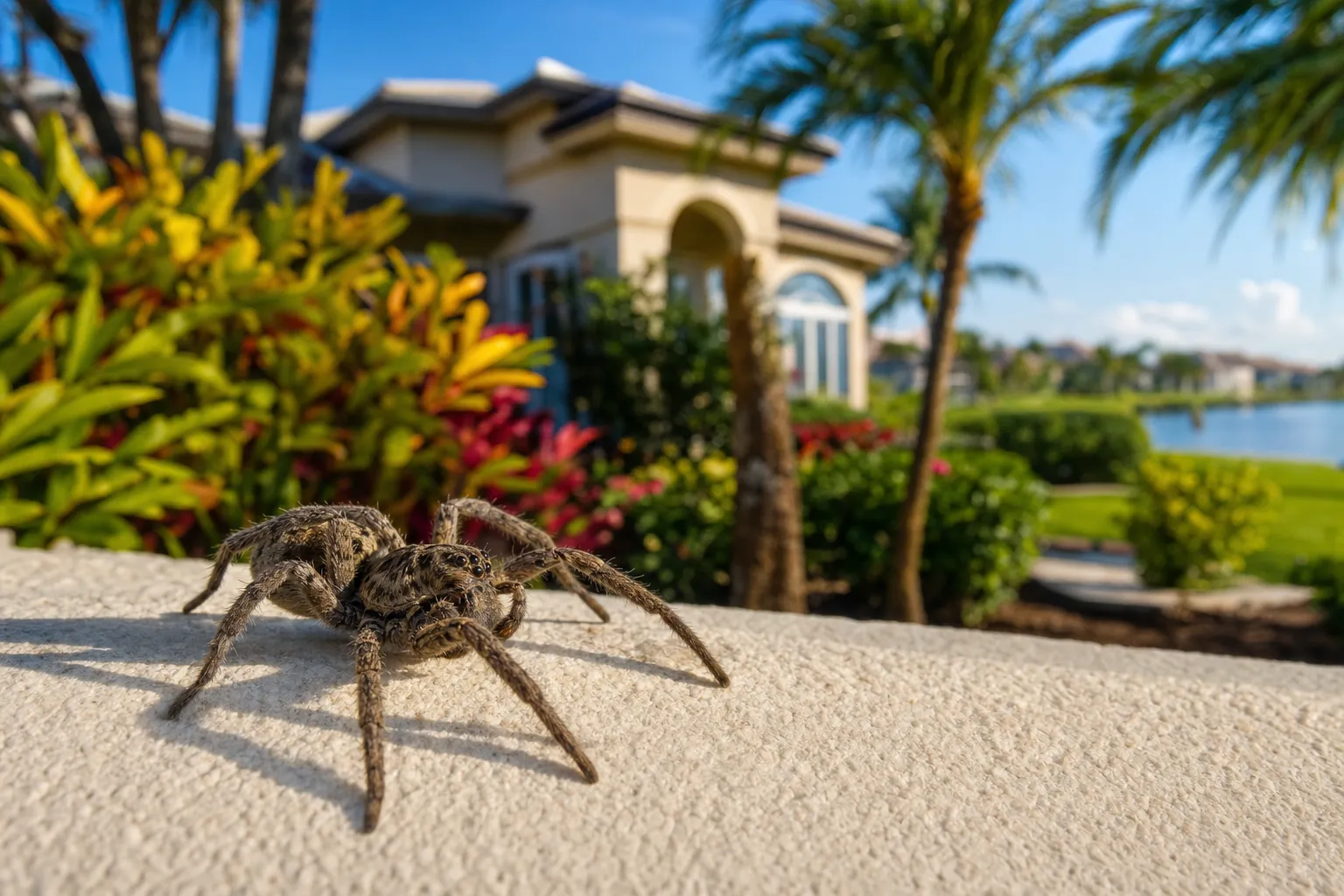
- Wolf spider Fast, ground-dwelling, brown or gray. The biggest species has a body up to about 1.4 inches. Bolts when the porch light snaps on. Females carry their babies on their backs. Creepy, but harmless.
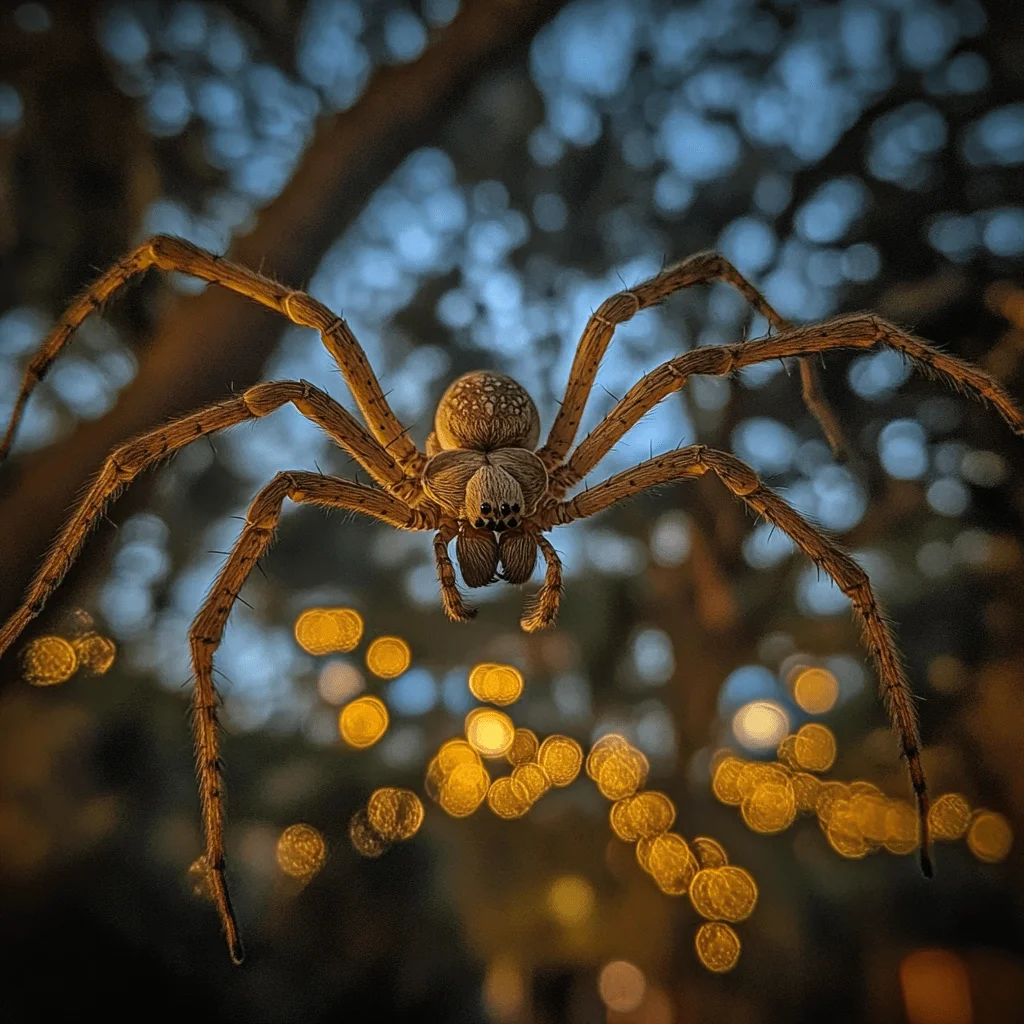
- Huntsman spider Flat, crab-like posture, long legs, 3–5 inch leg span. Likes garages, sheds, and the space behind pictures. Non-native, but established in subtropical Florida, SWFL included.
- Fishing / dock spider Big, brown, banded legs, hangs near pools, ponds, and canals. Can sit on water. Looks tarantula-sized when startled.
- Trapdoor / purseweb spider Chunky, glossy black, ambushes prey from a silk-lined burrow or tube. Native Florida cousin of tarantulas (same infraorder, Mygalomorphae), with far less drama.
- True tarantula (Mexican redrump) Black body, red hairs on the abdomen, leg span up to about 5 inches. The only wild population is near Fort Pierce on the Atlantic side, not the SWFL coast.
Rule of thumb: if it ran fast across your driveway, it's a wolf spider. If it was pressed flat against a wall in the garage, huntsman.
The tell most homeowners miss: tarantulas and trapdoor spiders are ambush predators that live in burrows. If your spider was running around in the open, it’s almost certainly a wolf spider or a huntsman.
Are Florida tarantulas (and their look-alikes) actually dangerous?
Short version: no, not to a healthy adult.
- Venom. Almost all spiders have venom, but none of the spiders on this list is considered medically significant to people. The state’s report on the Mexican redrump notes it has not been reported to have a bite serious to people. A bite from any of them usually feels like a bee sting.
- Urticating hairs. True tarantulas can flick barbed hairs off the abdomen when threatened. They itch like fiberglass and can hurt badly in the eyes, which is one more reason not to handle one.
- Allergic reactions. Some people react harder than others to any bite or sting. Spreading swelling, trouble breathing, or feeling sick all over means urgent care or the ER.
The spiders of real medical concern in Florida are the widows (southern black widow, northern black widow, brown widow and red widow). They’re established here, and none of them looks anything like a tarantula. The brown recluse gets talked about a lot, but UF/IFAS has found no established recluse population in Florida. If you’re worried about bites at home, widows are the ones to watch for.
Pro tip: A wolf spider on the porch is doing you a favor. It hunts roaches, crickets, and other insects. Keep it outside by sealing the door sweep and patching the screen rather than spraying everything in sight, which kills the helpful predators along with the pests.
What to do if you find a big spider inside your house
Here’s the homeowner playbook, in order:
- Don’t grab or step on it barefoot. Spiders bite when they get pressed against skin, so bare feet and bare hands are how most bites happen.
- Cup-and-card it. Put a wide plastic container over it, slide stiff paper underneath, and walk it out to the yard. This works for wolf spiders, huntsmans, and tarantulas alike.
- Take a photo first. It helps with identification, and you can send it to a pro if the spider comes back.
- Find the entry point. Big spiders use the same gaps every other pest uses: torn door sweeps, unsealed garage doors, lanai screen tears, and gaps around cable and A/C lines. Close the gap and the traffic stops.
- Cut the food supply. Big spiders follow smaller bugs. If you have roaches or crickets, the spiders are there to eat them.
What not to do: set off a bug bomb in the garage. Foggers rarely reach spiders tucked into cracks, and they coat every exposed surface with pesticide.
When it’s actually worth calling a pro
A single spider sighting in SWFL doesn’t need a service visit. It’s worth a call when:
- You’re seeing multiple big spiders per week, indoors, in different rooms.
- You’ve got egg sacs on wall/eave junctions or under patio furniture.
- You have kids or pets who will try to touch it.
- You’ve spotted widow markings (a red hourglass on the underside of a glossy black spider).
- The spiders are riding in on a bigger pest problem — roaches, silverfish, or ants they’re feeding on.
How Waves handles spiders and the pest chain feeding them
Spiders are usually a symptom. They follow the smaller bugs. So our integrated pest management (IPM) approach targets both the spiders you see and the insects that keep drawing them in:
- Inspection first. The tech walks the perimeter, garage, lanai, eaves, and any room with sightings. We confirm the species, the real risk, and where they’re getting in.
- Targeted treatment. Instead of fogging, we treat where spiders hide and travel: the perimeter, entry points, eaves, and weep holes, plus indoor spots with activity. We also treat the roaches, silverfish, and ants they’re eating.
- Exclusion advice. We point out the gaps and moisture problems drawing pests in and show you how to seal them.
- Follow-up. On quarterly service we re-check the same spots each visit, and WaveGuard membership covers free re-treatments between visits if they come back.
| What you get | DIY relocate + seal | Waves quarterly pest |
|---|---|---|
| Handles one wandering spider | Yes | Yes |
| IDs the species and real risk level | Your best guess | Tech confirms on-site |
| Treats entry points, eaves, weep holes | Depends on your ladder | Included every visit |
| Addresses the pests spiders are eating | No | Yes — perimeter + interior |
| Callbacks between visits | N/A | Free re-treats under WaveGuard |
A single big spider is usually a DIY afternoon. Recurring spider activity means something else is feeding them.
Want a ballpark before you call? The pest control calculator gives you a price in under a minute, no phone tag required.
Frequently Asked Questions
Are there any tarantulas in Florida?
Yes, but only one true tarantula, the Mexican redrump, has a confirmed wild population, and it’s confined to a small area near Fort Pierce in St. Lucie County. It’s native to Mexico and Central America, not Florida. In SWFL, nearly every “tarantula” sighting is a wolf spider, huntsman, fishing spider, or native trapdoor spider. More species profiles live in the Waves pest library.
What is the largest spider in Florida?
It depends on how you measure. By leg span, the huntsman spider (3–5 inches, per the state’s Division of Plant Industry) is the biggest spider most Floridians will ever see indoors. By body size, large female Carolina wolf spiders reach about 1.4 inches. The introduced Mexican redrump is bigger than both, with a body up to about 3 inches and a leg span up to about 5 inches, but it lives only near Fort Pierce.
Are Florida tarantulas poisonous?
They’re venomous, not poisonous, and not considered medically significant to people. The state’s report on the Mexican redrump says it has not been reported to have a bite serious to people, though its urticating hairs can irritate skin and eyes. The spiders Floridians should actually watch for are the widows, which are established here and look nothing like a tarantula. The brown recluse is not established in Florida.
Bottom line
If you spot a big hairy spider in Sarasota, Bradenton, Venice, Port Charlotte, or anywhere else in Manatee, Sarasota, or Charlotte County, the odds that it’s a true tarantula are close to zero. It’s almost always a wolf spider or a huntsman: impressive, harmless to people, and easier to relocate than to kill.
If they keep showing up, something else is going on. Book a Waves inspection or call (941) 297-5749. We’ll identify what’s there, close the entry points, and treat the insects they’ve been eating.