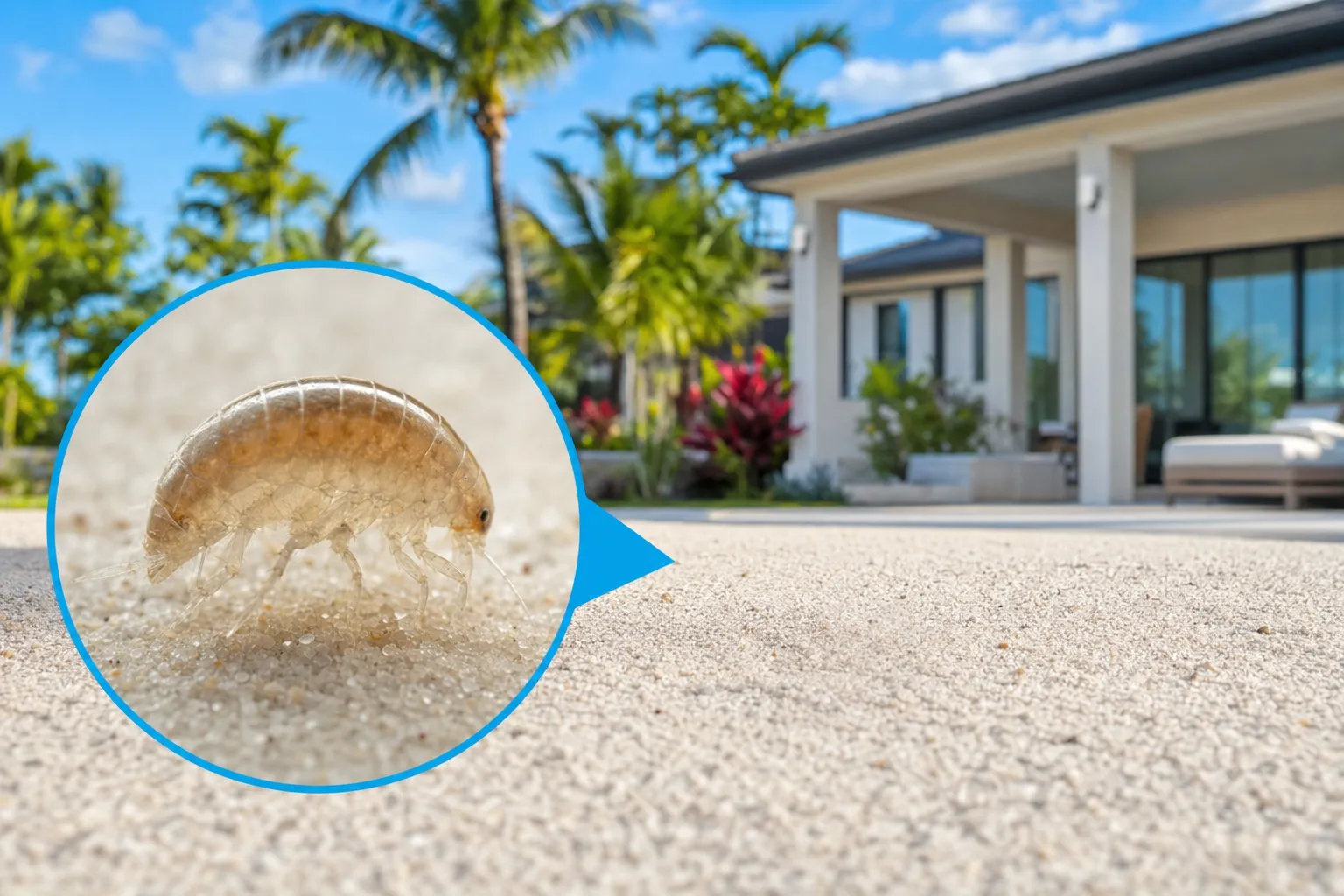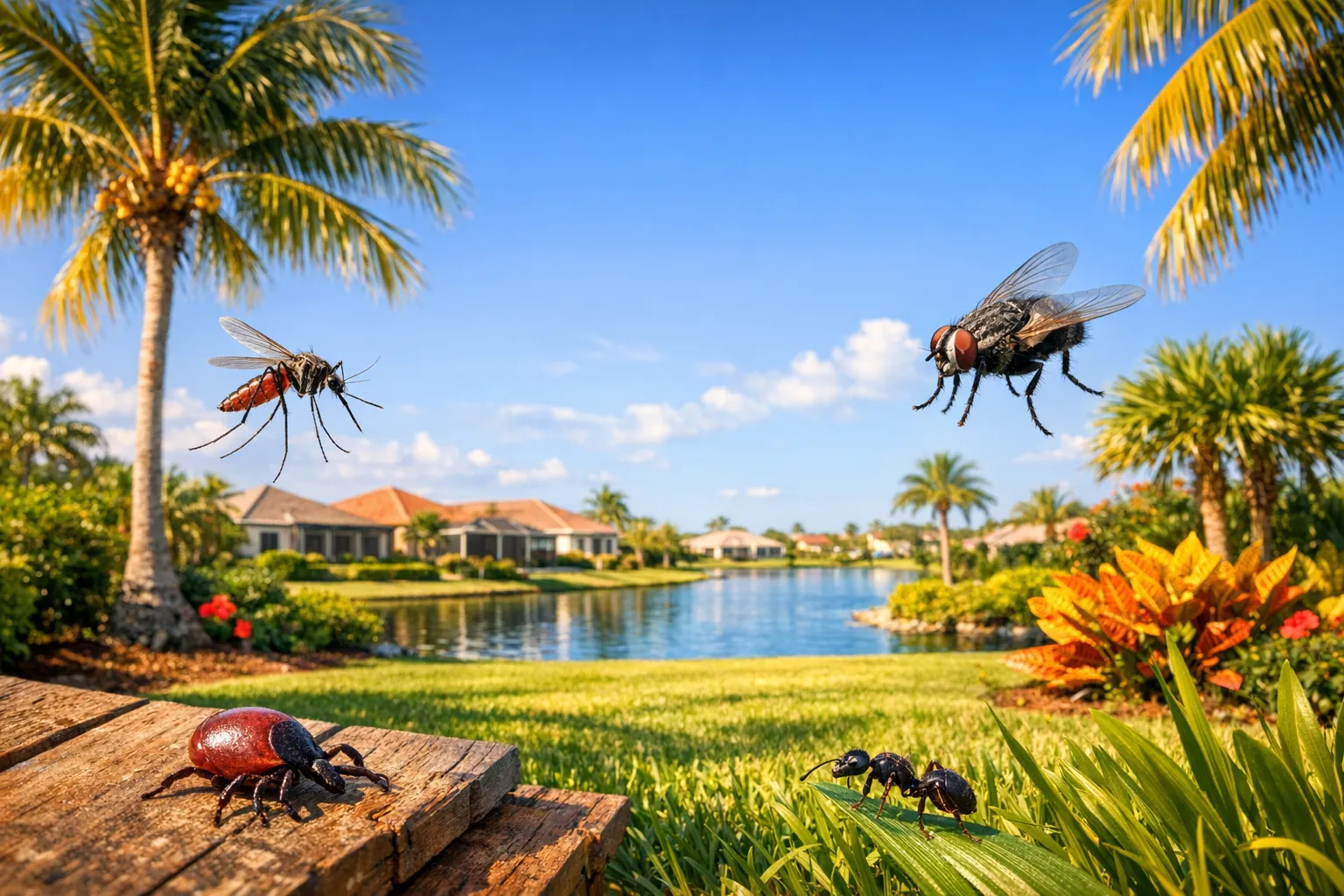
No-see-ums are biting midges: flies only 1 to 2 millimeters long that breed in the mud of salt marshes, mangrove edges, and pond banks. In coastal Bradenton they’re worst in spring and fall, and they bite hardest at dawn and dusk when the air is still. You can’t wipe them out of a waterfront yard, but you can make them far less miserable with a fan, the right screen, a proven repellent, and good timing.
Here’s what works, what doesn’t, and what a pest control visit can and can’t do about them.
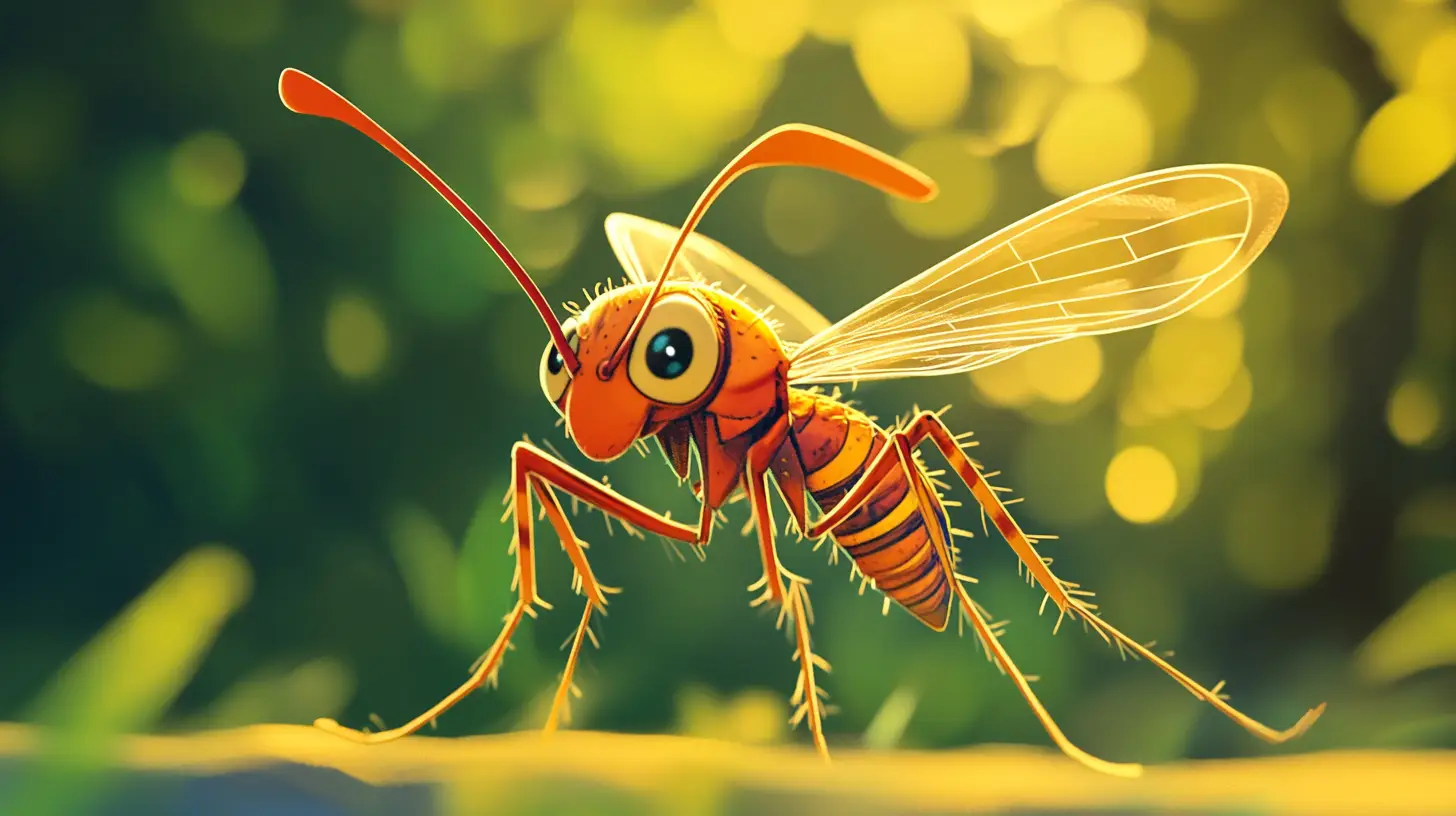
What no-see-ums are
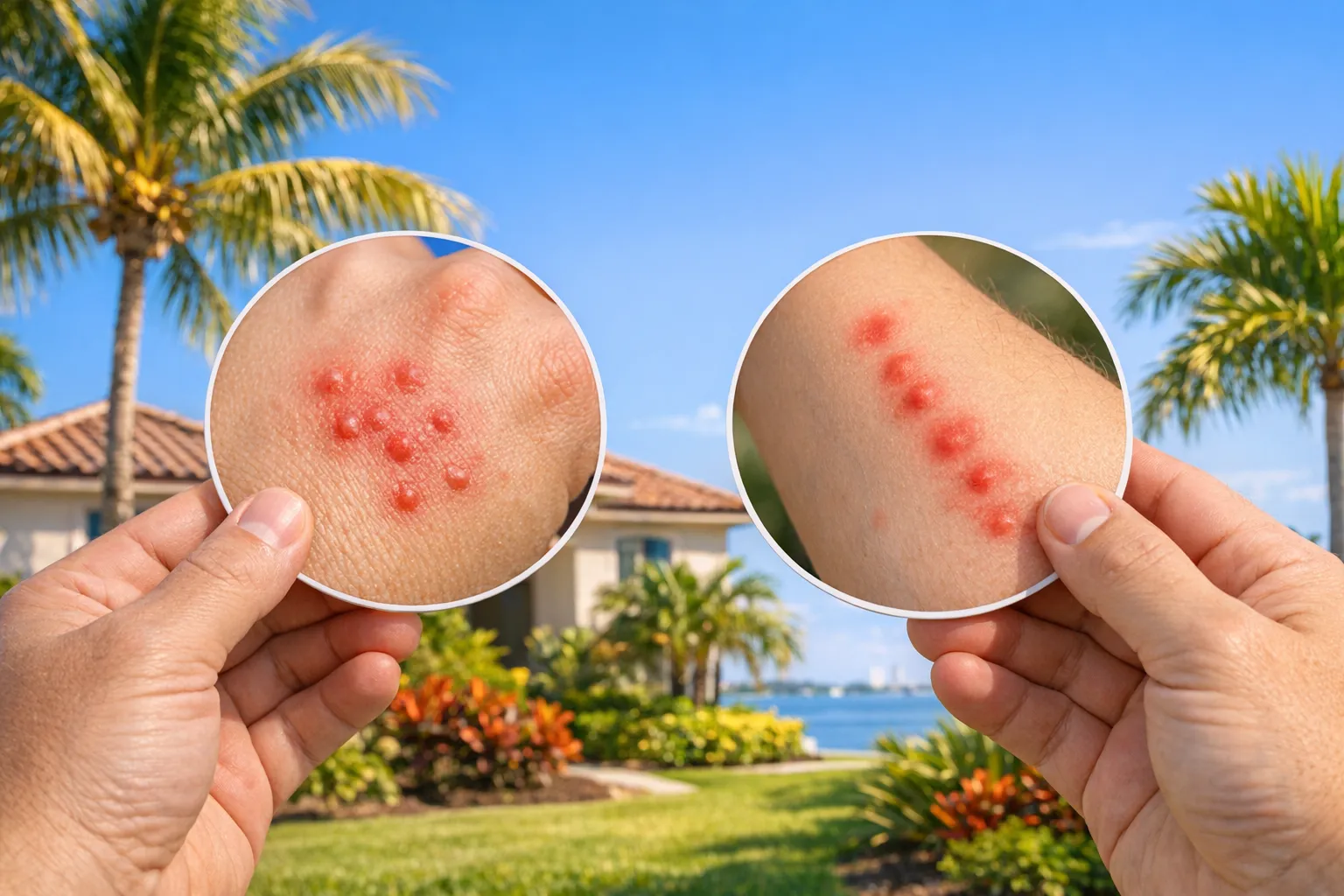
No-see-ums, also called biting midges or sand gnats, are tiny flies in the genus Culicoides. According to UF/IFAS, adults are usually 1 to 2 mm long, small enough to pass through regular window screen. Only females bite, and for their size the bite hurts. The sting usually fades within minutes to hours, but people who react to them can itch for two or three days.
Their larvae live in wet mud and muck: salt marsh, mangrove shoreline, the edges of ponds and streams, even water-filled tree holes. That’s why they’re such a problem around Palma Sola Bay, Robinson Preserve, Cortez, Perico, and Anna Maria Island. Many species can fly more than a mile from where they hatch, so a marsh down the road can supply your lanai.
They’re closely related to the harmless aquatic midges that swarm porch lights near retention ponds. The difference: those don’t bite. If you’re getting bitten and can’t see what’s doing it, it’s almost certainly no-see-ums. See the rest of Florida’s biters side by side in our Which Florida biting bug is this? hub.
When no-see-um season peaks in Bradenton
Along Florida’s coast, biting midges come out in the biggest numbers in April and May and again in October and November. UF entomologists tie those peaks to the seasonal high tides that flood salt marshes and hatch their eggs. Heavy summer rain can actually reduce them, because the females can’t lay eggs on standing water.
Day to day, most species bite at dusk, overnight, and in the early morning, and calm, humid evenings are the worst. Some coastal species will also bite in broad daylight during cool weather.
What actually keeps them off you
- Run a fan. No-see-ums are weak fliers. A large fan on the lanai or patio blows them away from where you’re sitting, and it’s the cheapest fix there is.
- Use no-see-um screen. Regular window and lanai screen won’t stop them. Screen sold as “no-see-um” mesh has small enough openings to keep them out. If you’re rescreening a lanai near the water, it’s worth asking for.
- Wear a proven repellent. DEET is the main repellent used against biting midges, and in studies oil of lemon eucalyptus has also performed well (UF/IFAS). Follow the label, especially on kids.
- Cover up and time it. Long sleeves and long pants help. On calm evenings, move the walk or the grill to midday when you can.
- Dry out the wet spots you control. Larvae can’t survive drying out. You can’t drain a salt marsh, but you can fix a leaking irrigation head, clear clogged gutters, and fill low spots that stay muddy.
What doesn’t work
Vanilla extract, dryer sheets, citronella candles, and “bug-repelling” plants all get recommended online. None has good evidence behind it against biting midges. (We looked at the vanilla claim in detail.) Stick with a repellent from the list above.
What a pest control treatment can and can’t do
It’s worth being straight about this. UF notes that no Florida community runs a biting-midge control program, because the larvae live in marsh mud where treatment isn’t practical. So nobody can clear no-see-ums from a waterfront neighborhood.
What a treatment can do is cut down the midges around your home. UF/IFAS cites a study in which a bifenthrin barrier spray, a common pyrethroid treatment, reduced no-see-um numbers. Our mosquito control service in Bradenton applies a barrier treatment to the shrubs and shaded areas where biting insects rest, so it helps with both. New midges will still fly in from the marsh, which is why a treatment works best alongside fans and fine screen, not instead of them.
On waterfront lots with heavy pressure, some homeowners also consider an automatic misting system. Here’s how misting compares with a barrier treatment.
How to treat no-see-um bites
Wash the bites with soap and water, then use a cold pack to calm the swelling. An over-the-counter hydrocortisone cream or an oral antihistamine can help with the itch. Try not to scratch, since broken skin can get infected. See a doctor if a bite looks infected or if you have signs of an allergic reaction, like swelling that spreads or trouble breathing.
Do no-see-ums spread disease in Florida?
In other parts of the world, biting midges spread diseases to people. In the U.S., the one to know about is Oropouche virus, which spreads mainly through midge bites. The CDC reports that every U.S. case so far has been travel-related, picked up in places like Cuba and Panama, and no locally acquired cases have been found. For Bradenton homeowners, no-see-ums are a comfort problem, not a disease threat.
For ongoing help with mosquitoes and the other biters that come with our climate, see our pest control in Bradenton plans, or get a price below.
Frequently Asked Questions
What are no-see-ums, and why are they so bad in Bradenton?
They’re biting midges, tiny Culicoides flies about 1 to 2 mm long. Their larvae grow in wet mud along salt marshes, mangroves, and pond edges, and Bradenton has a lot of that shoreline, from Palma Sola Bay to Anna Maria Island. Many species can fly over a mile, so homes near the water get them even without a marsh in the backyard.
How do I treat the bites?
Wash with soap and water, use a cold pack, and try an over-the-counter hydrocortisone cream or oral antihistamine for the itch. Don’t scratch. Get medical care if a bite looks infected or you have signs of an allergic reaction.
Are no-see-ums dangerous?
For most people, no. The bites hurt and itch but usually fade within hours to a few days. Oropouche virus, which midges can spread, has only shown up in the U.S. in travelers, with no local spread reported by the CDC.
When is no-see-um season in Bradenton?
The biggest numbers come in April and May and again in October and November, following the high tides that flood salt marshes. They bite most at dusk, overnight, and early morning, especially on calm evenings.
Can I get rid of no-see-ums completely?
No. They breed in marsh and mangrove mud that no one can treat, and they fly in from a distance. You can cut bites way down with fans, no-see-um screen, a DEET or oil of lemon eucalyptus repellent, and a barrier treatment on the shrubs where they rest.