Jump to a section (8)
- 01What Africanized honey bees are, and where they’re established in Florida
- 02You can’t tell them apart by eye
- 03Where colonies nest around homes
- 04If you find a colony
- 05If you’re attacked
- 06Sting first aid and emergency signs
- 07Why honey bees matter, and why that doesn’t change the advice
- 08Frequently Asked Questions
Africanized honey bees, the so-called “killer bees,” have been in Florida for more than two decades. If you live in Bradenton or Sarasota and find bees nesting near your home, the most useful thing to know is this: nobody can tell by looking whether they’re Africanized, and the right response is the same either way. Stay away, keep people and pets away, and call someone who is legally allowed to remove them.
This guide sticks to what the University of Florida (UF/IFAS) and the Florida Department of Agriculture and Consumer Services (FDACS) publish: where these bees are established, where they nest around homes, who may remove a colony, what to do if you’re attacked, and the emergency signs after stings.
What Africanized honey bees are, and where they’re established in Florida
UF/IFAS publications call them both “African honey bees” and “Africanized honey bees.” UF/IFAS describes them as spreading from South America and hybridizing with European honey bees. According to UF/IFAS, the first documentation of African honey bees in Florida came in 2001 near the Port of Tampa, and they have since spread throughout the southern half of the state. Another UF/IFAS guide says they have been established in Florida since the early 2000s.
The UF/IFAS pages we read don’t give a county-by-county list, so we can’t tell you whether a particular colony in Manatee or Sarasota County is Africanized. Without testing, nobody can.
You can’t tell them apart by eye
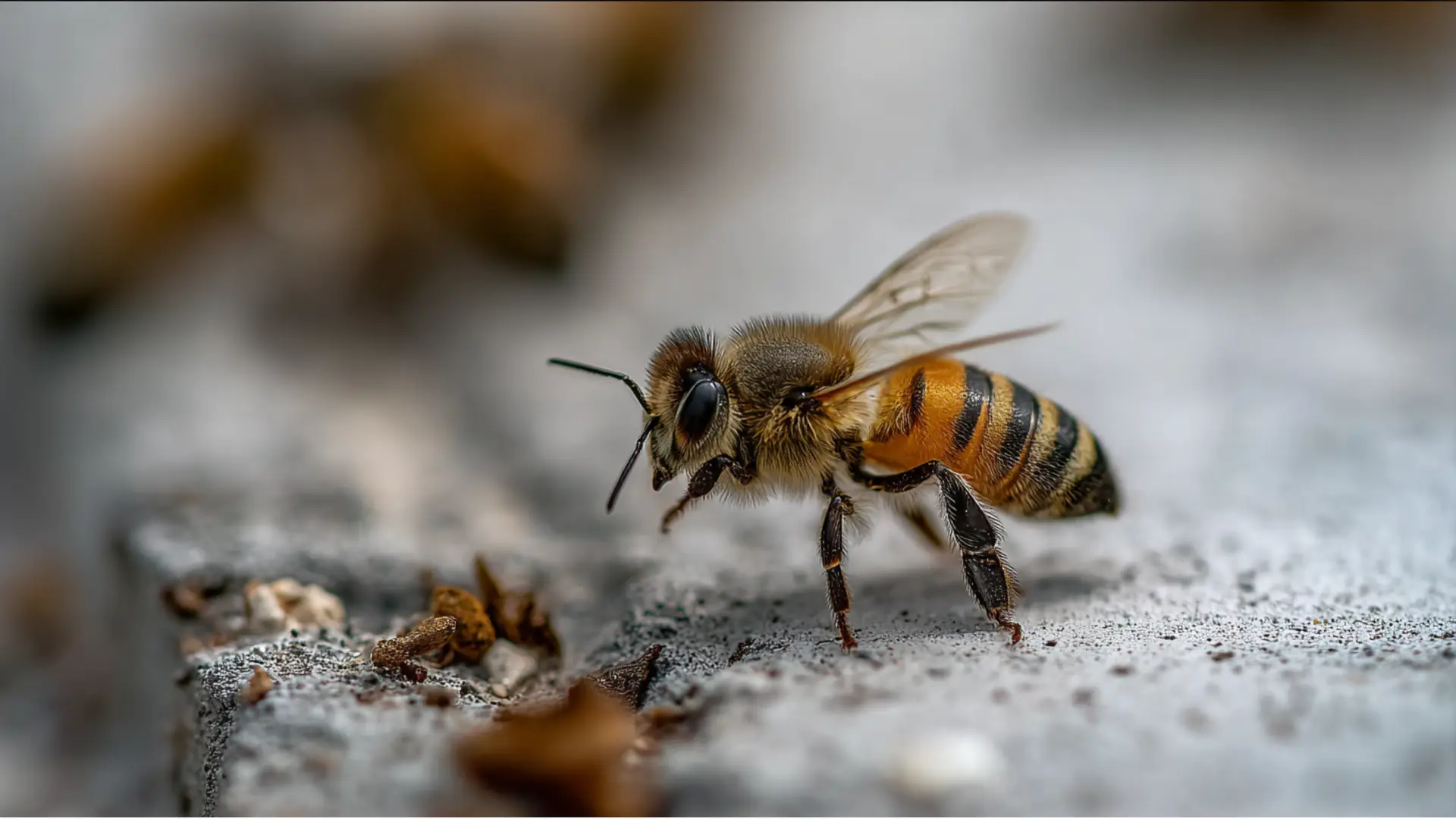
FDACS puts it plainly: “Genetic testing is required to determine if honey bees are African or European. It is impossible to tell the difference with the naked eye. Be sure to always take caution around any honey bees”. UF/IFAS adds that Africanized bees are about 10% smaller, but that telling the two apart takes specific measurements or laboratory testing. Florida uses lab methods called FABIS and USDA-ID for a definitive answer.
What does differ is behavior. UF/IFAS says Africanized colonies send more guard bees to sting, pursue for a longer distance, and stay agitated longer. A European colony might send 10 to 20 guard bees; an Africanized colony may send several hundred. They can also swarm 10 or more times a year, versus 1 or 2 for European bees.
The venom is the same. UF/IFAS says the Africanized honey bee’s sting is not any more potent. The danger comes from how many bees respond and how long they keep at it.
One more point from UF/IFAS: foraging honey bees, such as those visiting flowers, are normally not a threat. The risk is near a nest.
Where colonies nest around homes
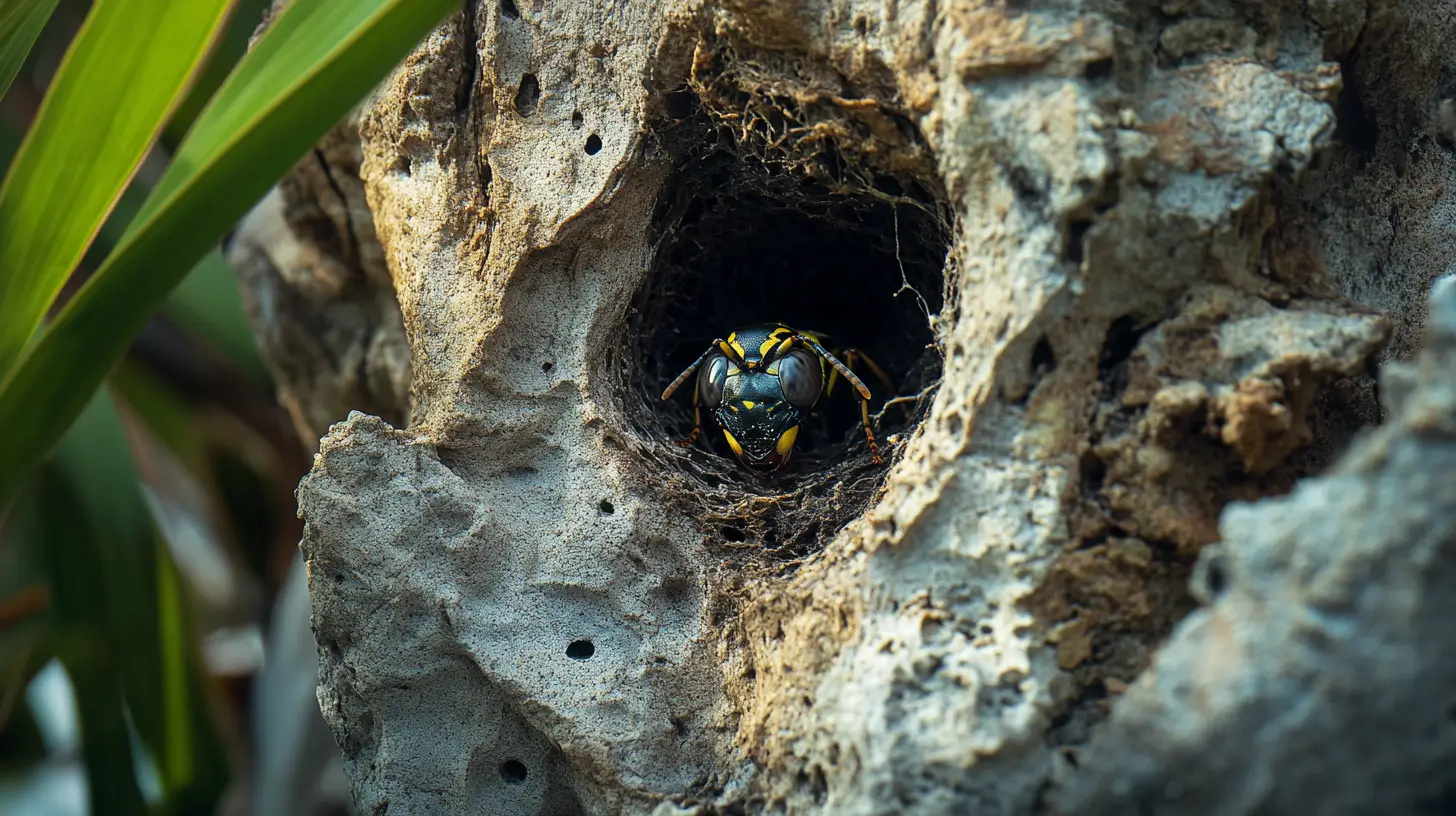
UF/IFAS says African honey bees may nest in “trees, abandoned buildings, soffits, garages, and other protected spots,” and unlike European honey bees they can also nest in the open, near people. They use smaller cavities too: 1 to 5 gallons, compared with about 10 gallons for European bees (UF/IFAS).
UF/IFAS’s bee-proofing guide lists places bees move into around homes and yards:
- Eaves, walls, chimneys, garages, sheds, and other outbuildings
- Hollow trees, tree branches, and lumber piles
- Fence posts, empty containers, old tires, and abandoned vehicles
- Utility infrastructure and playground equipment
A steady stream of bees going in and out of one gap, or a hum inside a wall, can mean a colony is in there. It can’t tell you what kind of honey bee it is.
If you find a colony
-
Don’t disturb it. UF/IFAS’s first instruction is “do not disturb the bees.” Stay away from the nest, and keep children and pets away too.
-
Don’t try to remove or kill it yourself. FDACS says that without the proper equipment and training you should not attempt to remove or eradicate a nuisance honey bee colony. It can be dangerous and, if not done properly, can lead to a violation of state or federal pesticide laws and liability if someone is hurt.
-
Don’t seal the hole. UF/IFAS says that if bees are going in and out of an opening or can be heard inside the wall, do not seal it, because that can force the bees further into the wall and possibly into the structure. The colony has to be removed first.
-
Call the right kind of professional. Florida has two legal paths, and they depend on who does the work:
- Live removal by a beekeeper. FDACS says beekeepers hired to remove honey bees alive must be registered with FDACS.
- Eradication (killing the colony). FDACS says only a licensed pest control company can do this (Section 482.021, Florida Statutes).
FDACS keeps a list of registered beekeepers and pest control companies that handle bees on its honey bee removal page. UF/IFAS notes that it is the property owner’s responsibility to deal with an unwanted swarm or colony.
Waves Pest Control does bee work as a licensed pest control company: eradication of nuisance colonies and swarms, and comb removal and clean-out afterward. We don’t do live removal or relocation, which is a registered beekeeper’s job. What we can do at a given property is decided on inspection, and a colony inside a wall or roof, or in a high or hard-to-reach spot, may be referred to a specialist.
What about a swarm, a cluster of bees hanging in a tree or on a fence? UF/IFAS says swarms are generally docile because they don’t yet have a nest to protect, but it also says never to approach one. The same advice applies: leave it alone and call a registered beekeeper or licensed pest control operator.
If you’re attacked
This is UF/IFAS and CDC guidance for a disturbed colony:
- Run. UF/IFAS says “get away from bees as quickly as possible” and to run in a straight line to shelter.
- Cover your face. Protect your nose, mouth, and airways with your shirt as you go.
- Get indoors or into an enclosed vehicle. CDC says a shaded area is better than an open area.
- Don’t jump into water or hide in bushes. CDC notes that some insects hover above water.
- Don’t swat. UF/IFAS says swatting agitates bees and makes them sting more readily, and crushed bees release a chemical that attracts others.
- Call 911 if someone is being attacked.
Sting first aid and emergency signs
- Wash the sting site with soap and water.
- Remove the stinger by wiping it away with gauze or scraping it with a fingernail. Never squeeze the stinger or use tweezers.
- Apply ice to reduce swelling.
- Don’t scratch the sting.
- Have someone stay with the person to see whether they have an allergic reaction.
UF/IFAS says to remove stingers as soon as possible, since they keep injecting venom, and that a worker honey bee can sting only once.
Emergency signs. UF/IFAS says to call 911 or get emergency medical attention immediately if there is an allergic reaction, and lists these symptoms: difficulty breathing, hives covering large areas of the body, nausea, vomiting, or swelling away from the sting site. CDC says anaphylaxis, a severe and potentially life-threatening allergic reaction, needs immediate emergency care. This list isn’t exhaustive; if someone seems seriously unwell after stings, call 911.
Many stings. UF/IFAS says to seek medical attention after numerous stings because of the risk of toxic envenomation, meaning a venom overdose.
If you have a known severe allergy to stings, ask your doctor about your emergency plan before you ever meet a colony.
Why honey bees matter, and why that doesn’t change the advice
Honey bees do real work in Florida. UF/IFAS says over 50 major crops in the United States and at least 13 in Florida either depend on honey bees for pollination or produce more yield when honey bees are plentiful.
Because you can’t tell by looking which honey bees are Africanized, treat every nest near your home with the same caution. Don’t spray it, swat at it, or plug it. FDACS points you to a registered beekeeper or a licensed pest control operator.
Stinging insects that aren’t honey bees call for different handling. Our guides to honeybees versus yellow jackets in Southwest Florida and stinging wasps in Southwest Florida can help you work out what you’re looking at, and the Florida wasp identification guide covers paper wasps, yellowjackets, and mud daubers. Check with a professional before deciding anything about a colony.
Frequently Asked Questions
Are there Africanized bees in Bradenton and Sarasota?
UF/IFAS says African honey bees have been established in Florida since the early 2000s and have spread throughout the southern half of the state. The UF/IFAS pages we read don’t list counties, and only lab testing can say whether a specific colony is Africanized.
Can I tell if the bees on my property are Africanized?
No. FDACS says genetic testing is required and that it’s impossible to tell the difference with the naked eye. Treat any honey bee colony near your home with caution.
Who is allowed to remove a bee colony in Florida?
According to FDACS, live removal must be done by a registered beekeeper, and eradication can only be done by a licensed pest control company. FDACS recommends against removing or killing a colony yourself.
What should I do if bees are attacking me?
Run in a straight line to shelter, cover your nose and mouth, and get indoors or into an enclosed vehicle. Don’t swat, don’t jump into water, and don’t hide in bushes. Call 911 if someone is being attacked.
When are bee stings an emergency?
Call 911 or get emergency medical attention immediately if there is an allergic reaction. UF/IFAS lists these symptoms: difficulty breathing, hives covering large areas of the body, nausea, vomiting, or swelling away from the sting site. UF/IFAS also says to seek medical attention after numerous stings.