Jump to a section (14)
- 01Key Takeaways
- 02What Makes Mud Daubers Different from Other Wasps
- 03Common Mud Dauber Species in Southwest Florida
- 04Identifying Mud Dauber Nests vs. Other Wasp Nests
- 05Where Mud Daubers Nest Around Your Home
- 06The Active vs. Inactive Assessment
- 07DIY Removal for Inactive Nests
- 08When to Call the Professionals
- 09The Lakewood Ranch Mud Dauber Reality
- 10Prevention Strategies
- 11What to Expect from Professional Removal
- 12Cost Considerations: DIY vs. Professional
- 13The Bottom Line for Lakewood Ranch Homeowners
- 14Frequently Asked Questions (FAQs)
When you spot a wasp nest on your Lakewood Ranch home, your first instinct is probably to run inside, slam the door, and call someone else to deal with it. That’s a completely reasonable reaction – wasps can be aggressive, territorial, and downright scary when they decide you’re a threat to their real estate.
But here’s the thing: if you’re looking at those distinctive tube-shaped mud nests that look like someone smeared clay on your eaves or garage wall, you might be dealing with mud dauber wasps – arguably the most chill wasps you’ll encounter in Florida.
These solitary insects are basically the introverts of the wasp world. They mind their own business, rarely sting, and are actually doing you a favor by hunting down spiders around your property — including venomous species like black widows. The question is: can you safely remove their nests yourself, or should you still call in the professionals?
Let’s talk about when DIY mud dauber removal makes sense, when it doesn’t, and how to tell the difference.
Key Takeaways
- Proper identification is crucial. Make sure you’re actually dealing with mud dauber nests rather than more aggressive wasp species before attempting any removal.
- Activity assessment determines your approach. Inactive nests can often be removed DIY, while active nests require professional intervention.
- Safety gear is non-negotiable. Even with mud daubers, wear protective clothing and work carefully during removal.
- Prevention beats removal. Address spider populations and eliminate nesting sites to reduce future mud dauber attraction to your property.
- When in doubt, call professionals. Professional removal avoids the risk of misidentifying nest types or activity levels.
- Lakewood Ranch conditions extend activity seasons. Our year-round warm weather means nests may remain active longer than in other climates.
The goal is maintaining your property’s appearance and preventing pest issues while prioritizing safety and effectiveness.
What Makes Mud Daubers Different from Other Wasps
Before we dive into removal strategies, you need to understand why mud daubers are in a completely different category from the aggressive wasps that make Florida summers miserable.
- Mud daubers are solitary. Unlike yellow jackets or hornets that live in colonies and will collectively lose their minds if you threaten their nest, mud daubers work alone. There’s no angry swarm waiting to defend the homestead.
- They’re not territorial. Mud daubers don’t see you as a threat to their territory. They’re focused on hunting spiders and building their individual mud tubes.
- They rarely sting. They can sting but rarely do.
- Their nests are temporary. Mud dauber nests are used for raising one generation of larvae, then abandoned. They don’t build permanent colonies that expand year after year.
This doesn’t mean you should be completely casual about mud dauber removal.
Common Mud Dauber Species in Southwest Florida
Before you grab a scraper, it helps to know exactly which mud dauber you’re dealing with. Southwest Florida is home to several species, each with distinct physical traits and nesting habits:
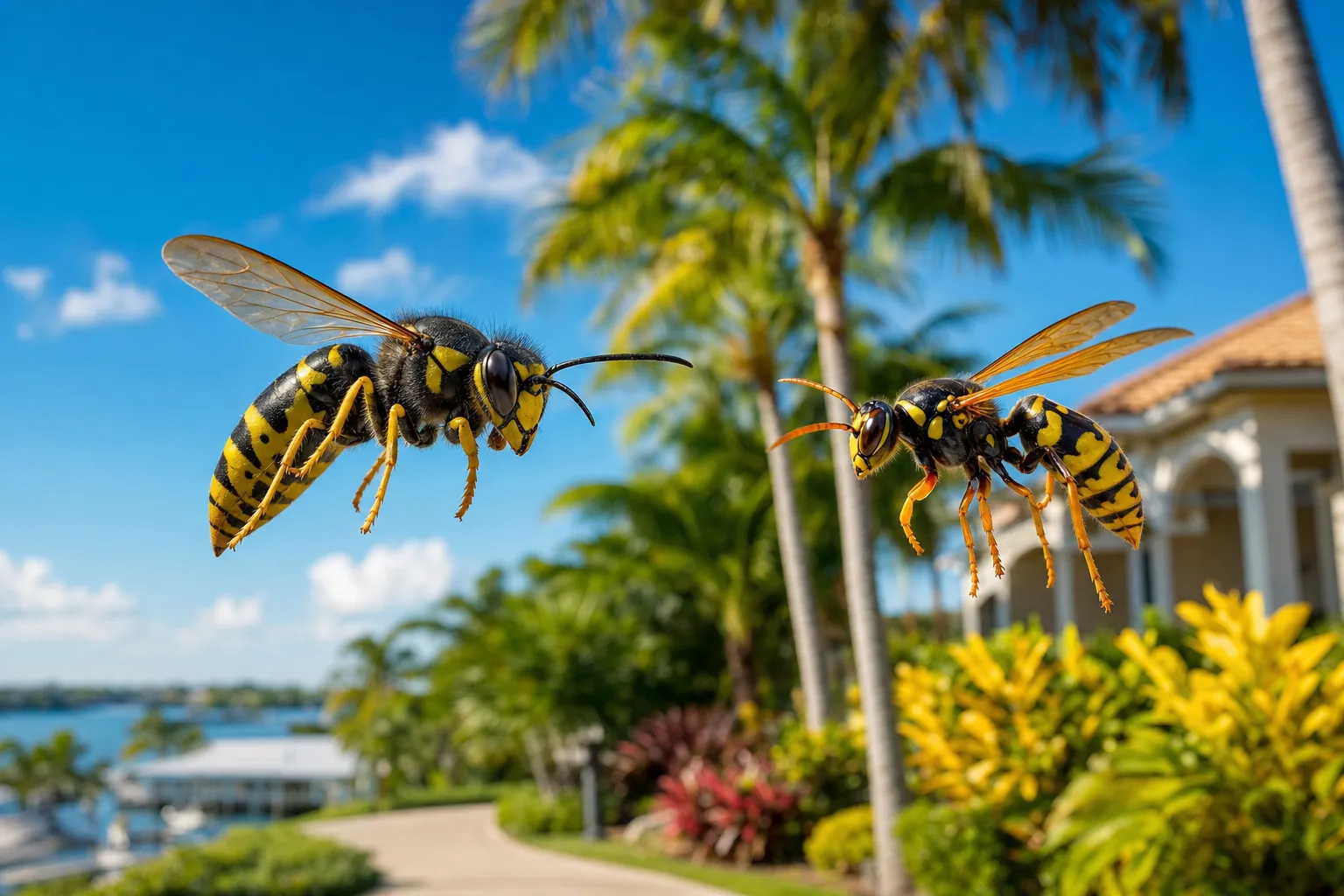
- Yellow and Black Mud Dauber (Sceliphron caementarium): The most recognizable species, with striking yellow and black coloration and an exceptionally narrow, thread-like waist. They build cylindrical or irregularly rounded mud nests, typically one chamber at a time.
- Blue Mud Dauber (Chalybion californicum): Identified by its metallic blue or blue-green body. Rather than building from scratch, this species often repurposes and refurbishes old nests left behind by other mud daubers, cleaning them out before laying her own eggs.
- Organ Pipe Mud Dauber: True to its name, this species constructs long, tubular nests that resemble organ pipes, often found in clusters under eaves and along walls.
All three species share similar body proportions: long, slender bodies measuring roughly 1/2 to 1 inch (12-25 mm) in length, with six thin legs and that distinctive thread-like waist that separates them from stockier wasp species. Some have pale markings; others display that unmistakable metallic sheen. If you’re looking at a wasp with a notably narrow waist perched on a mud tube, you’re almost certainly looking at a mud dauber.
Identifying Mud Dauber Nests vs. Other Wasp Nests
In Lakewood Ranch, you’ll encounter several different types of wasp nests, and proper identification is crucial for safety:
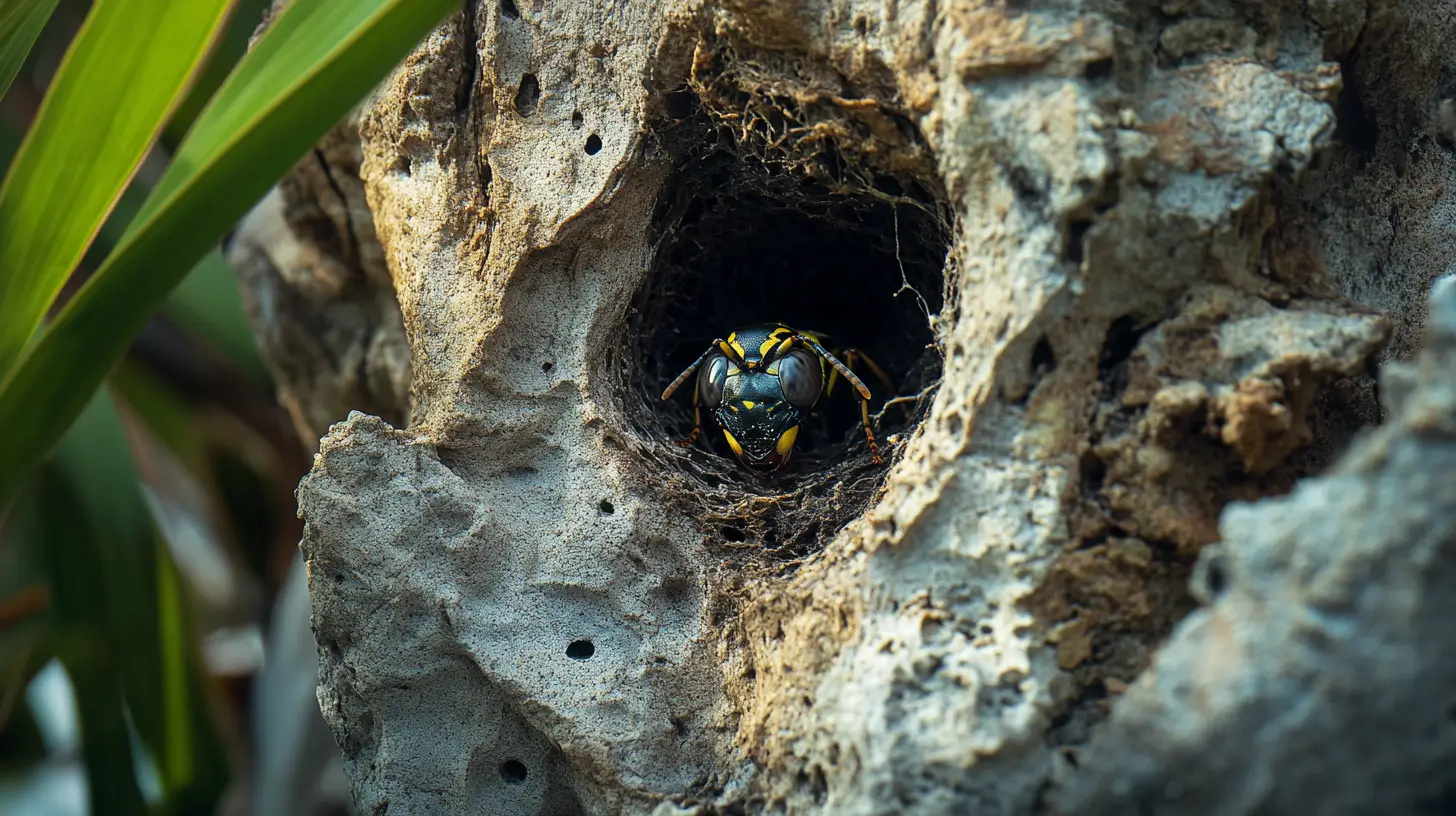
- Mud dauber nests look like tubes or pipes made of dried mud, usually built individually rather than in clusters. They’re often found under eaves, on walls, or in protected areas like garages or sheds. Nest shape varies by species: organ pipe mud daubers build long, tubular structures often arranged in parallel clusters; black and yellow mud daubers create cylindrical or irregularly rounded cells; and blue mud daubers simply move into old nests left by the other two. Each nest can contain multiple chambers, and here’s the part that gets people: the chambers are stuffed with paralyzed spiders — alive but immobilized — as food for the developing larva.
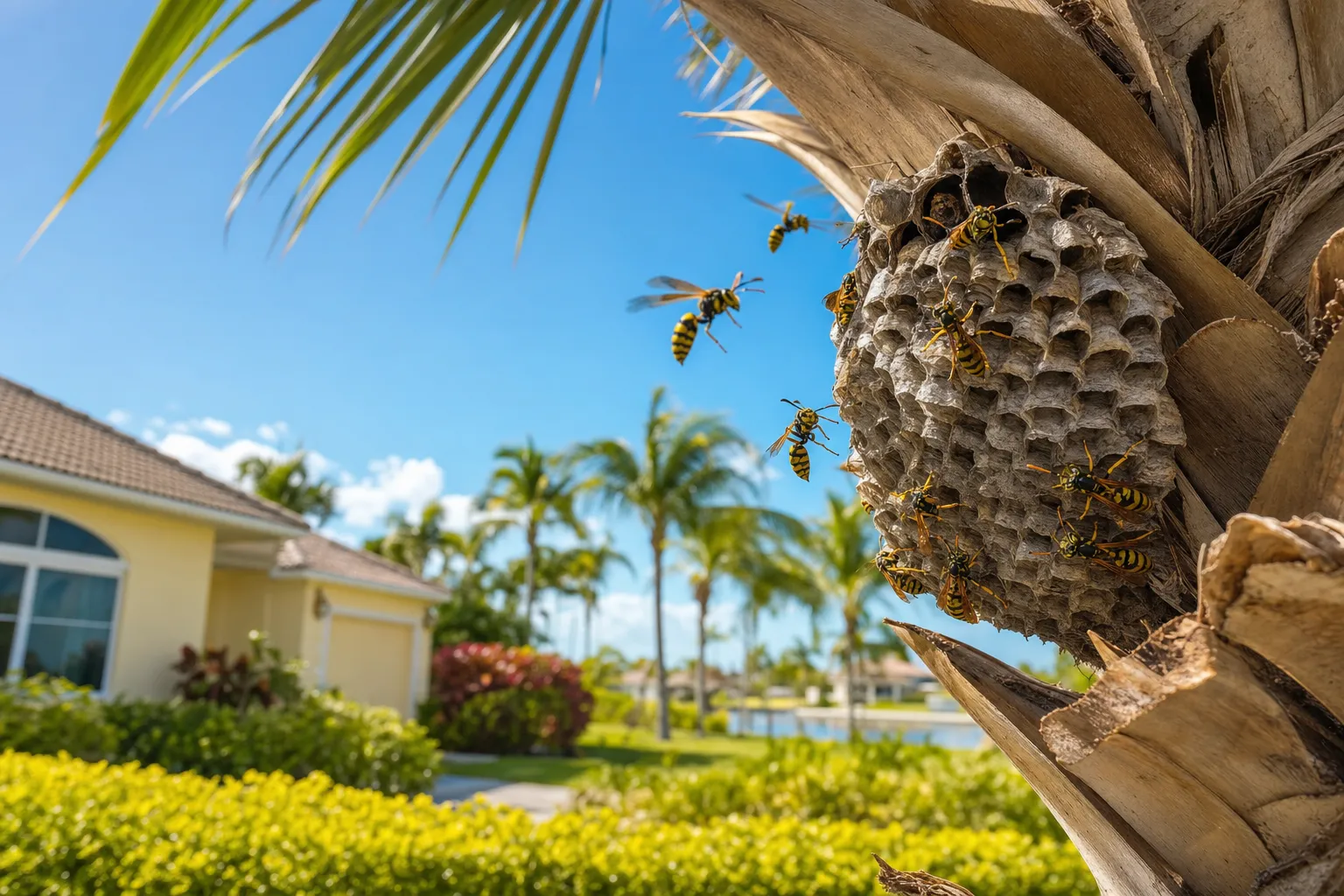
- Paper wasp nests look like open umbrellas made of gray papery material, with visible hexagonal cells. These wasps ARE aggressive and territorial.
- Yellow jacket nests are usually hidden in wall voids, underground, or in protected spaces, with wasps flying in and out of a small opening.
- Hornet nests are large, football-shaped structures made of paper-like material, often hanging from trees or under eaves.
If you’re looking at anything other than those distinctive mud tubes, stop right there and call a professional. Those other species will absolutely ruin your day if you mess with their nests.
Where Mud Daubers Nest Around Your Home
Mud daubers aren’t exactly discreet about their real estate choices. In Sarasota and across the Suncoast, their nests show up in some of the most inconvenient places:
- Inside garage rafters and on ceiling joists
- On stucco walls under eaves (rough textures give the mud excellent grip)
- Along pool screen enclosures — they treat lanai frames like prime waterfront property
- Inside hose reels and outdoor storage boxes
- Beneath dock overhangs and boat lifts
- Inside boat storage lockers and RV compartments (always check before reaching into dark, enclosed spaces)
Why so many nests in our area? Sarasota’s humidity keeps the mud workable year-round, and our subtropical climate means the spiders they hunt never go dormant either. If you’ve got spiders around your lanai or pool cage, you’ve essentially set up a mud dauber buffet.
One thing homeowners underestimate: nest damage. Old mud dauber nests dry out, crack, and flake off over time — and they take chunks of your paint or stucco with them. What starts as a cosmetic annoyance can become a slow-burn maintenance issue if nests accumulate season after season.
The Active vs. Inactive Assessment
The most important step in mud dauber removal is determining whether the nest is currently active. This makes the difference between a simple DIY project and a situation that requires professional help.
Signs of an active nest:
- Wasps flying in and out of the tubes
- Fresh mud or recent construction activity
- Wasps visible on or around the nest
- The mud looks fresh and hasn’t been weathered
Signs of an inactive nest:
- No wasp activity after observing for several hours
- Weathered, cracked, or faded mud
- Spider webs across the nest openings
- Debris or vegetation growing around the nest
Best times to observe: Early morning or late evening when wasps are less active but still visible if present. In Lakewood Ranch’s year-round warm weather, mud daubers can remain active longer than in cooler climates, so be thorough in your assessment.
If you’re not 100% certain the nest is inactive, treat it as active and consider professional removal.
DIY Removal for Inactive Nests
If you’ve confirmed the nest is inactive, removal is straightforward:
- The scraping method: Use a putty knife, paint scraper, or similar tool to scrape the mud nest off the surface. Work slowly to avoid spreading debris, and have a bag ready to collect the pieces.
- The water method: A strong stream from your garden hose can effectively dissolve and wash away mud nests. This works particularly well for nests on surfaces that can handle water exposure.
Essential safety gear:
- Long sleeves and pants
- Gloves
- Safety glasses or face protection
- Closed-toe shoes
There’s always a chance you missed something in your activity assessment, or that other insects have moved into the abandoned nest.
If an active wasp is guarding the nest: Don’t attempt manual removal. If you use an insecticide aerosol like Pyrid or Waspfreeze, read and follow the product label. Wait until the wasps are inactive before attempting any scraping. If you’re not comfortable with insecticide application, this is a good time to call a professional.
Clean-up considerations: After removing the nest, sweep up all debris promptly. Leftover larvae can attract ants and other pests.
When to Call the Professionals
Even with mud daubers’ peaceful reputation, certain situations call for professional intervention:
- Active nests: If there’s any wasp activity, don’t risk it. Professional pest control technicians have the equipment and experience to handle active nests safely.
- Hard-to-reach locations: Nests under high eaves, in tight spaces, or requiring ladder work are best left to professionals with proper equipment.
- Multiple nests: If you’re seeing several mud dauber nests around your property, there might be an underlying attractant issue that requires professional assessment.
- Allergy concerns: If anyone in your household has known reactions to insect stings, consider professional removal.
- Uncertainty about nest type: If you’re not 100% sure you’re looking at mud dauber nests rather than more aggressive wasp species, get professional identification first.
The Lakewood Ranch Mud Dauber Reality
Our local conditions create some specific challenges and considerations for mud dauber management:
- Year-round activity: Unlike northern climates where wasp activity dies down in winter, Lakewood Ranch’s subtropical climate means mud daubers can remain active throughout the year. Nests that appear inactive might just be temporarily quiet.
- Abundant food sources: Our warm, humid climate supports large spider populations, which means excellent hunting for mud daubers. This makes your property more attractive for nesting.
- Building materials: Many Lakewood Ranch homes have stucco, stone, or textured surfaces that provide excellent attachment points for mud nests.
- Landscaping factors: Extensive outdoor living spaces, pool areas, and landscaping create numerous sheltered spots perfect for mud dauber nesting.
Prevention Strategies
The best mud dauber management is preventing nests in the first place:
- Eliminate spider populations: Since mud daubers hunt spiders — including black widows — reducing spider habitat around your home makes your property less attractive. Regular cleaning of spider webs and egg sacs, reducing outdoor lighting that attracts insects, and maintaining tidy landscaping all help. Use a cobweb eliminator on recurring trouble spots.
- Seal potential nesting sites: Fill cracks and gaps in exterior walls, especially around eaves, rooflines, attic vents, windows, and doors. Pay attention to areas where different building materials meet.
- Paint and seal rough surfaces: Mud daubers prefer rough, textured surfaces like raw stucco or unfinished wood for nest attachment. A smooth, painted surface is less appealing.
- Treat persistent nesting areas: For spots where mud daubers keep coming back, a targeted insecticide treatment applied by a professional may be an option. Ask your pest control technician about it.
- Reduce moisture sources: Fix leaky outdoor faucets, improve drainage around your foundation, and eliminate standing water that supports the insect populations mud daubers hunt.
- Regular inspections: During peak nesting season (spring through fall in most climates, but essentially year-round here), regularly check common nesting areas so you can address new nests before they become established. Don’t forget to check boats, RVs, and storage lockers — mud daubers love dark, sheltered spaces that sit undisturbed.
What to Expect from Professional Removal
If you decide to call in professionals for mud dauber removal, here’s what the process typically involves:
- Assessment: Experienced technicians can quickly identify nest types and activity levels, potentially saving you from misidentifying more dangerous wasp species.
- Removal: Professionals have protective equipment and specialized tools for removing nests in challenging locations.
- Prevention recommendations: Good pest control companies will identify attractants and suggest modifications to prevent future nesting.
- Follow-up options: Some companies offer monitoring or treatment programs if mud daubers are a recurring problem.
Cost Considerations: DIY vs. Professional
- DIY costs: Minimal – just basic tools you probably already have and protective clothing.
- Professional costs: Vary depending on the number of nests, location difficulty, and whether follow-up treatment is needed.
For single, easily accessible inactive nests, DIY removal makes financial sense. For multiple nests, difficult locations, or active nests, professional removal often provides better value when you factor in safety and effectiveness.
The Bottom Line for Lakewood Ranch Homeowners
Mud dauber wasps are about as user-friendly as wasps get. They’re beneficial insects that control spider populations, and their nests can often be removed by homeowners when inactive.
The key is accurate identification and honest assessment of the situation. If you’re dealing with confirmed mud dauber nests that show no activity, DIY removal is usually straightforward. If there’s any doubt about nest type or activity level, professional help is the better choice.
Don’t let mud dauber nests turn into a bigger problem by attracting other pests or creating unsightly damage to your home’s exterior. Address them promptly, but do it safely.
Frequently Asked Questions (FAQs)
How can I tell the difference between mud dauber nests and more dangerous wasp nests?
Mud dauber nests look like individual tubes or pipes made of dried mud, while paper wasps build open umbrella-shaped nests with visible cells, and yellow jackets typically nest in hidden cavities. If you see anything other than distinctive mud tubes, call a professional for identification.
Is it safe to remove mud dauber nests myself?
Inactive nests can be removed by homeowners. Always wear protective clothing and ensure the nest is truly inactive before attempting removal. If there’s any wasp activity or you’re uncertain, professional removal is the better choice.
What’s the best time of day to remove mud dauber nests?
Early morning or late evening when any remaining wasps would be less active. However, if you’ve confirmed the nest is inactive, timing is less critical since there shouldn’t be any wasps present.
Can I just leave mud dauber nests alone?
Old nests can attract other pests and create unsightly damage. They also provide framework for other wasp species to build on. It’s better to remove them, especially inactive ones.
How do I prevent mud daubers from building new nests?
Reduce spider populations around your home by regularly removing webs, seal cracks and gaps in exterior walls, minimize outdoor lighting that attracts insects, and maintain clean, dry outdoor areas.
What should I do if I accidentally disturb an active mud dauber nest?
Move away calmly and give the area space. It’s wise to avoid the area until they settle down. If you notice increased activity, call a professional.
Are there any legal restrictions on removing wasp nests in Florida?
There are no specific regulations against removing wasp nests from your own property in Florida. However, always prioritize safety and consider professional help for challenging situations.
Do mud dauber nests attract other pests?
Yes. The paralyzed spiders stored inside nests — and the leftover spider corpses after larvae hatch — can attract ants, beetles, and other scavenging insects. Old nests also provide framework that other wasp species might build on. This is one of the main reasons to remove nests promptly rather than leaving them in place.
What should I do if I find a mud dauber nest in my boat or RV?
Check carefully before reaching inside any dark, enclosed storage space. Mud daubers love these sheltered environments, especially if the boat or RV sits undisturbed for weeks at a time. Remove inactive nests with a scraper and clean the area thoroughly. If the space is too tight to work safely, call a professional.