
Which one is it? · Lizards & Wildlife
Which Florida Lizard or Wildlife Neighbor Is This?
From the anoles doing push-ups on the lanai to the iguana on the seawall and the armadillo digging up the flower bed, compare Southwest Florida's small lizards and backyard wildlife side by side, then read the full guide for more detail.
Snakes aren't included here — Florida's venomous species (rattlesnakes, cottonmouth, coral snake) deserve their own careful treatment rather than sharing a grid with lizards and frogs. For larger or unfamiliar wildlife, get a reliable ID before approaching it; see our lanai lizard guide for more.
Cane Toad (bufo toad)
Rhinella marina
Keep an eye on it
- Toxic to pets
How to tell: Very large toad, often 4 to 6 inches or more, dry warty skin in gray, brown, olive or reddish-brown
Cuban Treefrog
Osteopilus septentrionalis
Keep an eye on it
- Toxic to pets
How to tell: Large warty treefrog, up to about 5 inches — the largest treefrog in the US
Green Treefrog
Hyla cinerea
Helpful — leave it
How to tell: Slim, smooth-skinned frog 1.25 to 2.5 inches long, usually bright green with a bold white to cream stripe along each side
Southern Toad
Anaxyrus terrestris
Helpful — leave it
- Toxic to pets
How to tell: Smaller toad, usually under 3.5 inches, brick-red to gray, brown or black with warty skin
Squirrel Treefrog
Hyla squirella
Helpful — leave it
How to tell: Small frog, about 1 to 1.5 inches long, usually green but can shift to brown, yellow, or blotchy patterns
Argentine Black and White Tegu
Salvator merianae
Worth a pro look
- Can bite
- Can spread disease
How to tell: Large, stocky lizard, often 3 to 4+ feet long, black with white or yellow speckled banding, growing more black overall with age
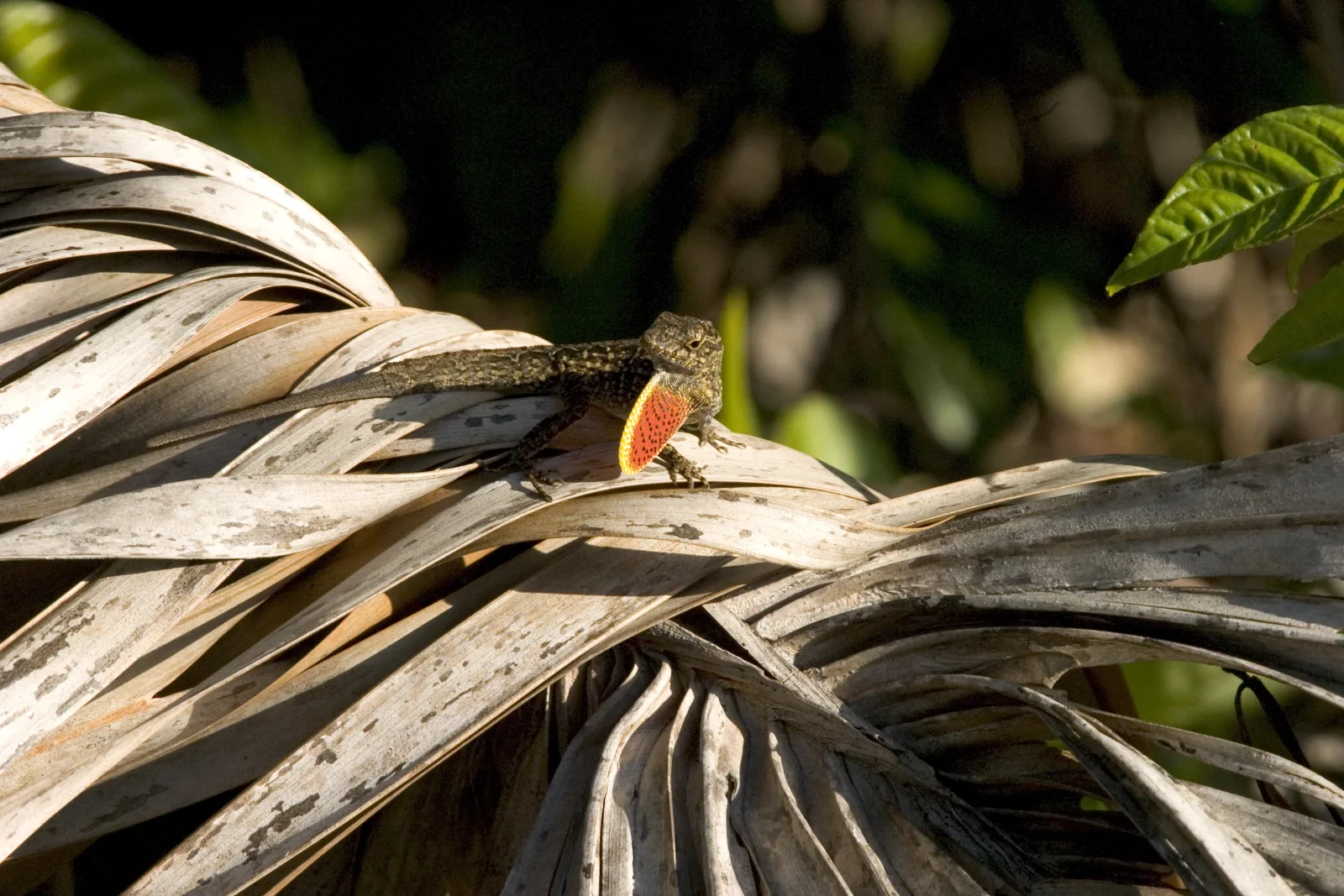
Brown Anole
Anolis sagrei
Helpful — leave it
How to tell: Brown lizard doing push-ups and bobbing its head on walkways
Photo: Everglades NPS from Homestead, Florida, United States via Wikimedia Commons , public domain, resized.
.jpg)
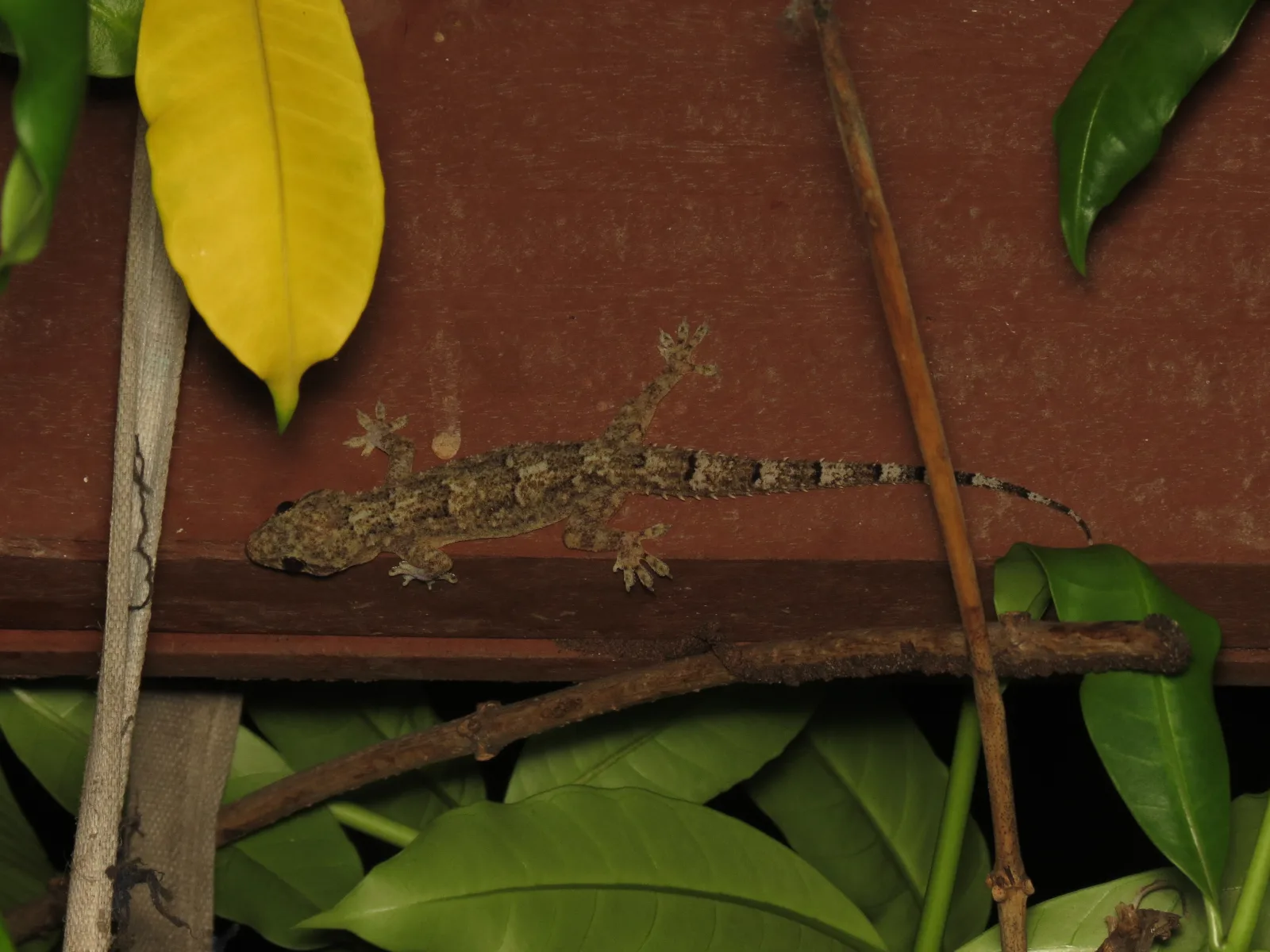
House Gecko
Hemidactylus spp.
Helpful — leave it
How to tell: Pale, almost translucent lizard active on walls at night
Photo: Donald Hobern from Copenhagen, Denmark via Wikimedia Commons , CC BY 2.0, resized.
.jpg)
Green Anole
Anolis carolinensis
Helpful — leave it
How to tell: Slender lizard, 5 to 8 inches long including tail, usually bright green but can shift to brown with mood, temperature or stress
Green Iguana
Iguana iguana
Worth a pro look
- Can bite
- Can spread disease
- Can damage structures
How to tell: Large lizard, often 3 to 5+ feet long including tail, usually green but can turn olive, gray, or orange-ish, especially breeding males
Nile Monitor
Varanus niloticus
Worth a pro look
- Can bite
- Can spread disease
How to tell: Very large lizard, often 4 to 6+ feet long, grayish-brown with rows of pale yellow-green spots across the back and bands on the tail
Spiny-tailed Iguana
Ctenosaura similis
Worth a pro look
- Can bite
- Can spread disease
- Can damage structures
How to tell: Large lizard, often 3 to 4+ feet long including tail, gray to tan-brown with faint dark banding, not typically green
Gopher Tortoise
Gopherus polyphemus
Helpful — leave it
How to tell: Half-moon-shaped burrow entrance with a sandy apron in front
Nine-banded Armadillo
Dasypus novemcinctus
Worth a pro look
- Can spread disease
How to tell: Shallow, cone-shaped holes dug overnight, 1-3 inches deep
Brazilian Free-tailed Bat
Tadarida brasiliensis
Worth a pro look
- Can bite
- Can spread disease
How to tell: Small (body about 3.5 inches, weighs less than an ounce), dark brown to gray fur, with a tail extending past the edge of the wing membrane
Eastern Gray Squirrel
Sciurus carolinensis
Keep an eye on it
- Can bite
- Can damage structures
How to tell: Gray fur with brownish tints and a large, bushy tail, about 18 to 20 inches long including the tail
Raccoon
Procyon lotor
Worth a pro look
- Can bite
- Can spread disease
- Can damage structures
How to tell: Grayish-brown body 2 to 3 feet long including tail, with a black mask across the eyes and alternating light/dark rings on the tail
Southern Flying Squirrel
Glaucomys volans
Worth a pro look
- Can bite
- Can damage structures
How to tell: Small (8 to 10 inches including tail), soft gray-brown fur with a cream-white belly
Virginia Opossum
Didelphis virginiana
Keep an eye on it
- Can bite
How to tell: Grayish body about 2.5 to 3 feet long including tail, with a white face and long, pointed pink nose
Still Not Sure Which One You Have?
Text a photo and a licensed local tech will help you identify it for free. Some look-alikes can only be told apart in person, so we'll say if it needs an inspection. Or get a real price online in about 60 seconds.