Jump to a section (11)
- 01What musophobia actually is
- 02What causes musophobia
- 03How common is musophobia, really
- 04How musophobia is treated
- 05Why SWFL homeowners get more rodent auditions than most
- 06Signs there’s an actual rodent (not just musophobia talking)
- 07Where they actually get in
- 08Homeowner action plan
- 09What Waves does when you call
- 10Frequently Asked Questions
- 11Bottom line
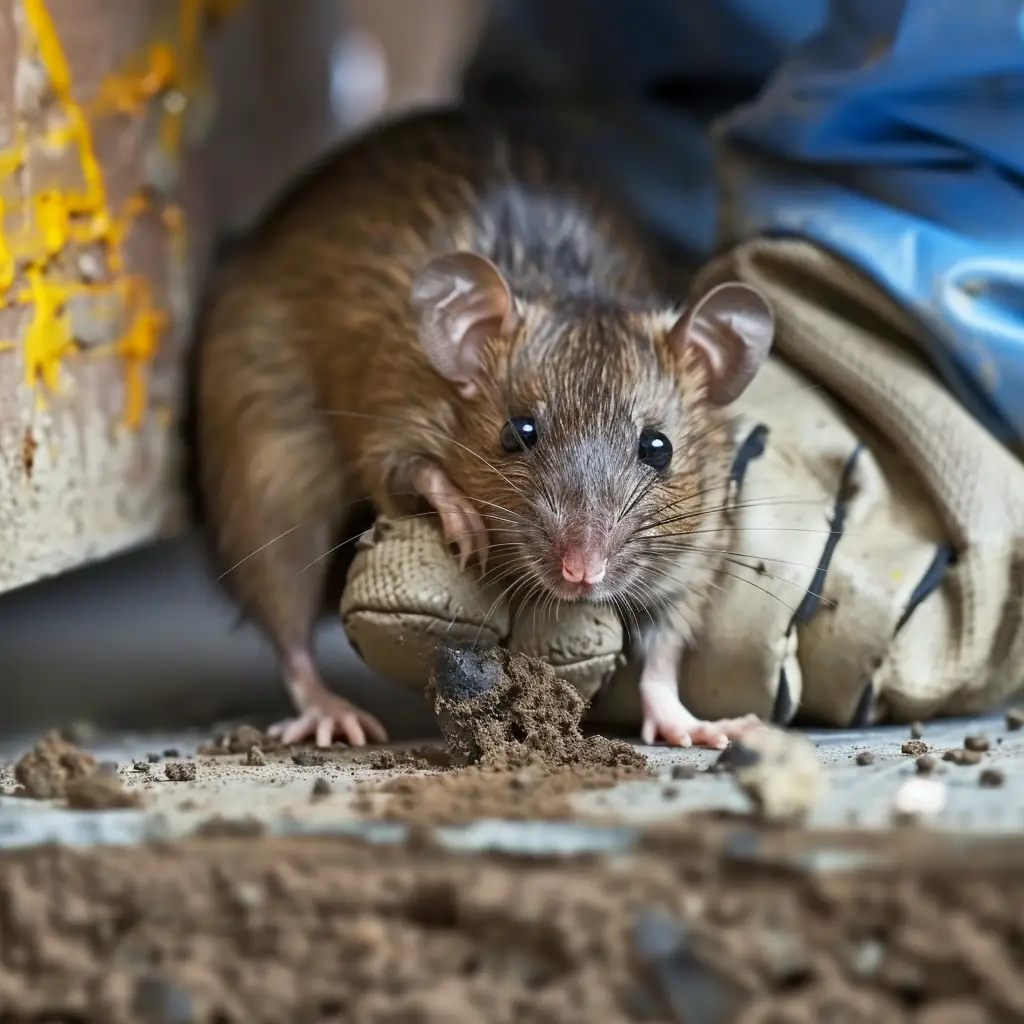
Musophobia (mus-oh-FOH-bee-uh) — the intense fear of mice and rats — is one of the more common specific-animal phobias out there. If you’ve ever done the “did-I-just-hear-something-in-the-ceiling?” freeze at 2 a.m. and lost the rest of the night’s sleep, this one’s for you. We’ll cover what musophobia actually is, what causes it, how it gets treated, and — because this is Southwest Florida and you probably clicked here for a reason — what to do when a real rodent is auditioning for a role in your attic. If you’d rather skip straight to identification, our pest identifier has photos and behavior notes for every rodent that shows up in SWFL homes.
Prefer to just talk to a human? See our pest control services or run the pest control calculator to see what a rodent job looks like for your home — no hardcoded pricing, because your roof size, story count, and how much tree contact you’ve got all matter.
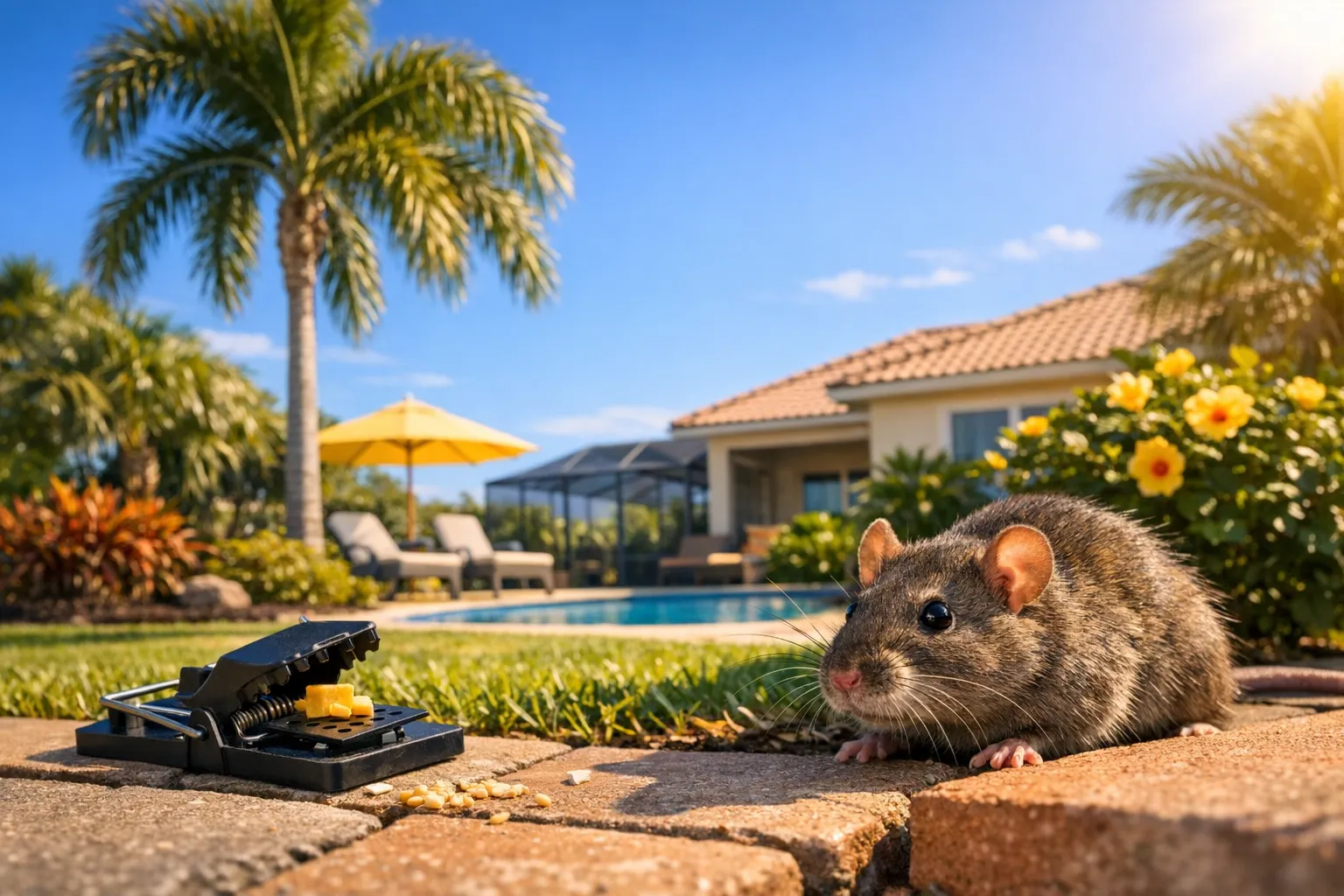
What musophobia actually is
Musophobia (sometimes called murophobia or suriphobia) is a specific phobia — meaning a persistent, out-of-proportion fear tied to one type of animal. Clinically, “specific phobia” is a DSM-recognized anxiety disorder. Casually, it’s the reason your neighbor won’t open the garage for a week after she spotted a tail near the recycling bin.
Estimates put the lifetime prevalence of specific phobias somewhere around 12–15% of U.S. adults, and animal-type phobias (mice, rats, snakes, spiders) are the biggest slice of that pie. So no — you’re not weird. You’re in a very well-populated club.
What causes musophobia
A few overlapping drivers, none of them silly:
- Evolutionary bias. Small, fast, unpredictable movement triggers a startle response in humans by default. Rodents are basically the perfect stimulus for the ancient part of your brain that runs the “get on the chair NOW” subroutine.
- Learned response. Watching a parent shriek at a mouse when you were four is enough to install the fear for life. Media reinforcement — plague stories, hoarder shows, disease headlines — piles on.
- Disgust sensitivity. Musophobia overlaps a lot with a disgust reflex: droppings, urine smell, contamination fear. Rodents genuinely do carry pathogens (leptospirosis, hantavirus, salmonella), so the disgust isn’t entirely irrational.
- Sound triggers. For plenty of people, the trigger isn’t the animal at all — it’s hearing the animal. Scratching in the ceiling at 3 a.m. hits differently than seeing a mouse dart across the garage in daylight.
How common is musophobia, really
Hard numbers are messy because most people never seek treatment, but survey data consistently puts fear of mice in the top three animal fears alongside snakes and spiders. It’s reported more often in women, but that likely reflects reporting bias more than anything else — plenty of grown men have given us the “please don’t tell my wife I stood on the couch” face during an inspection.
How musophobia is treated
We’ll say this once, clearly: if a fear of rodents is affecting your sleep, your ability to enter parts of your home, or your daily life, talk to a licensed mental-health professional. We’re pest control, not therapists. Evidence-based treatments for specific phobias generally include:
- Cognitive behavioral therapy (CBT) — reframing the thought loops that keep the fear online.
- Exposure therapy — gradual, controlled contact with the feared stimulus, typically starting with pictures, then video, then a caged rodent in a controlled setting.
- Relaxation and breathing techniques for acute moments.
What Waves can do is remove the actual rodent from your house so the exposure part isn’t happening in your kitchen at midnight against your will.
Why SWFL homeowners get more rodent auditions than most
Southwest Florida is basically a rodent theme park. Sandy soil doesn’t slow tunneling down the way clay would. Afternoon storms all summer push rodents up out of the yard and into dry attics and soffits. Our mature palm and oak canopy gives roof rats a direct highway to your roofline. Barrel tile roofs on older homes have natural gaps that pretty much say “welcome home” to a rat looking for a nesting cavity. And year-round warmth means there’s no winter die-off — populations just build.
The result: even a spotless, well-kept home in Sarasota, Bradenton, Fort Myers, or Naples can host a roof rat colony in the attic without anyone realizing until scratching starts overhead. If your yard is patchy St. Augustine and you’ve got palms brushing the eaves, you’re in the pattern.
Seasonal pressure
SWFL Rodent Pressure by Season
- Winter Dec–FebLower build
No winter die-off in SWFL, but cool-front pulses drive rodents indoors seeking warmth and dry harborage.
- Spring Mar–MayBuilding
Breeding ramps up as temperatures climb; nesting activity increases in attics and soffits.
- Summer Jun–AugPeak
Afternoon storms push rodents up out of saturated yards and into dry attics, soffits, and wall voids.
- Fall Sep–NovSurge
Storm season and early cool fronts keep pressure elevated as populations built over summer look for shelter.
Summer & Fall run hottest. Rodent pressure in SWFL doesn't really take a season off — it just shifts intensity around storm season and cool-front pulses.
Signs there’s an actual rodent (not just musophobia talking)
Before you spiral, do a five-minute walkthrough. Real activity leaves real evidence.
On every inspection
What a tech looks for during a rodent inspection
- Droppings Roof rat ~½ inch, spindle-shaped and pointed. House mouse ~¼ inch, pointed. Norway rat ~¾ inch, blunt. Dark and moist = recent; gray and crumbly = old.
- Rub marks Greasy brown streaks along rafters, joists, and top plates where rodents run the same path repeatedly.
- Gnaw marks Fresh chew on wiring, wood, or plastic. Light-colored gnaws are new; dark and weathered means old activity.
- Attic sounds Scratching or running noises after dark. Roof rats are nocturnal — daytime noise usually means squirrels.
- Disturbed insulation Trenches, matted spots, or shredded material pulled into a nesting area.
- Musky odor Urine smell in enclosed spaces — pantries, under sinks, or near HVAC in the attic.
Two or more of these and you've got activity, not anxiety.
Where they actually get in
You will not out-clean a roof rat. Exclusion — sealing the actual entry points — is what ends the problem. Here’s the map a tech will walk with you:
Your home, zone by zone
Where we inspect & treat
A typical Southwest Florida home — the numbered zones a local tech walks on every visit.
- Foundation perimeter Exterior barrier band — the first line where pests cross in from the yard.
- Entry points (doors/windows) Thresholds and frames where ants and roaches slip indoors.
- Eaves & soffits Up under the roofline where wasps and spiders like to nest.
- Weep holes Block-wall gaps that let pests behind the brick veneer.
- Garage corners Dark, cluttered edges spiders and roaches favor.
- Lanai & screen cage The classic SWFL hot spot for spiders, midges and palmetto bugs.
- Mulch beds & turf edges Damp landscaping that harbors ants, fleas and chinch bugs.
- Interior baseboards Where indoor crawlers travel along the wall line.
- Kitchen & bath plumbing gaps Pipe penetrations roaches and ants use to move room to room.
- Attic Top of the home — checked for rodent runs and nesting.
The zones a Waves tech inspects and seals on a SWFL rodent job. A/C line penetrations are the #1 re-entry point in this market — foam alone degrades in the sun and gets chewed through in hours.
Homeowner action plan
If you suspect rodents, here’s the sane sequence:
- Do the walkthrough above. Look, don’t touch. Droppings should never be swept dry — that aerosolizes pathogens. Following CDC rodent cleanup guidance, put on gloves, thoroughly soak the droppings and any urine with a disinfectant or bleach solution, let it sit for at least five minutes, then wipe it up with disposable paper towels and bag the waste before you clean before an inspection.
- Trim vegetation back at least 3 feet from the structure. Roof rats use palm fronds and oak branches like on-ramps. This is the single highest-leverage thing a homeowner can do, and it costs nothing but an afternoon.
- Scan A/C line penetrations, soffit corners, and gable vents from the ground with binoculars. You’re looking for gaps of about ¼ inch or larger (a mouse only needs that much) — and rats can squeeze through roughly ½ inch. When in doubt, treat any pencil-width gap as a possible entry point.
- Don’t drop store-bought bait blocks in the attic. A rodent that eats bait and dies inside a wall cavity is a six-week smell problem. Snap traps in tamper-resistant stations are the professional approach for a reason.
- Call for a real inspection. A trained tech finds entry points you can’t see from the ground and can tell roof rat activity from Norway rat activity from a squirrel in under a minute.
Pro tip: If you hear scratching overhead only between about 8 p.m. and 5 a.m., it’s almost certainly a roof rat — they’re strictly nocturnal. Daytime running noises usually mean squirrels, which is wildlife rather than a rodent-control job — squirrels should be referred out to a licensed wildlife trapper, not handled as a Waves removal. Tell the tech which one you heard, and when, and we’ll help point you to the right resource.
What Waves does when you call
A rodent job runs in three phases so nothing gets skipped:
- Inspection + trapping. Full property walk (1–1.5 hours), snap traps placed at confirmed activity points inside, and tamper-resistant stations outside. Under EPA rodenticide restrictions, any exterior above-ground bait or rodenticide has to go in a tamper-resistant bait station.
- Exclusion. Copper mesh backed with pest-block foam at A/C lines, soffit gaps, roof vent boots, garage door corners, and any other entry point identified. Foam by itself is not a seal; a rodent chews through it in hours. Copper mesh, they can’t.
- Monitoring. Recurring visits to verify seals hold and catch new activity early. This is where a WaveGuard membership earns its keep, especially in neighborhoods with heavy tree canopy or older barrel tile roofs.
Frequently Asked Questions
Is musophobia the same as the fear of rats?
Close enough for our purposes. Musophobia technically covers mice, but in practice the fear response doesn’t discriminate — most people with a fear of mice have the same reaction to rats, gerbils, hamsters, and anything else rodent-shaped. Some clinicians separate out “suriphobia” for rats specifically, but the evidence-based treatment approach is identical.
Can a pest control company help someone with musophobia?
We can’t treat the phobia itself — that’s a licensed therapist’s job. What we can do is get the rodent out of the home fast, exclude the entry points so it doesn’t happen again, and communicate clearly at every step so you’re not surprised in your own house. A monitored home with sealed entry points and no current signs of activity after inspection is a lot easier to relax in than one where you’re waiting for scratching at 2 a.m. If you’d like a tech who understands that the phobia is real and won’t wave a dead rat in your face for laughs, just say so when you book. That’s a normal request.
How do I know if it’s a mouse, a rat, or something else?
Droppings are the fastest tell. Mouse droppings are about the size of a rice grain, roof rat droppings are around half an inch and pointed, and Norway rat droppings are three-quarters of an inch and blunt. Sound helps too: attic noises above your bedroom usually mean roof rat, ground-level scratching in cabinets is more often a mouse or Norway rat, and daytime racket in the soffits is almost always a squirrel. Our pest identifier has side-by-side photos and behavior notes if you want to compare before you call.
Bottom line
Musophobia is real, common, and — if it’s genuinely disrupting your life — worth a conversation with an actual mental-health professional. But if the underlying problem is that there’s a rodent in your Southwest Florida home, the fix isn’t more anxiety. It’s inspection, trapping, and exclusion. That part we can handle.
Book a rodent inspection or call us at (941) 297-5749 and we’ll walk your home end to end.