If the seed-shaped case is on a wall, ceiling, or garage corner, you have the indoor household casebearer, and our plaster bagworm guide covers it. If the bag hangs from a branch of a tree or shrub, covered in bits of twig and leaf, this page is for you.
Here is what UF/IFAS says about landscape bagworms in Florida, what the damage looks like, and what to do about it, in a sensible order.
Which bagworm is in Florida landscapes?
UF/IFAS notes that “several species of bagworms can be found in Florida.” The one its main fact sheet covers is the common bagworm, also called the evergreen bagworm or eastern bagworm (Thyridopteryx ephemeraeformis) (UF/IFAS EDIS). That fact sheet says this species “is not found here in Florida with great frequency,” and calls it an occasional pest here because many of its preferred host plants “do not grow well below the USDA hardiness zone 8A.” It also mentions unconfirmed reports of the common bagworm as an economic pest of Adonidia palms in southern Florida.
“Occasional” does not mean “never.” Ralph Mitchell, the UF/IFAS Extension horticulture agent in Charlotte County, has written about seeing bagworm damage on Indian hawthorn and junipers there, including “numerous Indian Hawthorns essentially defoliated by bagworms” (UF/IFAS Charlotte County). The UF/IFAS pages I reviewed do not name the other Florida species or say which is most common in Sarasota or Manatee County, so everything below applies to the common bagworm.
What a landscape bagworm looks like
You usually see the bag, not the caterpillar. UF/IFAS says the larva builds its bag from “pieces of twigs, leaves, and silk,” and only the head and thorax poke out of the front end. The bag grows as the caterpillar does, and Charlotte County Extension describes mature bags as up to about two inches long. Pinellas County Extension notes the larva interweaves bits of the host plant’s twigs or leaves into the silk “to disguise and strengthen the case,” so a bag can be easy to overlook.
Hosts UF/IFAS lists include juniper, arborvitae, live oak, southern red cedar, willow, maple, elm, pine, Indian hawthorn, ligustrum, and viburnum. The species can feed on “over 50 families” of trees and shrubs, so a plant not on that list is not off the table.
A quick way to sort what you found:
- Hanging from a branch, covered in twig and leaf pieces, outdoors: a landscape bagworm, which is this page.
- Flat, gray, seed-shaped case stuck to a wall or ceiling: the indoor household casebearer. See the plaster bagworm guide.
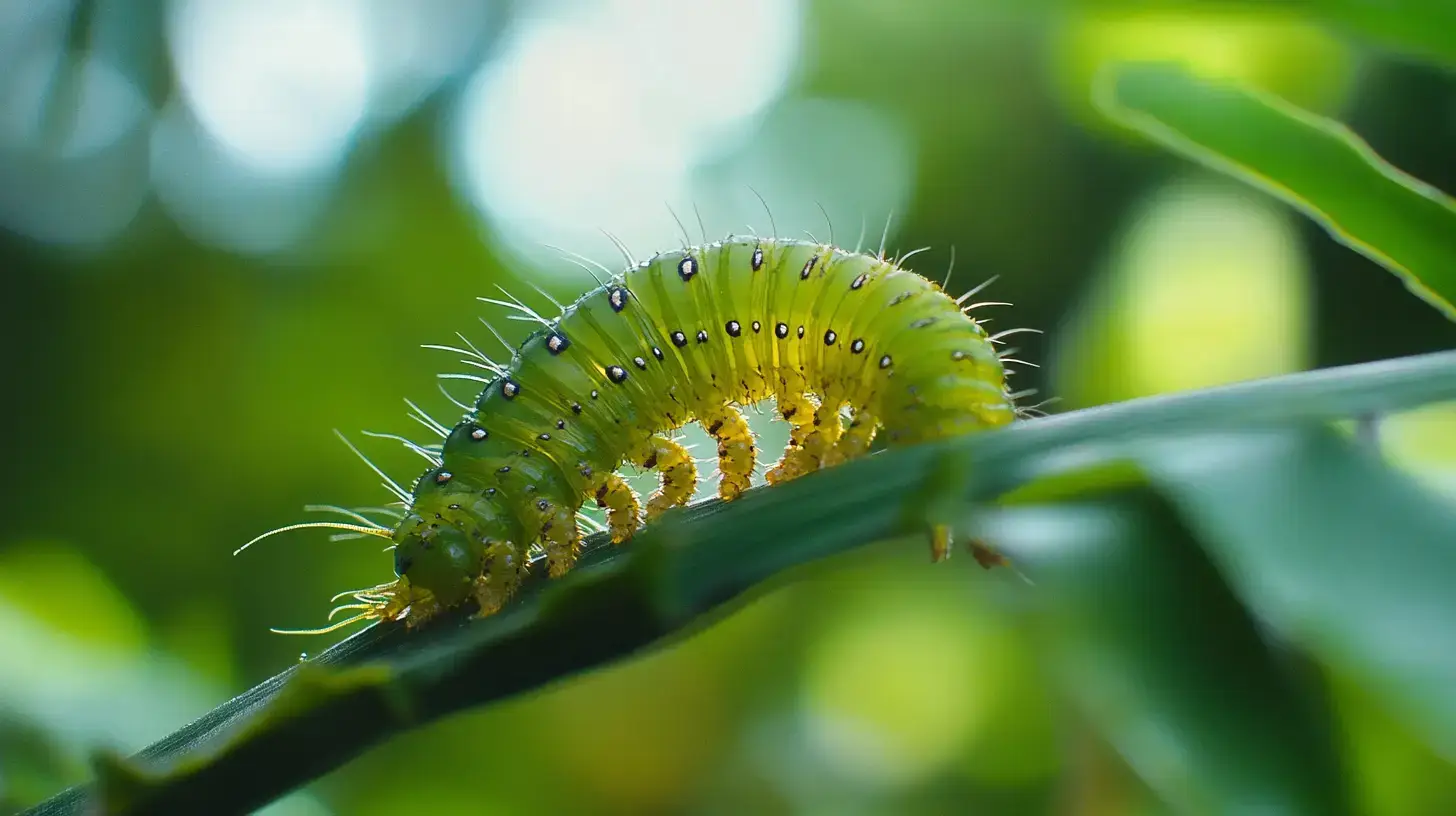
- A caterpillar with no bag at all: a different insect. Try the Which Florida caterpillar is this? guide.
Life cycle and timing
UF/IFAS describes the common bagworm this way:
- A female lays 500 to 1,000 eggs inside her bag, and the eggs overwinter.
- Larvae hatch in late spring and early summer. Hatchlings are about 2 mm long and spread by spinning a silk thread and “ballooning” on the wind.
- The caterpillar goes through seven instars and “takes up to four months to develop, depending on temperature.”
- The mature larva fastens its bag to a branch with a band of silk. The pupal stage lasts about 7 to 10 days.
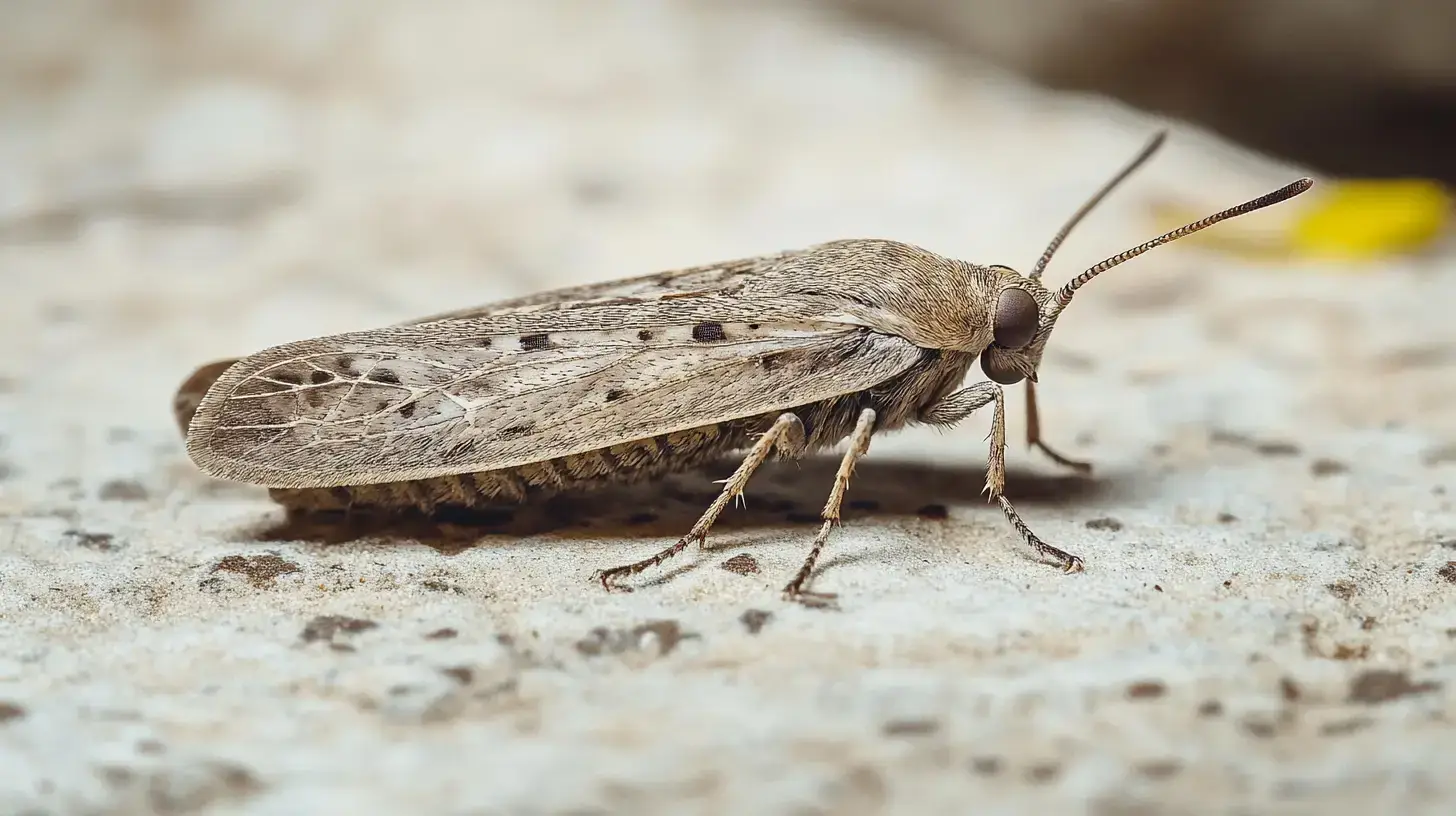
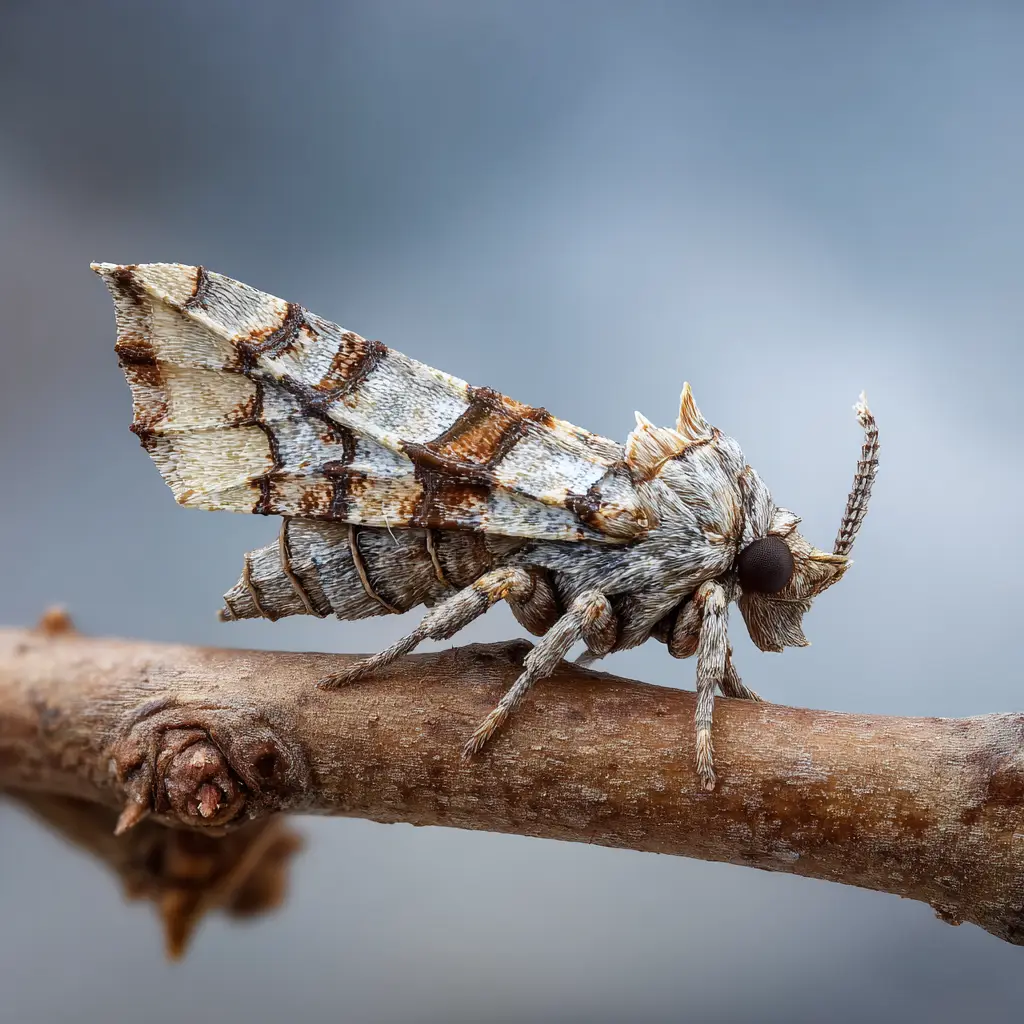
- Males emerge in the fall as hairy black moths and fly to the females. The female stays in her bag. She has no wings and only greatly reduced legs and mouthparts, and she lives only a couple of weeks.
One caution on timing. That calendar is UF/IFAS’s description of the species in general, and the Pinellas County Extension office notes that in Florida there is no dormant period (UF/IFAS Pinellas County). Don’t treat a date on the calendar as a firm rule here. What matters more is the size of the bags and the caterpillars inside them. Small ones are easier to control than large ones.
UF/IFAS also says bagworm infestations tend to stay local, because the larvae move only a few meters from the plant where they hatched. A single host plant can end up carrying a heavy population.
What bagworm damage looks like
According to UF/IFAS, the first sign on evergreens is branch tips that look brown and unhealthy. Larvae can cause “severe defoliation and even death, especially on evergreen species.” Charlotte County Extension adds that infestations can be heavy but are localized, so check the plants nearest the original bags first.
How to control bagworms, in order
1. Monitor and hand-pick
Charlotte County Extension calls the best and easiest way to suppress this pest to “monitor frequently and hand-pick the bags as they are discovered.” UF/IFAS says handpicking into a bucket of soapy water or a sealed bag is an effective control “when populations are low,” and that it is most effective “from late fall to early spring before adults reproduce and new bagworm larvae disperse.” Pinellas County Extension adds a practical tip: cut the silk band that attaches the bag to the plant, or the bag may stay put.
A bag you can reach with a pole pruner or from the ground is easy. A bag in the top of a tall tree is a different job, and a landscape professional or your county Extension office can help with it.
2. Leave room for natural enemies
UF/IFAS says the common bagworm is attacked by at least 11 species of parasitic wasps, and that predators include white-footed mice and sparrows. In one study it cites, adding flowering species to a mock landscape increased parasitism by certain wasps. Natural enemies are a help, not a replacement for removing bags on a plant that is being stripped.
3. Bacillus thuringiensis for young larvae
UF/IFAS lists Bacillus thuringiensis var. kurstaki (Bt) as an effective control “when applied to early instar larvae.” Charlotte County Extension likewise says a Bt product can be used with success on the smaller caterpillars. Because UF/IFAS ties Bt to early instars, timing matters. UF/IFAS also says entomopathogenic nematodes, especially Steinernema carpocapsae, “have been shown to provide control.” For either one, use the product only as the label directs.
4. Other insecticides: young larvae, as a last resort
When handpicking is not practical, UF/IFAS says insecticide control “should be aimed at young larvae,” and warns that “penetration with insecticides can be challenging due to the protective bag.” Pinellas County Extension describes stomach insecticides as a last resort, effective mainly on young larvae, with thorough coverage of the foliage. Choose only an EPA-registered product labeled for bagworms on your plant, follow the label for how and when to apply it, and protect bees and other pollinators. If the plant is large, valuable, or already heavily damaged, ask a licensed professional.
For more on landscape plants, see tree and shrub care in Lakewood Ranch. If the plant’s problem turns out to be a different pest, our scale insect guide covers another common one.
Frequently Asked Questions
Are the bagworms on my wall the same as the ones on my shrubs?
No. The flat, seed-shaped cases on walls and ceilings are household casebearers, an indoor pest with its own guide: plaster bagworms in Southwest Florida. The bags this page covers hang from the branches of trees and shrubs.
When should I pick bags off my trees and shrubs?
UF/IFAS says handpicking is most effective from late fall to early spring, before the adults reproduce and new larvae spread.
Does Bt kill bagworms?
UF/IFAS says Bt (Bacillus thuringiensis var. kurstaki) is effective when applied to early instar larvae, meaning the small ones. Use any Bt product only as the label directs.
Can bagworms kill a shrub or tree?
They can. UF/IFAS says larvae can cause severe defoliation and even death, especially on evergreen species. Infestations tend to stay on or near the plant where they started.
Do natural enemies keep bagworms down?
UF/IFAS says the common bagworm is attacked by at least 11 species of parasitic wasps, along with predators such as white-footed mice and sparrows. They are a help, but not a replacement for removing bags on a plant that is already heavily infested.