You spot a chunky, jet-black, bristly caterpillar crawling across your lanai screen or your St. Augustine, and two questions hit at once: is that thing going to sting me, and what is it going to turn into? Both are fair. “Fuzzy and black” describes several different caterpillars in Florida. Most are harmless, and one or two you really don’t want to grab.
The short answer: a big, all-black, bristly caterpillar that curls into a ball and flashes red bands is a giant leopard moth caterpillar, and it doesn’t sting. The look-alikes that do cause problems have tells you can spot from a safe distance. If you’d rather skip the ID quiz, our pest control services team gets this call every spring and fall.

For a broader field guide to what’s crawling around your yard, bookmark our pest library, or compare it side by side with other larvae in our Which Florida caterpillar is this? hub.
Which fuzzy black caterpillar you’re looking at
Getting the ID right is the whole game, because the right response ranges from “leave it alone” to “wash the area and watch for a reaction.”
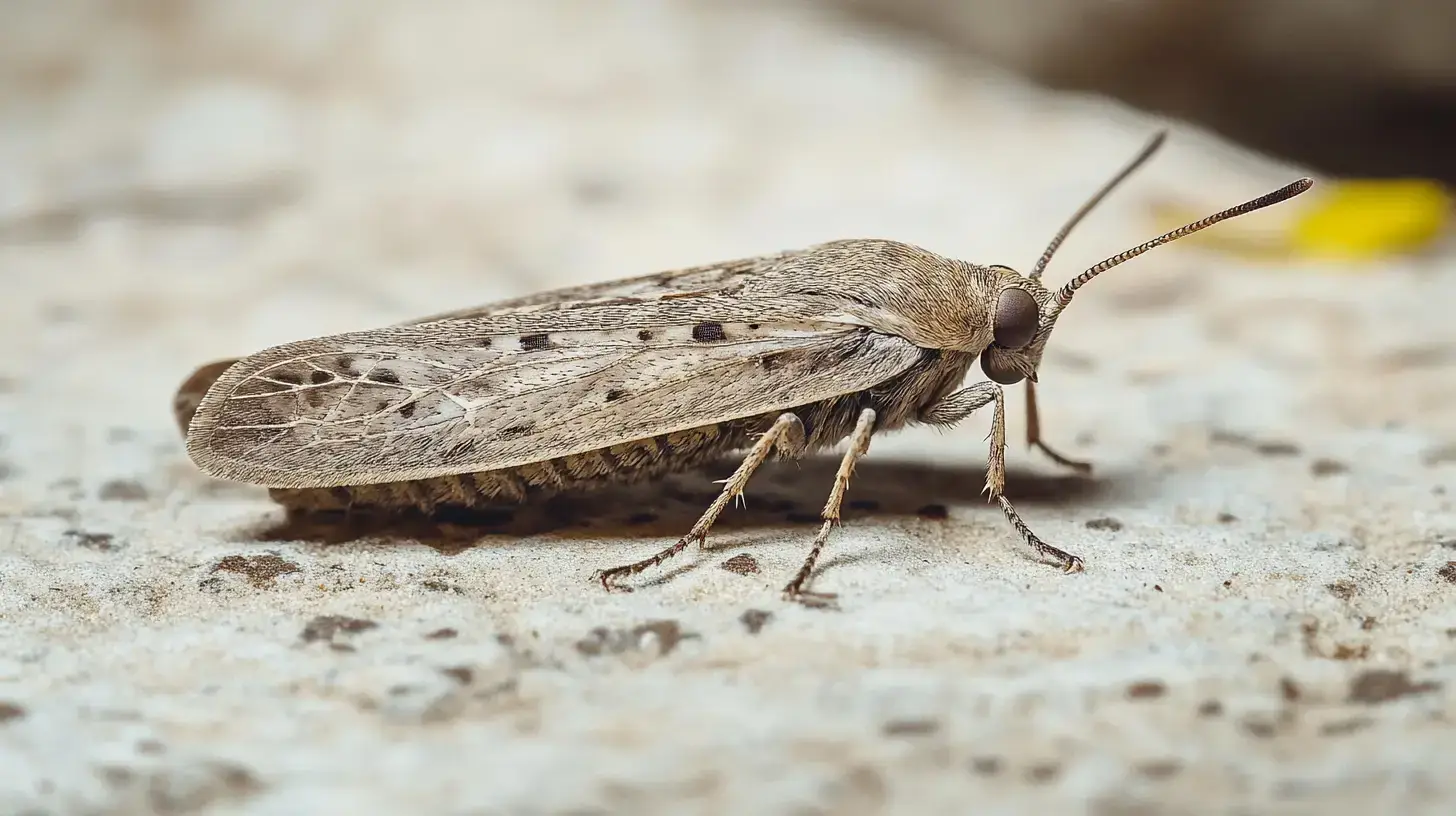
Giant leopard moth caterpillar (Hypercompe scribonia). Also called the giant woolly bear. UF/IFAS describes full-grown caterpillars as about 3 inches long, black, and covered in stiff, shiny black bristles, with red bands between the body segments. When it feels threatened, it curls into a tight ball, and the red bands show. Tiger moth caterpillars like this one have no stinging spines and don’t bite. It turns into a white moth with hollow black spots.
Banded woolly bear (Isabella tiger moth larva). Black at both ends with a rusty-orange band in the middle: the “weather-predicting” caterpillar from up north, which also occurs in Florida. It has no venom or stinging spines, though a few people get a mild rash from the bristles.
Tussock moth caterpillars (Orgyia species). These are the tufted ones: a dark body with four brush-like tufts on the back and long “hair pencils” sticking out at the front and rear. UF/IFAS lists the fir tussock moth as the most common in Florida, followed by the whitemarked tussock moth. Their hairs cause itchy welts that usually fade by the next day, though the itch can linger a day or two.
Puss caterpillar (Megalopyge opercularis). This is the one to respect. It’s covered in soft gray or pale brown hair, so it looks like a small toupee, not a black bristly worm, but it gets lumped into these searches all the time. Under the soft hair are venomous spines. According to UF/IFAS, a sting can cause headache, nausea, fever, and even seizures, and you should get medical attention if symptoms keep getting worse. Florida usually sees two generations a year, one in spring and one in fall.
| Species | Look | Sting risk | What it becomes |
|---|---|---|---|
| Giant leopard moth larva | Black bristles + red rings between segments | None — no stinging spines | White moth with black spots |
| Woolly bear | Black ends, rusty-orange middle band | None (mild rash possible) | Isabella tiger moth |
| Tussock moth larva | Dark body with distinct hair tufts | Mild — itchy welts | Small gray/brown moth |
| Puss caterpillar | Gray-to-pale-brown toupee-shaped fuzz | Severe — venomous spines | Southern flannel moth |
If it has visible red or orange rings between segments, it's almost certainly the harmless giant leopard moth caterpillar.
Why you see them in Southwest Florida
It comes down to food and weather. The giant leopard moth caterpillar eats a long list of plants, including citrus, magnolia, pokeweed, dandelion, and cabbage, so most SWFL yards have something on the menu. Puss caterpillars feed on many woody plants but are most common on oaks, and oaks are everywhere here.
Warm weather also means more generations per year. Giant leopard moths have two or more broods a year in the South, and puss caterpillars can have three in South Florida. That’s why you tend to see caterpillars in waves through spring and fall.
Your home, zone by zone
Where we inspect & treat
A typical Southwest Florida home — the numbered zones a local tech walks on every visit.
- Foundation perimeter Exterior barrier band — the first line where pests cross in from the yard.
- Entry points (doors/windows) Thresholds and frames where ants and roaches slip indoors.
- Eaves & soffits Up under the roofline where wasps and spiders like to nest.
- Weep holes Block-wall gaps that let pests behind the brick veneer.
- Garage corners Dark, cluttered edges spiders and roaches favor.
- Lanai & screen cage The classic SWFL hot spot for spiders, midges and palmetto bugs.
- Mulch beds & turf edges Damp landscaping that harbors ants, fleas and chinch bugs.
- Interior baseboards Where indoor crawlers travel along the wall line.
- Kitchen & bath plumbing gaps Pipe penetrations roaches and ants use to move room to room.
- Attic Top of the home — checked for rodent runs and nesting.
Fuzzy caterpillars usually turn up in zone 3 (eaves and soffits, where they spin cocoons), zone 6 (the lanai screen), and zone 7 (mulch beds and shrubs along the foundation). Check those spots when you find one.
Quick checks you can do (and what not to do)
Before you touch anything, take a two-second look from about a foot away:
- Look for red or orange rings between the segments. They flash when the caterpillar curls up. Red rings mean giant leopard moth, which is harmless.
- Look for brush-like tufts and long hair pencils. That’s a tussock moth. Don’t handle it bare-handed.
- Look for a toupee shape with no obvious segments. If it looks more like a wig than a worm, it’s a puss caterpillar. Don’t touch it, and don’t flick it off the wall with your fingers.
- Check walls, soffits, and lanai screens for cocoons. Tussock moths often spin cocoons there, and the cocoons contain the same irritating hairs. Wear gloves and scrape them into a bucket of soapy water.
Pro tip from the field: If you can’t identify a caterpillar and you have kids or pets nearby, set an upside-down plastic cup over it until you can get a good look.
What not to do:
- Don’t pick it up with bare hands. Even harmless species have bristles that bother some people’s skin.
- Don’t spray a broad-spectrum insecticide across the whole yard “just in case.” Most of these caterpillars come and go with the season. If you need to control them on a plant, use a Bt (Bacillus thuringiensis) product labeled for caterpillars and apply it to the leaves they’re eating, because they have to eat it for it to work. Follow the label.
- Don’t pressure-wash cocoons off the house. You’ll spray the irritating hairs around.
If someone gets stung: Florida’s Division of Plant Industry recommends lifting any spines out with adhesive tape, then using an ice pack and an antihistamine. For a puss caterpillar sting, or any reaction worse than a bee sting, call Poison Control at 1-800-222-1222 or get medical care.
When to call a pro (and how Waves handles it)
Most fuzzy black caterpillar sightings don’t need a treatment. Get a pro involved when:
- You’re finding dozens on the siding, screens, or foundation shrubs. That usually means a heavily infested tree or shrub nearby.
- Someone’s been stung and you can still see caterpillars on your oaks or shrubs.
- You keep finding them inside. That means there are entry points to seal, whatever the caterpillar.
- You have kids, dogs, or a pool cage that’s turned into a caterpillar hangout.
On a caterpillar call, we identify the species, find the plants they’re feeding on, and treat only where they’re actively feeding, with a product labeled for caterpillars. We clear cocoons off the structure and point out the gaps they’re using to get onto the lanai or into the garage. It’s targeted work, not a “spray the whole yard” reflex. If you’re already on a recurring plan, just mention it to your tech at the next visit.
Want a ballpark for your home? Get an instant range with our pest control calculator, no phone tag required.
Frequently Asked Questions
Are fuzzy black caterpillars venomous?
Most aren’t. The classic SWFL fuzzy black caterpillar, the giant leopard moth larva with red rings, has no stinging spines. Stinging caterpillars don’t use a stinger like a bee; they have hollow or barbed hairs and spines that break off in your skin. The Florida species that cause real stings, such as the puss, saddleback, and io moth caterpillars, look quite different. A puss caterpillar looks like a small toupee, not a bristly black worm.
What does a fuzzy black caterpillar turn into?
It depends on the species. The giant leopard moth caterpillar becomes a large white moth with hollow black spots and a wingspan of about 2¼ to 3½ inches. Woolly bears become Isabella tiger moths, which are a dull yellow-orange. Tussock moth caterpillars become plain gray-brown moths.
Is it safe to touch a woolly bear caterpillar?
Woolly bears have no venom or stinging spines, so a quick touch won’t hurt you. Some people do react to the bristles the way they would to fiberglass, with a short-lived itch or mild rash. If you want to move one off the driveway, scoop it onto a leaf instead of pinching it.
Bottom line: a fuzzy black caterpillar in your yard is usually a giant leopard moth larva looking for something to eat. Learn the few that actually cause trouble, keep an eye on your oaks, and don’t panic-spray. If you’re seeing large numbers, finding them inside, or someone’s been stung, that’s when a targeted visit pays off. Get a quote from Waves and we’ll take a look.