Jump to a section (8)
- 01The honest caveat, straight from UF/IFAS
- 02Bed bug signature: exposed skin, small clusters, a mattress that hides them
- 03Flea signature: ankles up, and usually — not always — a pet in the picture
- 04The one people never suspect: rodent and bird mites
- 05Pattern comparison at a glance
- 06Interesting facts (all sourced to UF/IFAS)
- 07Inspection checklist before you treat anything
- 08When to bring in a pro
You woke up with a few red bumps, spiraled through image searches, and now you’re in front of the bathroom mirror deciding whether to burn the mattress or the dog. Slow down. In Southwest Florida, the three usual suspects behind “I got bit last night” are bed bugs, fleas, and mites, and each one leaves a different signature. (Bitten outdoors instead — mosquitoes, no-see-ums, chiggers? See our broader Florida biting bugs guide.)
One honest thing first: bite patterns are clues, not a diagnosis. You confirm the pest by finding the pest, not by studying your forearm. This post is the identification guide. Once you know what you’re dealing with, our bed bug treatment breakdown and pest control services cover the next step.
Not sure what’s biting you and want a professional set of eyes on it? Request a quote and we’ll get a tech out to inspect.
The honest caveat, straight from UF/IFAS
Two things you have to accept before we compare patterns:
- Reactions vary widely from person to person. UF/IFAS notes that allergic responses to flea bites depend on how sensitive the person is, and the same is true of bed bugs and mites. One person can welt up like they’ve been stung while their partner in the same bed feels nothing. If a bite is severe or spreading, or you feel unwell, call a doctor.
- You confirm by finding the pest, not the bite. Bites in a line, bites on the ankles, bites out of nowhere: those narrow the list but don’t close the case. You confirm bed bugs by finding bed bugs (or their fecal spots, shed skins, or eggs). You confirm fleas by finding fleas on the pet or in the carpet. You confirm mites by finding mites, which is easier than most people expect if you know where to look.
With that out of the way, here’s what each one usually looks like.
Bed bug signature: exposed skin, small clusters, a mattress that hides them
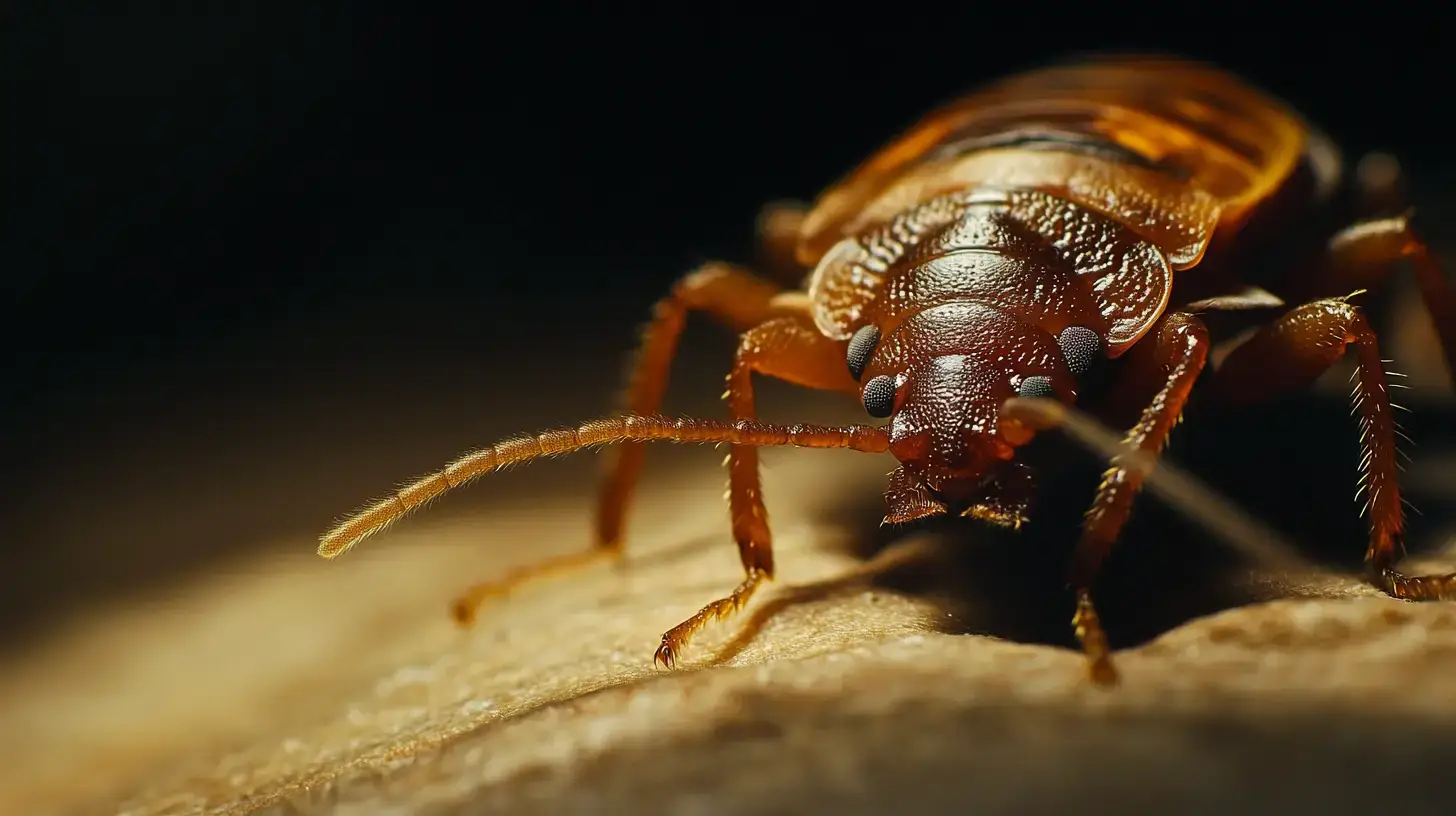
The UF/IFAS Featured Creatures profile describes the common bed bug (Cimex lectularius) as wingless, oval, and flat — adults about 3/16 inch long and brownish, turning reddish-brown after feeding. They generally feed on people at night while they sleep, take three to ten minutes to finish a meal, and then head back to their hiding spot, returning to feed roughly every seven to ten days.
What that means for the bite pattern:
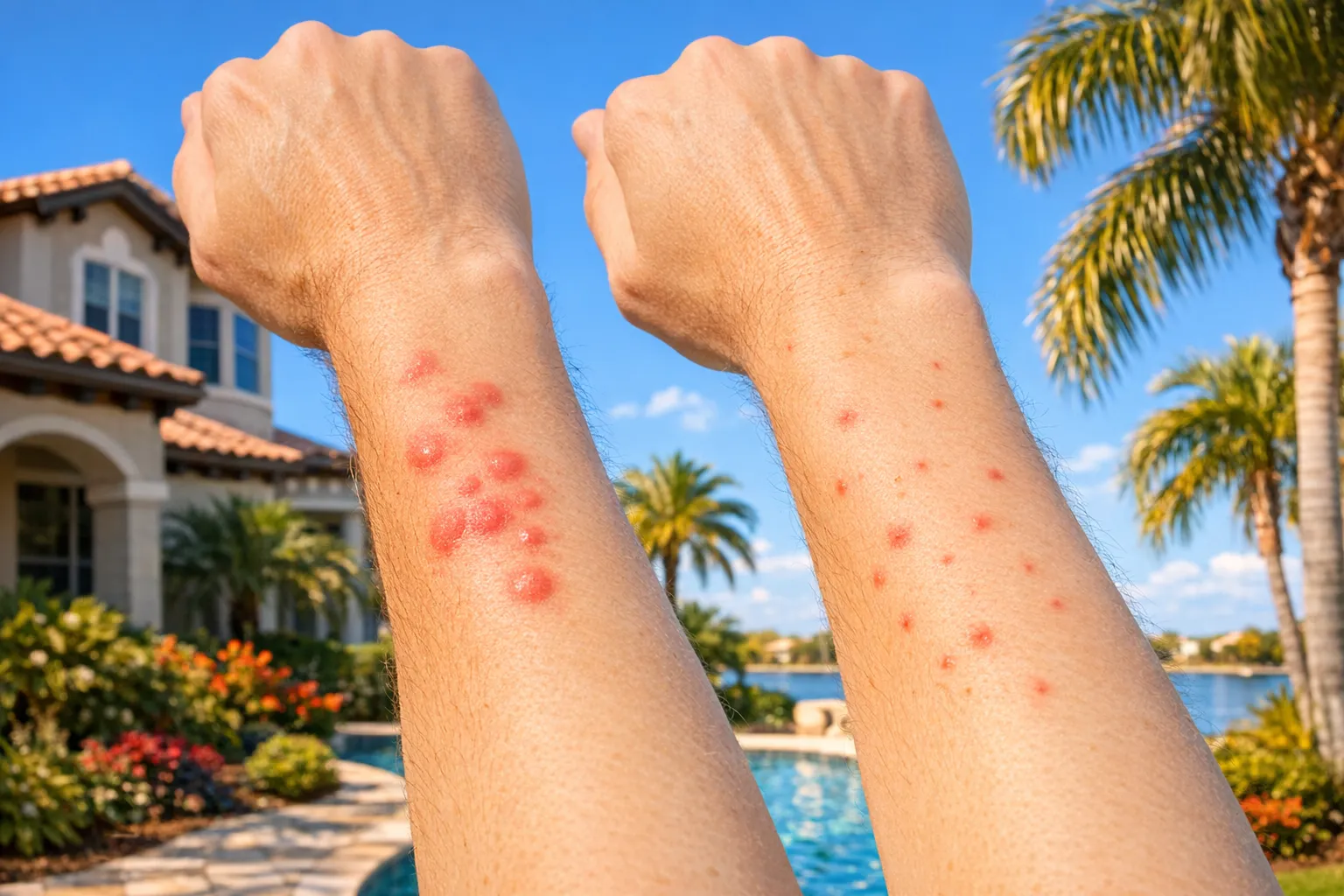
- Location: exposed skin during sleep — arms, shoulders, neck, upper back, legs. Anything your covers weren’t on.
- Grouping: small clusters or short runs on the same limb. Because a bed bug may feed more than once as it moves along skin, you can end up with two or three bumps in a rough line.
- Timing: noticed on waking. Bed bugs are active at night and hide during the day, per UF/IFAS.
- Where they hide: UF/IFAS lists human dwellings — mattresses, bed frames, cracks in walls, and similar warm hiding spots near a host — as their ideal habitat. That’s why the mattress-seam inspection is the confirming step. Look for:
- Live bugs about the size of an apple seed
- Rust-colored or black fecal spotting along mattress seams and box-spring edges
- Pale, translucent shed skins in the same seams
- Small pearly eggs tucked into joints and screw holes
If you find any of that, it’s bed bugs. If you find nothing but the bites keep coming, keep looking, because they’re very good at hiding. The good news: bed bugs have never been shown to spread disease to people. The bites are miserable, but disease isn’t the worry. When you’re ready to move from ID to treatment, our bed bug treatment guide is the next stop.
Flea signature: ankles up, and usually — not always — a pet in the picture
The flea you’re dealing with in Florida is almost certainly the cat flea (Ctenocephalides felis). Per UF/IFAS, adults are 1 to 3 mm, reddish-brown to black, wingless, and laterally compressed — flat side-to-side, unlike the top-to-bottom pancake shape of a bed bug. They have powerful hind legs built for jumping through hair, fur, and feathers, and adults are stimulated to emerge from their pupal cocoons by vibration and by an increase in carbon dioxide.
Read that last part again: vibration and CO₂ trigger emergence. That’s why you can walk into a house that’s been empty for a while and get bitten on the ankles within minutes.
What that means for the bite pattern:
- Location: ankles, feet, and lower legs first. You can pick up bites higher if you’re sitting on the floor or the couch, but the calf-and-down zone is the tell.
- Grouping: small red spots, often in loose clusters or short lines where the flea took several tries at the same leg.
- Timing: any time you’re near where they’re breeding — not specifically at night.
- Pet in the household? Big signal, but not a requirement. Look for “flea dirt” — dried adult flea fecal matter (basically undigested blood) — in your pet’s bedding and coat. UF/IFAS notes flea dirt is the main food source for flea larvae hiding in your carpet.
- No pet at all? Don’t cross fleas off. Cat fleas also live on wild animals like opossums, raccoons, and stray cats, so they can end up in your yard and slip in under a lanai door or garage seal whether or not you own a pet. Two situations make this easy to miss: a pet-free home that backs onto a preserve or woods, and a seasonal home that sat closed for months, where the pupae waited until the owner walked back in.
Pro tip, the white sock test: put on clean white socks pulled up over your ankles and walk slowly through the carpeted rooms where the pet spends time: under the couch, along baseboards, near pet bedding. Adult fleas jump toward the vibration and CO₂ you give off, so they land on the socks, where they show up as fast-moving dark specks. It’s not a lab test, but it flushes fleas out in a couple of minutes.
Southwest Florida gives cat fleas an unfair advantage. UF/IFAS notes their larvae do best out of the rain and sun, at 75% humidity or higher and 70°F to 90°F. That describes nearly every shaded corner of a Bradenton or Sarasota property from May through October. Sandy soil drains fast, so the moisture comes from what sits on top of it: shaded mulch beds, thick thatch, timer-run irrigation, dense shrubs against the foundation, and afternoon storms. Those are the spots to check. It’s also why treating the pet without treating the home and yard (or the reverse) rarely works.
The one people never suspect: rodent and bird mites
Here’s the plot twist. You’ve checked the mattress. You’ve combed the dog. Nothing. But you keep waking up itchy, or getting bitten, and can’t figure out where it’s coming from.
Mites — specifically the tropical rat mite (Ornithonyssus bacoti) and the tropical fowl mite (Ornithonyssus bursa) — bite people when their normal host disappears. Per the UF/IFAS Featured Creatures profile for the tropical fowl mite, “The bite is irritating, and some individuals react to the bite with prolonged itching and painful dermatitis. Several to many reports are received each year of mites invading homes.” UF/IFAS also notes the tropical fowl mite is common in the central and southern areas of Florida — which covers every city we service.
The pattern usually goes like this:
- You had rodents in the attic or walls, or birds nesting in a soffit, gable vent, or dryer vent.
- The animals moved on — or you cleaned them out — but the mites they hosted are still there and now hungry.
- The mites move into living space and bite whoever is closest.
- You cannot find bed bugs. You cannot find fleas. You cannot find anything.
If that sounds familiar, read our post on rat mites in Bradenton. It walks through the rodent-to-mite connection and why the fix has to include sealing the entry points, not just a can of spray.
To spot them: the UF/IFAS Insect ID Lab notes that when bird and rat mites are biting people, the mites usually aren’t hard to find. People describe them as about the size of a period on a printed page, and they’re easiest to see crossing a smooth white surface. A white bathtub, a white countertop, or a sheet of white paper on the nightstand is your detection kit.
Pattern comparison at a glance
Cross-reference before you decide anything.
| Signal | Bed bug | Cat flea | Rodent / bird mite |
|---|---|---|---|
| Where on you | Exposed skin during sleep — arms, shoulders, neck, back | Ankles, feet, calves; higher if sitting on floor or couch | Anywhere on the body — often trunk, arms, neck |
| Grouping | Small clusters or short runs of 2–3 bumps | Loose clusters on lower legs, often with a central puncture | Scattered small papules; no consistent pattern |
| When | Noticed on waking (night feeder, per UF/IFAS) | Any time near an infested area | Often after a rodent or bird issue was cleared |
| Where the pest hides | Mattress seams, box spring, headboard, cracks near the bed | Pet bedding, carpet, along baseboards, under furniture | Attic, soffits, wall voids — wherever rodents or birds nested |
| How you confirm | Live bugs, fecal spots, shed skins, or eggs in bed frame | Live fleas on pet or in carpet; 'flea dirt' in bedding | Tiny moving dots on a white surface; history of rodents or birds |
Bite patterns are directional evidence — final ID always comes from finding the pest, per UF/IFAS.
Interesting facts (all sourced to UF/IFAS)
A few pieces of trivia that actually matter for identification, not folklore:
- Bed bugs are the hide-and-seek champions of household pests. UF/IFAS notes that homes, bird nests, and bat caves make ideal bed bug habitat because they offer warmth, hosts, and cracks to hide in. Add a feeding cycle of about once every seven to ten days, and an infestation can go unnoticed for weeks.
- Bed bug bites are not a known disease vector. The UF/IFAS Featured Creatures profile notes bed bugs have been suspected as carriers of leprosy, oriental sore, Q-fever, and brucellosis historically, but have never been implicated in the spread of disease to humans. The itch is the problem; the disease risk from the bite itself is not.
- You set the fleas off. UF/IFAS states that adult cat fleas are triggered to leave their cocoons by vibration and rising carbon dioxide. That’s why “I walked into the empty house and got bitten” is such a common story: you brought the trigger with you.
- Cat fleas can carry pathogens, but rarely. Per UF/IFAS, cat fleas are capable of transmitting plague and murine typhus to humans, though such reports are rare. Flea allergy dermatitis on pets is the far more common issue.
- Mite problems are often misidentified. UF/IFAS gets several to many reports of mites invading Florida homes every year, and confirming them means finding the mite itself. Guessing from bites alone is often wrong.
For medical questions about a bite reaction (spreading redness, swelling, blistering, fever, or infection), see a doctor. We handle the pest side.
Inspection checklist before you treat anything
Before you set off a fogger, buy sprays, or call anyone (including us), walk through this. It saves you money and gets whoever you call to the right answer faster.
On every inspection
What to actually look for
- Mattress seam sweep Pull the sheet, run a flashlight along the seam, tag, and box-spring edge. You are looking for live bugs the size of an apple seed, rust or black fecal spots, and pale shed skins.
- Bed frame + headboard Bed bugs hide in wood joints, screw holes, and cracks. Loosen the headboard bolts if you can and look inside — that's where the population often lives, not the mattress.
- Pet check Comb the pet with a fine flea comb over a folded white towel. You're looking for live fleas or 'flea dirt' — tiny black specks that turn rusty red on a wet paper towel.
- Carpet edges + baseboards Fleas breed where the pet rests. Vacuum along baseboards and under furniture, and run the white-sock test to flush out adult fleas.
- Attic + soffit history Any rodent activity, bird nests, dryer-vent nesting, or bat guano in the last few months? If yes, mite bites move up your suspect list.
- White-surface mite check Set out a sheet of white paper or use a white bathtub. Mites — described by UF/IFAS as the size of a period on a page — are easiest to spot walking across a smooth, white surface.
Physical evidence beats bite guessing every time.
A few things not to do while you’re inspecting:
- Don’t haul the mattress to the curb on your own. Carrying an infested mattress through the house or building spreads bed bugs, and it rarely solves the problem because they’re seldom only in the mattress. Mattress encasements are sometimes part of a treatment plan, so ask whoever inspects before you throw anything away.
- Don’t fog the house without an ID. Total-release foggers don’t reach the cracks bed bugs and fleas actually live in.
- Don’t just treat the pet. Fleas live overwhelmingly in the environment; treating the animal alone is a temporary fix that fails within weeks in a Florida summer.
When to bring in a pro
Handle it yourself if:
- You’ve found the pest, the population is small, the pet is already on veterinary flea control, and you can commit to the weekly vacuuming, washing, and follow-up a DIY plan requires.
Bring in a pro if:
- Bites keep coming and you can’t find the source.
- You’ve confirmed bed bugs. This is not a DIY pest — they hide in places a homeowner can’t reach, and a partial effort usually just scatters them. Ask whoever you call what their approach is and how follow-up works before you commit.
- You’ve had rodent or bird activity in the attic or soffits and now people in the house are getting bit.
- You’re in a rental, condo, or attached home where a neighboring unit could be the source and cooperation matters.
If you’re at that point in Bradenton, Sarasota, Venice, or anywhere else in our service area, request a quote and we’ll come inspect. A licensed technician confirms which pest you actually have before anyone talks about treatment. For a ballpark price first, try our pest control calculator.
One thing that trips people up: an active bed bug or flea problem gets its own dedicated treatment. Regular quarterly service isn’t the fix for either one. Once the active problem is handled, our recurring pest control program is the ongoing prevention that keeps ants, roaches, spiders, and the rest of the SWFL lineup down. It’s exterior-focused, with interior service on request. Combining it with other recurring services earns a WaveGuard bundle discount. In Manatee County, that same program runs as pest control in Bradenton.
Want to keep going down the rabbit hole on a specific bug? The full pest library covers bed bugs, fleas, and the other pests we deal with most across the region, or see every Florida biting bug card in our Which Florida biting bug is this? hub.
Sources: UF/IFAS Featured Creatures profiles for the bed bug (Cimex lectularius), cat flea (Ctenocephalides felis), and tropical fowl mite (Ornithonyssus bursa), in the Featured Creatures series on EDIS; UF/IFAS Entomology and Nematology Insect ID Lab. This article describes bite patterns and inspection evidence to help homeowners identify a pest. It is not medical advice. See a physician for any question about a bite reaction.