From June 1 through September 30, Manatee County’s fertilizer ordinance bans any fertilizer that contains nitrogen or phosphorus on lawns and landscape plants. The rule applies to everyone who fertilizes, from homeowners to landscapers to pest control companies. Several other rules apply all year, including a near-total ban on phosphorus and a 10-foot no-fertilizer zone along water.
This guide covers the whole ordinance in plain English. The rules come from Manatee County Code Chapter 2-14, Article IV, which started as Ordinance 11-21, adopted May 24, 2011. Section numbers are included if you want to check the source.
Want a quicker answer for today’s date? The fertilizer blackout checker covers Manatee, Sarasota and Charlotte county cities in one lookup.
The summer blackout: June 1 to September 30
During the restricted season, no one may apply fertilizer containing nitrogen and/or phosphorus to turf or landscape plants (Sec. 2-14-64).
That means:
- Check the label’s three numbers (N-P-K). In summer, the first two must be zero. A 0-0-16 potassium product is fine. A 15-0-15 is not.
- Watch for combination products. “Weed and feed” products contain nitrogen, so they’re out for the summer too.
- Iron and micronutrient products with no nitrogen or phosphorus are allowed. They keep the lawn green without the two nutrients the ordinance targets.
- Compost and mulch are exempt, along with other mostly organic materials used to improve the soil (Sec. 2-14-69).
- Insect, weed, and disease control products aren’t fertilizer. The ordinance doesn’t restrict them, as long as they don’t contain nitrogen or phosphorus.
Rules that apply all year
- Phosphorus is banned unless a soil test shows you need it. The test has to come from a state-certified lab, and you must give the county a copy before you apply any phosphorus (Sec. 2-14-65).
- Nitrogen has limits. No more than 4 pounds of nitrogen per 1,000 square feet per year. Granular products must be at least 50% slow-release nitrogen, and liquid nitrogen can’t go on at more than 0.5 pounds per 1,000 square feet per application (Sec. 2-14-65).
- New sod and plants wait 30 days. No nitrogen on newly installed turf or landscape plants for the first 30 days (Sec. 2-14-65).
- Watch the weather. No nitrogen or phosphorus fertilizer while the National Weather Service has a severe thunderstorm, flood, tropical storm, or hurricane watch or warning out for any part of the county, or when 2 inches or more of rain is forecast within 24 hours (Sec. 2-14-64).
- Stay 10 feet back from water. No fertilizer within 10 feet of the top of the bank of any pond, lake, canal, river, or other surface water (retention ponds included), the top of a seawall, or a wetland (Sec. 2-14-67).
- Keep it off hard surfaces. Clean up fertilizer spilled on driveways, sidewalks, and streets right away, and never wash, sweep, or blow it into storm drains, ditches, or water. Broadcast and rotary spreaders need a deflector shield (Sec. 2-14-66).
- Keep clippings out of the street. Grass clippings and yard debris can’t go into storm drains, ditches, water, or roadways (Sec. 2-14-68).
The county also recommends, but doesn’t require, a 6-foot low-maintenance, no-mow strip beyond the fertilizer-free zone along water (Sec. 2-14-72).
Who has to follow it
Everyone who applies fertilizer in Manatee County. The ordinance covers the whole county, cities included, unless a city has its own ordinance that conflicts with it (Sec. 2-14-73).
Professionals have extra requirements (Sec. 2-14-70):
- Commercial and institutional applicators must hold Florida’s limited certification for urban landscape commercial fertilizer application, issued by FDACS, and carry the certificate while working.
- Supervisors and managers of landscape maintenance companies must complete an approved Green Industries Best Management Practices (GI-BMP) training program, and other employees must be trained too.
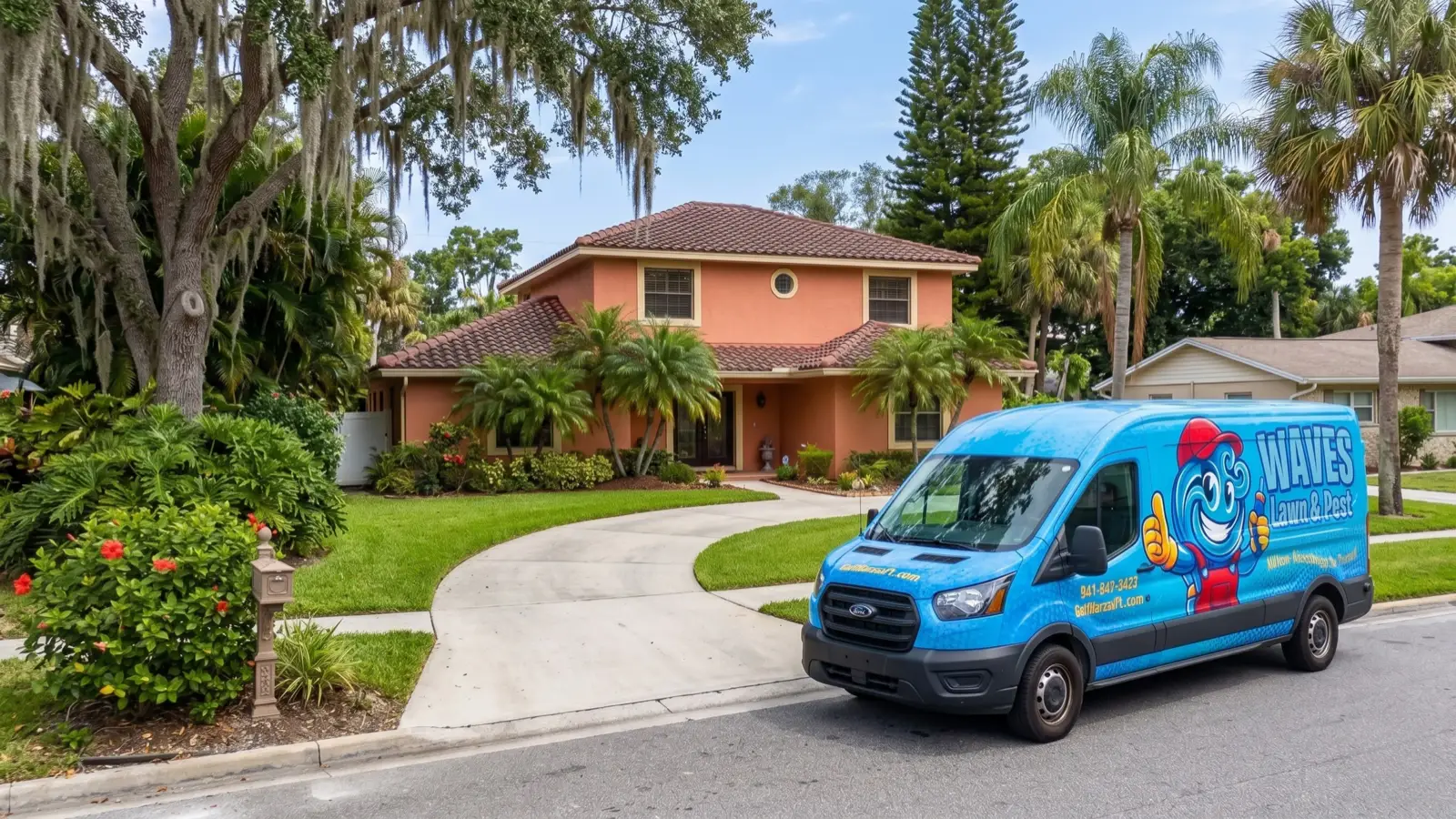
- Company vehicles and trailers must display a county compliance decal.
If you hire a lawn company, it’s fair to ask to see the certificate and look for the decal.
Exemptions
These are exempt from the summer blackout and the content and rate limits (Sec. 2-14-69):
- Golf courses, which must follow the state’s golf course best management practices instead
- Athletic fields and other specialized turf, which must follow the GI-BMP manual
- Bona fide farm operations and pastures used for grazing livestock
- Vegetable gardens, as long as fertilizer rates stay within UF/IFAS recommendations
- Compost, mulch, and similar organic soil amendments
- Tree trunk injection fertilization done by a certified arborist
- Fertilizer the county makes from treated sewage
The exemptions don’t cover everything. Exempt properties still have to follow the weather rule, the 10-foot fertilizer-free zone, and the hard-surface rules.
Enforcement and penalties
The county can enforce the ordinance through code enforcement or prosecute violations in court, and each day a violation continues counts as a separate offense (Sec. 2-14-71). Under Florida Statute 125.69, a county-ordinance violation prosecuted in court can bring a fine of up to $500, up to 60 days in jail, or both. The county can also sue for damages and to stop violations.
If you think a neighbor or a lawn company is breaking the rules, contact Manatee County’s Natural Resources or Code Enforcement staff.
Why the county adopted it
The county’s findings are straightforward. Extra nitrogen and phosphorus from lawn fertilizer wash into Manatee County’s stormwater systems, rivers, lakes, canals, estuaries, and Tampa Bay, where they feed algae and weeds that hurt water quality and clog drainage (Sec. 2-14-60 and 2-14-61). Summer is when heavy daily rain washes the most fertilizer off lawns, which is why the ban covers the rainy season.
How to keep your lawn healthy through the blackout
- Use iron for color. Iron and micronutrient products without nitrogen or phosphorus keep St. Augustine green. Follow the label rate.
- Mow high and sharp. Keep your grass at the right height for its type, cut no more than a third of the blade at a time, and leave clippings on the lawn (just not in the street).
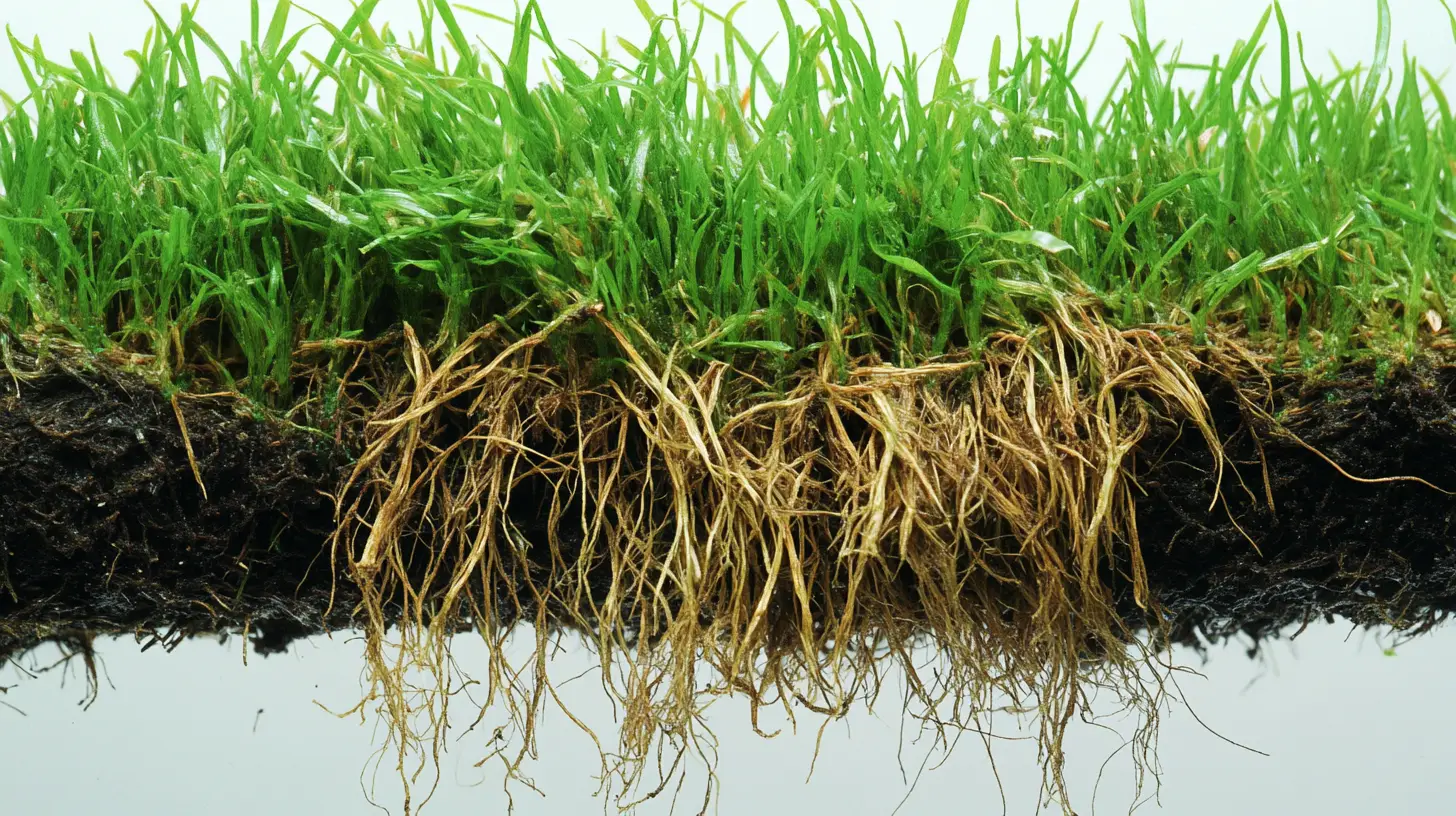
- Water less, not more. UF/IFAS recommends about ½ to ¾ inch of water per watering, early in the morning, only when the grass shows signs of wilt, and only on your allowed watering days. Overwatering causes more Florida lawn problems than underwatering: it feeds fungus and weeds and weakens roots. Check the current county and Southwest Florida Water Management District schedule, since drought orders can tighten it.
- Feed before June 1. A spring feeding with slow-release nitrogen, applied before May 31, helps carry the lawn into summer.
- Start again October 1. Nitrogen is legal again on October 1. Granular products still need to be at least 50% slow-release.
Our lawn program is built around this calendar. From June through September, we switch to iron and micronutrients with no nitrogen or phosphorus, then resume fertilizing in October. See our lawn care in Bradenton page for how the program works. If you live south of the county line, Sarasota County has a similar ordinance with some important differences. Our Sarasota County fertilizer blackout guide covers it.
Frequently Asked Questions (FAQs)
When exactly does the fertilizer blackout begin and end in Manatee County?
It runs from June 1 through September 30 every year. You can apply nitrogen fertilizer again starting October 1. Granular products must be at least 50% slow-release nitrogen, and phosphorus is still off-limits year-round without a soil test.
What happens if it rains right after I fertilize?
The ordinance bans nitrogen or phosphorus fertilizer when the National Weather Service has a severe thunderstorm, flood, tropical storm, or hurricane watch or warning out, or when 2 inches or more of rain is forecast within 24 hours. Beyond that rule, it’s smart to skip fertilizing whenever heavy rain is likely, since that’s how fertilizer washes into storm drains.
Can I use organic fertilizers during Manatee County’s blackout?
Only if they contain no nitrogen or phosphorus, and most organic fertilizers contain both. Compost, mulch, and similar organic soil amendments are exempt and can go down any time.
Does the blackout apply to vegetable gardens?
No. Vegetable gardens are exempt from the summer blackout as long as you stay within UF/IFAS fertilizer recommendations. The 10-foot fertilizer-free zone along water and the hard-surface rules still apply.
How do I know if a fertilizer product is legal during the blackout?
Read the N-P-K numbers on the bag. During the blackout, the first two numbers must be zero (0-0-X). Iron and other micronutrients are listed separately from N-P-K.
What should I do if my HOA or lawn service isn’t following the rules?
Talk to them first; they may not know the details. If it continues, contact Manatee County’s Natural Resources or Code Enforcement staff. Professional applicators are required to be certified, carry proof of it, and display a county decal on their vehicles.
Can I still hire a lawn service during the blackout?
Yes. Lawn services can keep mowing, treating weeds and insects, and applying iron and other products with no nitrogen or phosphorus. Make sure they’re certified and follow the blackout.
Will my lawn suffer without fertilizer all summer?
A healthy lawn handles the blackout fine. Summer rain, correct mowing and watering, and iron for color carry most lawns through to October. The biggest summer mistake we see isn’t the missing fertilizer. It’s overwatering.