Jump to a section (12)
- 01Key takeaways
- 02What December feels like for Florida grass
- 03How different Bradenton grasses handle winter
- 04Why fertilizing now works against your lawn
- 05The real goals of December lawn care
- 06Large patch is the real December threat
- 07Winter weeds and quiet invaders
- 08Want winter green without stressing the lawn?
- 09Manatee County rules in plain English
- 10The underrated power of doing less
- 11Professional Lawn Care Services in Bradenton, FL
- 12Frequently Asked Questions (FAQs)
December lawn care in Bradenton, FL is the quiet season nobody really talks about. No flashy growth. No instant gratification. Just your lawn, slowing its roll, asking for a little patience and a lot less interference.
If you’ve ever walked outside with coffee in hand, looked at your grass, and thought, Should I be doing something right now? — you’re in good company. Lawn care in Bradenton during December feels strange because the lawn isn’t thriving… but it isn’t failing either. It’s resting. And that rest is part of what makes Florida lawns bounce back so hard in spring.
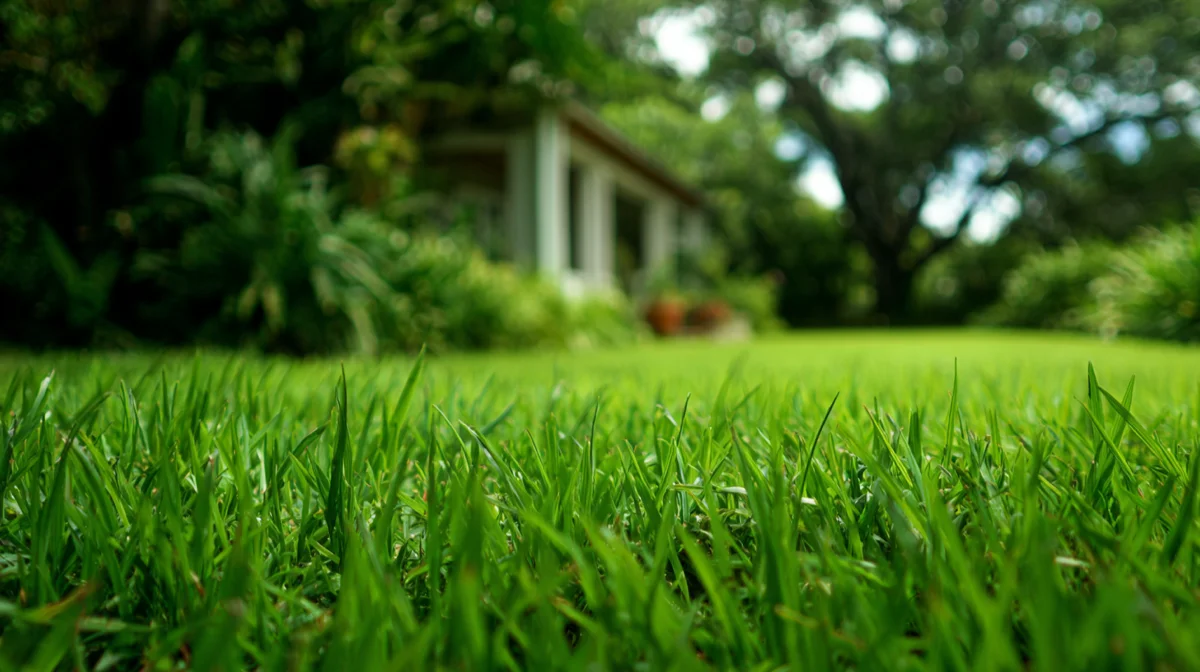
Winter here isn’t harsh, but it’s enough to change how grass behaves on our sandy, fast-draining SWFL soils. Understanding that shift makes all the difference.
Key takeaways
- Warm-season grass growth slows as daylight shortens and soil cools
- A heavy December feed works against slowed-down grass; at most, semi-active St. Augustine gets a light one
- Color changes are seasonal, not a sign of neglect
- Overwatering through cool weather fuels large patch (Rhizoctonia solani)
- Winter is ideal for observation, not correction
What December feels like for Florida grass
Bradenton winters hover in that in-between zone. Days often land in the 70s, nights cool down, and the sun checks out earlier than it did a few months ago. UF/IFAS puts warm-season grasses — St. Augustine, Bahia, and Zoysia — in a slow-growth or dormant pattern once soil temperatures drop and daylight shortens. Shorter days mean less photosynthesis. Cooler soil slows root uptake. Growth becomes minimal, even when the lawn still looks alive.
That yellowing or browning you notice? It’s not failure. It’s conservation. Think of it as your lawn switching to low-power mode.
How different Bradenton grasses handle winter
St. Augustinegrass tends to confuse homeowners the most. It often stays partially green through winter here, especially in mild years, which makes it tempting to push it harder. Growth slows sharply though, and patchy brown areas are common. Those spots usually aren’t insects — they’re dormancy showing up unevenly on sandy soil that heats and cools in patches.
Bahia takes winter seriously. It browns out, rests deeply, and wants very little attention. Feeding it during this phase doesn’t help and usually gets ignored by the plant altogether.
Zoysia goes tan early and stays that way longer. It’s dense and resilient during the growing season, but winter is its full stop. Trying to wake it up early often leads to weak growth later.
Different personalities, same message: winter is not growth season.
Why fertilizing now works against your lawn
This is where December lawn care goes sideways for a lot of homeowners.
Fertilizer works when grass is actively growing. In December, roots aren’t pulling nutrients efficiently. Nitrogen applied now doesn’t magically wait for spring — it sits in the soil, washes through sand with the next rain, or feeds weeds instead of your lawn.
Even worse, UF/IFAS ties poorly timed late-fall and winter nitrogen to large patch (Rhizoctonia solani), the cool-season disease that hits St. Augustine. Tender new growth plus cool, wet nights is the pathogen’s favorite recipe. More on that one in a minute, because it’s the single biggest December mistake we see.
Green now can mean trouble later.
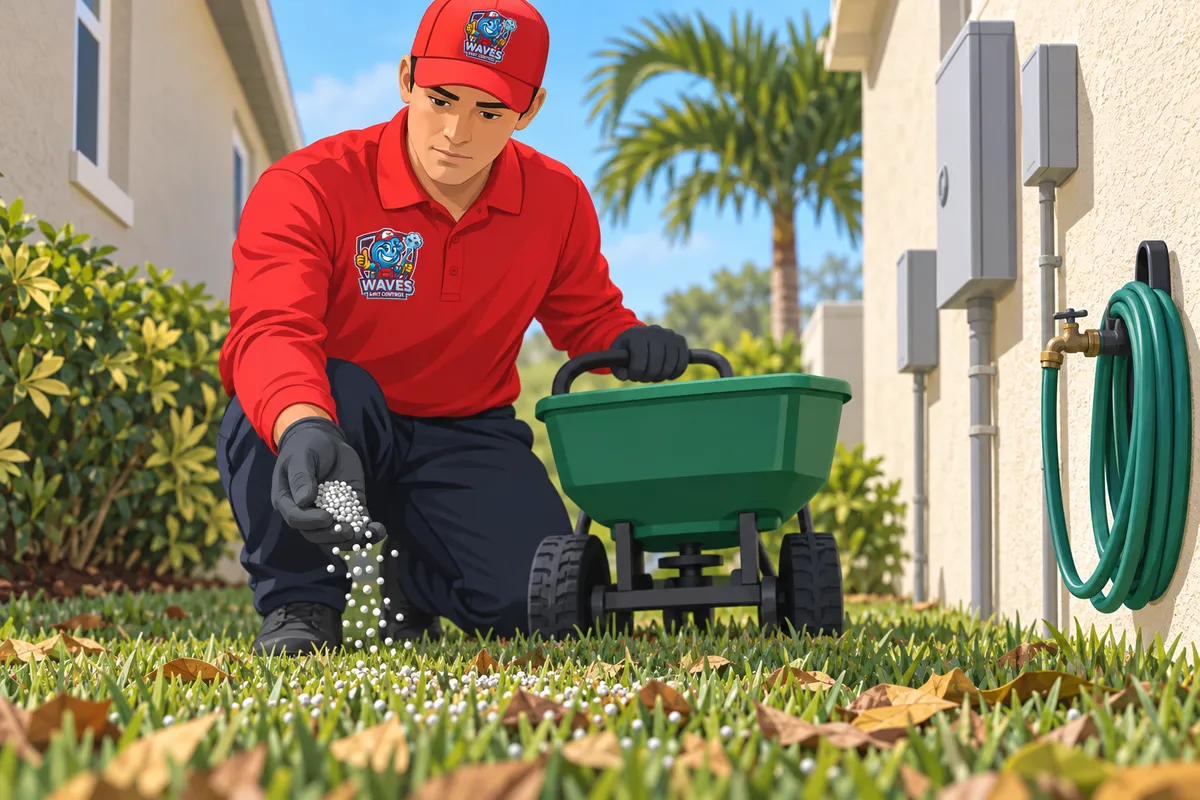
That doesn’t mean December has to be zero. Bradenton winters are mild enough that St. Augustine often stays semi-active, and a light, low-rate slow-release feed can hold color. What causes trouble is a big push of nitrogen trying to force spring growth in winter.
The real goals of December lawn care
Winter lawn care in Bradenton is about protection, not progress.
Mowing should stay at the high end of the range for your grass type. Taller blades shade the soil, protect the crown, and handle temperature swings better — so whatever you mow at, don’t scalp in winter.
Watering should taper down. For St. Augustine, UF/IFAS points to ½ to ¾ inch per application. The only reliable “when” cue is leaf blades folding, wilting to a blue-gray color, or holding footprints — and even then, water early in the morning on your assigned day (Manatee County’s baseline schedule allows two days a week). Cooler air and shorter days stretch the time between those cues way out. Overwatering during this stretch softens soil, weakens roots, and sets the table for disease.
This is also the season to watch and learn. Areas that thin out, spots that stay wet, or patches that struggle every year become obvious when growth slows. Those observations turn into smarter decisions when spring arrives.
Sometimes the best lawn care move is noticing without reacting.
Large patch is the real December threat
If you remember one thing from this page, make it this: the disease that chews up Bradenton St. Augustine lawns in winter has a name, a timing window, and a trigger — and all three line up with December.
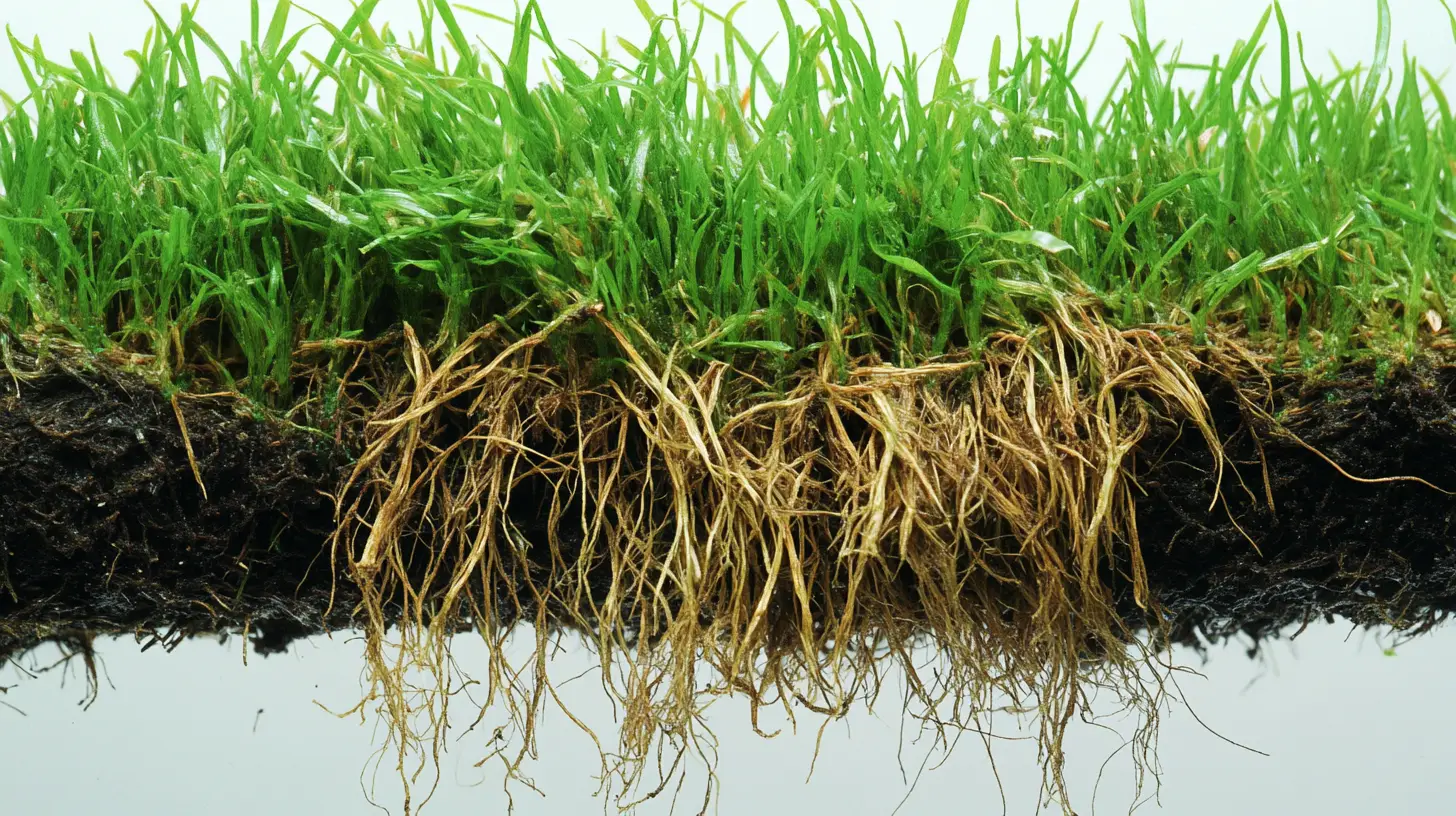
Per UF/IFAS, large patch (Rhizoctonia solani) shows up from fall through spring, when soil temperatures sit around 65–75°F. It looks like roughly circular yellow-to-brown patches, often with a yellow-orange edge where the disease is still spreading. Excess moisture drives it, which is why overwatering on cool days matters so much.
The two things that make it worse? Excess nitrogen and extra water. Which happens to be exactly what a lot of homeowners pile on when they panic over a little winter color change. Holding back heavy fertilizer and pulling the irrigation back lowers the risk. Once patches are already spreading, though, cutting water and nitrogen won’t clear them on their own — get the patch diagnosed, because active large patch is managed with those cultural fixes plus a labeled fungicide.
Winter weeds and quiet invaders
While turfgrass slows, some weeds stay ambitious. Winter annuals love open space and mild Florida temperatures. Addressing them early keeps them from spreading and competing once grass wakes up again.
Pests tend to calm down during winter, though some remain active year-round in our area. Monitoring matters more than treating. Jumping into heavy applications during December often creates more imbalance than benefit.
Want winter green without stressing the lawn?
For homeowners who really want color through winter, fertilizer isn’t the solution.
Overseeding with annual ryegrass can give lawns a green look through cooler months. It fills visual gaps and fades out naturally when warm-season grass returns, though it does require its own watering and mowing routine.
Turf colorants are another option growing in popularity. These lawn-safe dyes add color without forcing growth, making them a favorite for properties that want winter curb appeal without long-term stress.
Both approaches work with nature instead of pushing against it.
Manatee County rules in plain English
Lawn care in Bradenton always comes with environmental responsibility — our runoff ends up in the Manatee River and the bay, and the county’s ordinance exists to keep excess nutrients out of them.
The Manatee County fertilizer ordinance pauses nitrogen- and phosphorus-containing fertilizer on residential lawns from June 1 through September 30 each year. December sits outside that blackout window, so nitrogen is legal — which is why so many homeowners assume it’s a green light. Legal isn’t the same as useful, and the ordinance still sets limits:
- From October 1 through May 31, at least 50% of the nitrogen in any fertilizer must be slow-release.
- Phosphorus is banned year-round unless a soil test shows a deficiency — not because the bag happens to include it.
- Lawns are capped at 4 pounds of nitrogen per 1,000 square feet per year.
Our work is run under FDACS pest control license JB351547, held by our founder Adam Benetti, and our lawn technicians are BMP-trained.
The underrated power of doing less
December lawn care doesn’t deliver instant results, and that’s the point.
By letting grass rest, roots stay stronger. Disease pressure stays lower. Spring growth comes back cleaner, thicker, and more even. Lawns that get pushed through winter often lag behind once real growing season begins.
Rest now equals resilience later.
December isn’t about fixing your lawn. It’s about letting it be exactly what it’s meant to be right now. That quiet season pays off more than most people realize — and your spring lawn will show it.
Professional Lawn Care Services in Bradenton, FL
Want a healthier lawn without fighting the season? Waves Pest Control builds lawn care programs in Bradenton, FL around what your grass actually needs each month — including a winter plan that respects UF/IFAS guidance and the Manatee County ordinance. Ready to see what a right-sized program looks like for your yard? Request a Lawn Care Quote through our online tool, or Get a Lawn Care Estimate from the Bradenton team.
Frequently Asked Questions (FAQs)
Should I fertilize my lawn in December in Bradenton?
Not heavily. Dormant turf can’t use much nitrogen, and UF/IFAS links poorly timed winter nitrogen to large patch (Rhizoctonia solani). St. Augustine that stays semi-active in a mild Bradenton winter can take a light, low-rate slow-release feed to hold color — that’s different from pushing for growth. December is outside the county’s June–September blackout, but from October through May at least half the nitrogen in any fertilizer must be slow-release, and phosphorus is only allowed year-round if a soil test shows a deficiency.
Is it normal for my lawn to lose color?
Yes. Warm-season grasses naturally fade or brown during cooler months. St. Augustine often stays partially green, Bahia browns deeply, and Zoysia goes tan early. All three are seasonal responses, not damage.
How much should I water during December?
Water far less than summer. For St. Augustine, UF/IFAS recommends ½ to ¾ inch per application, applied in the early morning on your assigned watering day, only when the lawn shows wilt cues — folded blades, blue-gray color, or footprints that stay visible. Cool weather stretches the time between those cues significantly.
Can lawn diseases still appear in winter?
Yes. Large patch (Rhizoctonia solani) is the main cool-season disease on St. Augustine and Zoysia here, showing up from fall through spring when soil temperatures sit around 65–75°F. Excess moisture and poorly timed nitrogen both make it worse, and an active infection needs a diagnosis and a labeled fungicide, not just less water.
When should regular lawn care restart?
Most Bradenton lawns begin active growth again in late March or April, as soil temperatures climb and daylight lengthens. That’s the window for the next real fertilizer push — not December.